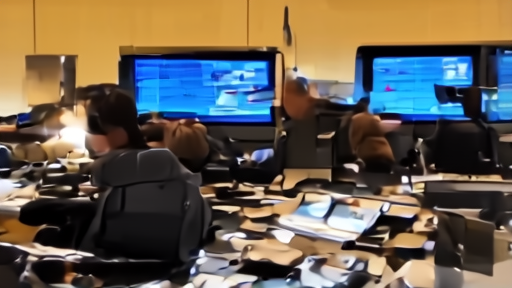
The 2026 World Cup broadcast operation must deliver 104 matches from 16 venues across the United States, Mexico, and Canada, with an International Broadcast Center in Dallas and a non-live production hub in East London. [1]
The paper's June 12 account of World Cup policing becoming the opening story argued that the tournament's operating systems were already part of the story. Today's operating system is not police lines. It is signal flow.
Sports Video Group reports that FIFA and Host Broadcast Services built the event around software-based processing on commercial servers, a converged ST-2110 network, public-cloud elements, and private-cloud infrastructure. [1] The Dallas IBC holds 12,000 square meters of multilateral production areas, and replay, audio mixing, graphics, and shading for each match are operated from Dallas rather than the stadiums. [1]
That choice changes what "live from" means. The stadium still supplies the match, crowd, and cameras, but much of the judgment that shapes the broadcast happens hundreds or thousands of miles away. Replay timing, audio balance, graphic insertion, and camera shading are part of how a viewer experiences urgency. Centralizing those jobs in Dallas turns the tournament into a networked production problem, not just a travel problem. [1]
Televisa's setup shows the system at national-broadcaster scale. Sports Video Group reported that its IBC team has 12 technicians and two production personnel, nearly 40 rights holders are on site, and Televisa sends 36 signals plus 36 backup signals back to Mexico City, with SRT over fiber to New York, Chicago, and Los Angeles and satellite feeds from other stadiums. [2]
For a broadcaster, redundancy is not excess; it is the price of making a global event feel ordinary at home. The 36 backup signals are a quiet fact with a loud consequence. They mean failure is planned for before viewers see it. They also show why the World Cup's media story belongs beside security, transport, and border access: the event depends on parallel systems that must work before the drama can look effortless. [2]
The consumer layer is just as technical. TV Tech reported that Peacock will stream all 104 Telemundo World Cup matches in Dolby Vision and Dolby Atmos with Dolby AC-4 after more than a year of NBCUniversal and Dolby engineering work. [3] The article says AC-4 can deliver Dolby Atmos with up to 50 percent greater efficiency than traditional codecs. [3]
The Dolby detail matters because streaming quality is now part of the editorial experience. A match in Dolby Vision and Atmos is not merely a cleaner file; it is a platform promise that the stream can carry spectacle without the old gap between television and app. TV Tech's codec detail is therefore a consumer fact. It tells the reader why a streaming rights package can be sold as premium rather than secondary. [3]
X sees the ratings posts and studio clips. Trade press sees the machinery. A reader who follows only the clips sees the product without the factory; a reader who follows only the factory misses why platform quality and social circulation now compete for the same event.
-- DAVID CHEN, Beijing