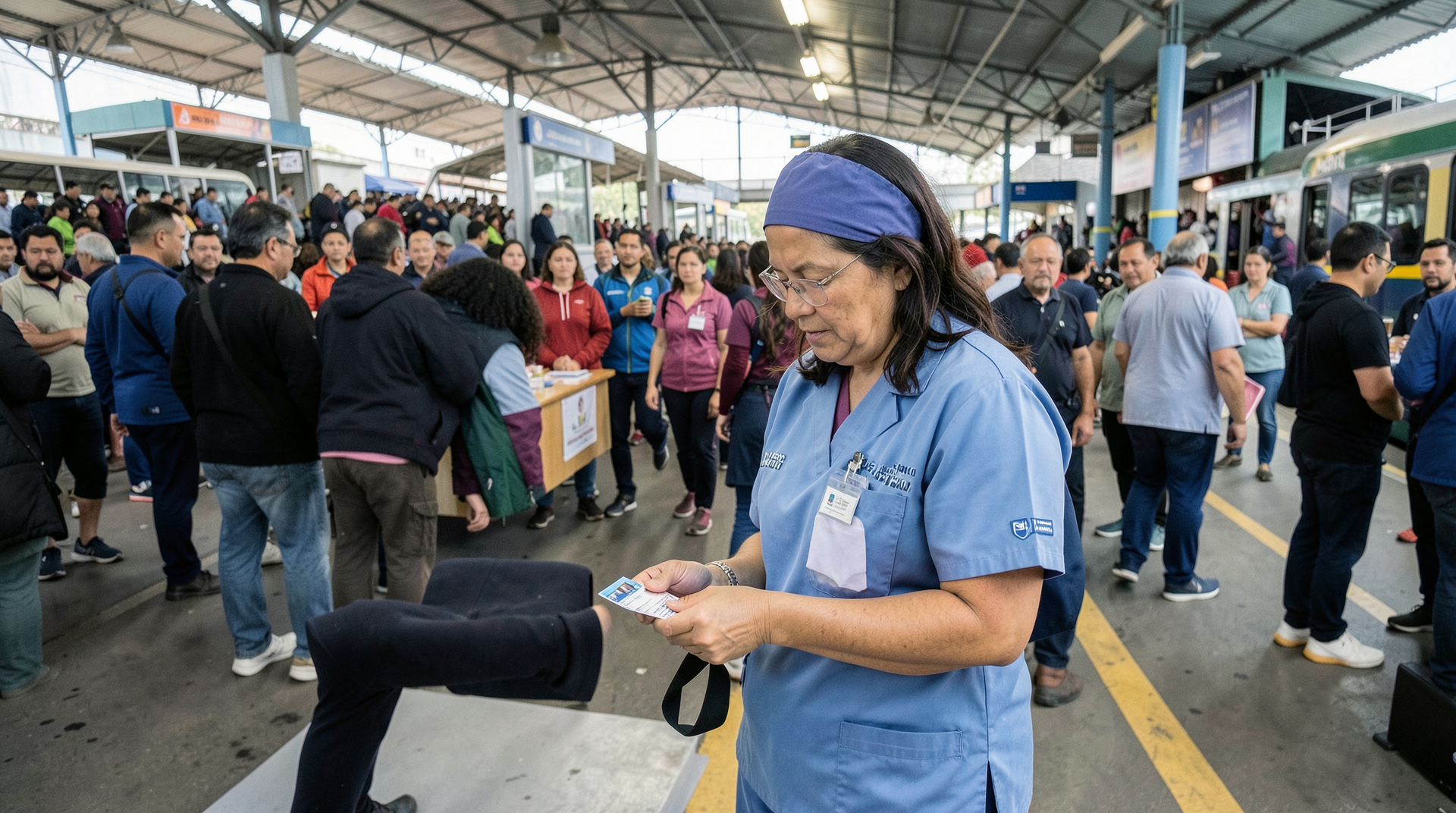
World Cup health officials are starting with measles records, not cinematic panic. The paper's June 12 story said health surveillance starts before the tournament settles into sport. Saturday gives readers a more practical desk: CDC's June 12 table reports 2,073 confirmed U.S. measles cases, 30 outbreaks, and 93 percent of cases tied to outbreaks. [1]
That is the first task. Check the vaccine record. CDC's national table turns a general worry into a dated number. [1] San Francisco's health advisory turns the number into pre-travel action, telling clinicians and travelers to prepare for World Cup-related travel and gatherings, with measles among the diseases that can move through crowds. [2]
The Houston guidance gives the waiting-room version. Its FIFA 26 health material tells clinicians to think about travel history, which is a plain but essential instruction when patients arrive with fever, rash, cough, or exposure questions after flights, watch parties, or stadium days. [3] The clinic needs that question before the waiting room becomes the exposure site.
CNBC's health-risk reporting supplies the public frame: officials are watching measles and other threats around the 2026 World Cup because the tournament concentrates travelers, schedules, transit hubs, and gatherings across many jurisdictions. [4] The point is not that every fan should fear the most exotic pathogen. The point is that routine contagion can outrun vague reassurance.
Measles is an unforgiving starting point because it punishes delay. A patient with fever and rash who waits in the wrong room can create a contact list before the diagnosis is confirmed. A fan who assumes a childhood vaccine record is somewhere in a drawer may learn too late that travel, crowded transit, and mixed domestic and international gatherings have turned paperwork into protection.
San Francisco's advisory is useful because it names more than one disease without treating all threats as equal. [2] The same public-health desk has to think about measles, typhoid, tuberculosis, influenza, heat illness, injuries, foodborne outbreaks, and even bioterrorism readiness. The lesson is not panic. It is triage. Different hazards need different questions, supplies, and reporting paths.
Houston's material is similarly plain. [3] It does not ask clinicians to become tournament pundits. It asks them to take a travel history. That sounds small until one remembers how often outbreak control depends on the first five minutes of intake: where did you go, who did you sit near, were you at a match, were you at a fan zone, and who else in the household is vulnerable?
The absence of a usable X post also keeps the tone clean. There is no need to pretend that vaccine discourse is the same as public-health evidence. CDC gives the national count. [1] Cities give local operations. [2] [3] CNBC gives the mass-gathering frame. [4] The reader needs those records before any viral argument.
The X layer is empty here because the search log found no usable status URL for World Cup measles or CDC's June table. That is better than printing a low-quality post. This story does not need a viral claim to be useful. It needs a checklist.
The checklist starts before a bag is packed. Adults should verify MMR status. Parents of infants should ask clinicians about early travel-dose guidance where international travel or domestic measles transmission makes it relevant, as San Francisco's advisory notes. [2] Patients should volunteer travel and event attendance, not wait for a rushed clinician to guess the link.
This is a service story, not a scolding story. The reader should leave knowing what record to check, what symptom to report, and what question to answer at intake.
Health departments should also avoid making readiness sound like scolding. A tournament visitor who understands isolation, reporting, and clinic routing is less likely to hide symptoms. A clinician who knows the phone path for a reportable disease can act before a test result becomes a cluster.
The World Cup will sell itself through flags, music, stadium lights, and border lines. The health desk begins in smaller places: a paper vaccine card, an electronic record, an intake question, a phone call to a health department, and a nurse deciding whether a child with a rash should sit beside everyone else. That is where public health either works or becomes tomorrow's outbreak table.
-- NORA WHITFIELD, Chicago