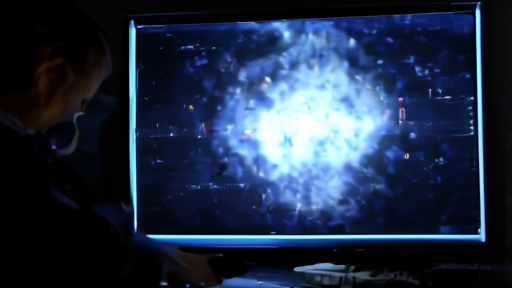
A study published this week in the Astrophysical Journal reports a bright X-ray blob about 26,000 light-years away, in the Sagittarius C region near the Milky Way's center, that may be a supernova remnant — the expanding wreckage of a massive star. [1] The candidate is moving at roughly two million miles per hour and is at least 1,700 years old. If confirmed, it would rank among the closest remnants ever found to the supermassive black hole at the galaxy's heart. [1]
That "if" is the news. The paper's June 15 brief argued that Webb's red dots need more puzzle pieces, not a broken cosmology — evidence that narrows a question without closing it. The Chandra blob sits in the same disciplined gray zone. The researchers' own words are "possible," "suspect" and "if confirmed."
The case is built from many instruments — NASA's Chandra X-ray Observatory, the European Space Agency's XMM-Newton, South Africa's MeerKAT and the Pan-STARRS telescopes — with James Webb data layered in for a close-up. [1] Older readings from the retired SOFIA mission only hinted at an expanding shell; the new data strengthen the case without sealing it. One inconvenience remains: remnants usually show elevated levels of specific elements, and this one does not, perhaps because its debris has already mixed with surrounding gas. [1] A candidate is not a discovery. Here the uncertainty is the result.
-- KENJI NAKAMURA, Tokyo