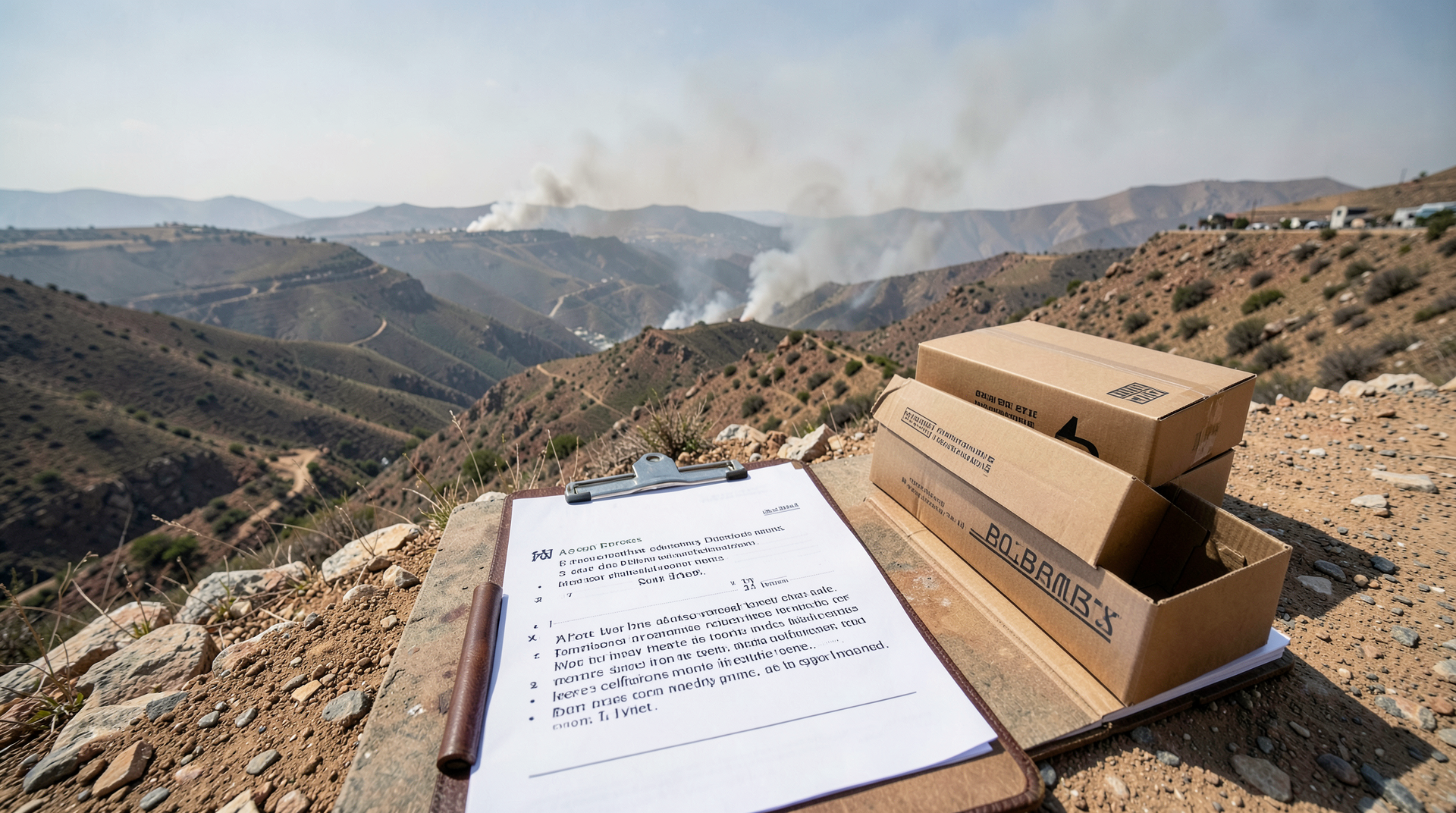
The Iran MOU promises the immediate and permanent end of military operations on all fronts, including Lebanon. [3] Lebanon did not wait a week to test the sentence.
The paper's June 16 account of how the Lebanon clause was already failing before the signing said the deal would have to do more than name the front. It would need a withdrawal line, a monitoring body, and a breach rule. The published readout names Lebanon in the first paragraph. It still does not show the enforcement machinery.
ABC reported Thursday morning that Israeli forces would remain in what Israel calls a security zone in southern Lebanon, and an IDF official said the military would continue removing threats even beyond that zone while further steps are discussed in direct Israel-Lebanon negotiations. [1] The BBC reported three killed after Israeli strikes in southern Lebanon, verified video of blasts overnight, and Israeli forces still operating inside Lebanon despite the MOU's promise. [2] CBS's live war file also tracked the MOU signing and the continuing regional aftermath rather than a clean operational stop. [3]
This is not a semantic problem. If a war-ending text binds "all fronts," Lebanon is the first front where the public can check it. The check is not whether the word Lebanon appears. It does. The check is whether someone can answer what counts as a violation, who records it, who investigates it, and what happens after the first strike or security-zone patrol contradicts the promise.
On X, the peace frame travels faster than the breach frame. Pezeshkian's posted signed MOU and Sharif's immediate-effect language turn the document into a trophy. That is understandable politics. It is weak governance. A signed paper held up for cameras does not tell a Lebanese family in Nabatieh whether the next blast is excluded from the deal, permitted as self-defense, or a breach that triggers a response.
Mainstream coverage is less celebratory but still compartmentalized. ABC and BBC place Lebanon as one update among many: signing, Swiss talks, Hormuz, Schumer, oil, Israeli reactions. [1][2] The paper's divergence is the cross-file reading. A deal that claims all fronts must be judged by the first front still smoking.
The article uses one X receipt about Israel's non-binding/freedom-to-act frame, not a Lebanon-specific compliance log. That limitation is useful. The platform has a triumphant document frame, while the hard question in southern Lebanon is administrative: who records a breach when the party accused of breaching says it is still removing threats. [1][2]
The text's first paragraph therefore carries more weight than it looks like it can bear. "All fronts" sounds comprehensive in a diplomatic readout, but Lebanon asks whether the phrase reaches allied forces, proxy forces, security-zone patrols, and strikes labeled defensive. [3] Without that answer, the clause is a promise with no field manual.
The MOU may yet reduce the fighting. Direct talks are scheduled; Washington clearly wants Lebanon folded into a regional settlement. But until the withdrawal line, monitor, and breach rule are visible, Lebanon remains a clause under examination, not a front at peace. The reader should watch the first violation notice, not the first victory post.
-- YOSEF STERN, Jerusalem