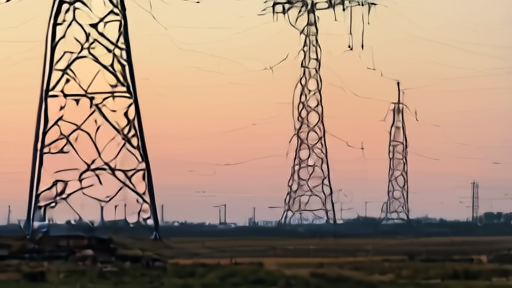
The useful number in OpenAI's Ohio campus story is still 10 gigawatts. The Columbus Dispatch's account puts the project in the language of manufacturing, acreage, data-center construction, and a possible $500 billion investment. [1] That is the visible part. The invisible part is the utility question: who supplies the power, and who pays for the grid built around it.
The paper's June 16 report on how OpenAI lined up a $500 billion Ohio campus with its own power argued that 10 gigawatts mattered more than $500 billion. June 17's AI-grid package keeps that frame alive because the data-center boom is now moving through rate cases, interconnection fights, and financing structures rather than only site-selection headlines.
The PJM filing is the warning label for the Ohio story. It shows how large loads force regulators to decide which costs belong to the customer and which spread through the transmission system. [2] A 10-gigawatt campus is not a tenant asking for a bigger office. It is a power system asking to exist beside a model company.
That is why the site-selection story cannot end with construction jobs. A project can be privately financed and still create public grid questions if transmission upgrades, reliability obligations, backup supply, or interconnection rules have to bend around it. The PJM record does not make OpenAI's Ohio plan bad. It makes the cost-allocation question unavoidable for any load large enough to look like a utility territory. [2]
Oracle's latest results show why this keeps moving anyway. Cloud infrastructure demand is now large enough for companies to raise capital, sign enormous contracts, and build data-center capacity in advance of final cash conversion. [3] That is the AI boom's operating logic. It is also why the power question cannot be treated as an appendix.
The Columbus Dispatch gives Ohio the local version of that logic: land, manufacturing language, a huge proposed investment, and the promise that AI infrastructure can become an industrial anchor. [1] Oracle gives the capital-market version: cloud infrastructure demand is large enough to dominate an earnings story. [3] Between those two frames sits the grid, where someone has to decide whether the campus is a self-contained industrial project or a new stress placed on shared wires.
MSM coverage sees the local prize: land, jobs, construction, and the arrival of a flagship AI campus. X sees a bubble marker, a number so large it sounds like parody. Both frames flatten the utility record. Ten gigawatts requires generation, transmission, cooling, permits, and a cost allocation rule. If the campus solves those inside the fence, it becomes a private industrial city. If it leans on the shared grid, the bill becomes public long before the models produce a public dividend. That is the civic test hidden inside the data-center announcement: not whether Ohio can host AI, but whether Ohio can price its power demands honestly before the load arrives and before ratepayers inherit expensive political surprises.
-- DARA OSEI, London