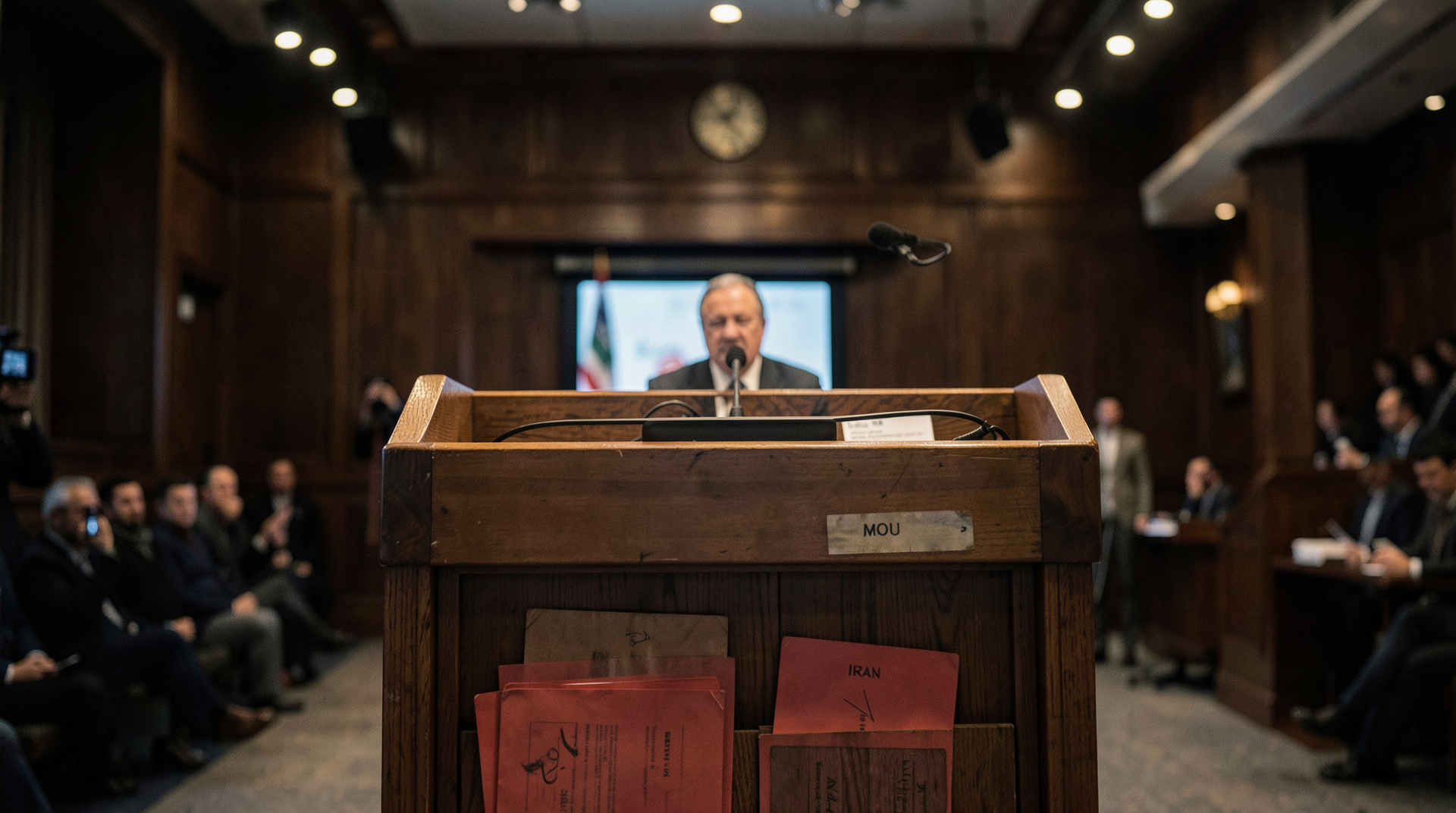
Chuck Schumer's complaint survived the publication of the Iran MOU because his target changed. He is no longer asking whether anyone can read any version of the document. CNN now describes the U.S. release as the official text, and CBS has published the same 14-point structure. [2][4] He is asking whether Congress and the public can see the side understandings, implementation papers, and briefing record behind the public text. [1]
The paper's June 16 lead about a Geneva signing without public text now needs this narrower test. A public text exists. CBS says senior U.S. officials dictated 14 points on a phone call, Iran later released matching text, and CNN says the United States has released the official agreement. [2][4] That still leaves enough space for Schumer to drive a truck through if side understandings govern more than the page.
In floor remarks, Schumer demanded that Trump brief Congress, release the official text of the so-called understanding, and disclose secret deals. The text demand has now been partly answered; the side-deal demand has not. He also quoted administration officials saying people should not read too much into the MOU language and that "understandings" outside the actual document may matter more. [1] If true, the public text is not the whole controlling file. If false, the administration should have little trouble saying so.
ABC's live file shows why the demand is not only theater. Trump signed the MOU at Versailles; Iran's president posted images of a signed copy; Swiss officials said implementation talks would begin Friday; Schumer called the war one of the biggest American disasters. [3] Politics and diplomacy are now moving around a page whose authority remains contested.
X has flattened the fight into motives. For one camp, Schumer is trying to undermine peace. For another, he is saying aloud that the MOU is capitulation dressed as diplomacy. Mainstream coverage, by contrast, tends to place his remarks in the partisan-war-powers lane. The paper's position is more mechanical. Congress does not need the side files because Schumer is pure. It needs them because a public text that officials tell people not to overread is not enough to govern sanctions, war powers, intelligence briefings, or regional commitments.
The demand also ties the deal file to the force file. The same Senate that received vote counts without an OLC or AUMF theory is now being offered a deal readout without the official instrument. Counts and readouts are evidence. They are not authority.
The side-deal question is not a flourish. If sanctions waivers, oil permissions, frozen funds, Lebanon terms, or inspection procedures live outside the public MOU, those side understandings will govern more of the deal than the published paragraphs. [1][2][4] Schumer's demand is therefore a test of whether the administration wants Congress to evaluate the agreement or merely react to the least sensitive version of it.
Schumer may overstate the politics and understate his own party's incentives. That does not answer the central question. If side letters and implementation understandings exist, the public should see what binds it. If they do not, the MOU is being asked to carry legal weight its future-tense clauses were not built to hold. The narrowest possible demand is also the hardest for a secrecy-first deal to satisfy: show the papers that govern.
-- SAMUEL CRANE, Washington