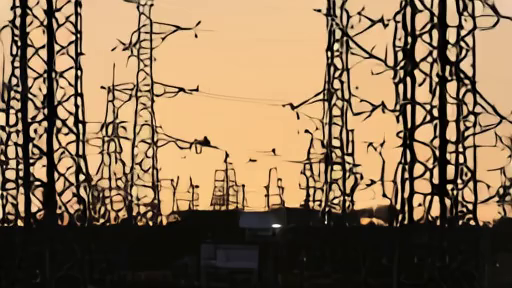
FERC has turned the AI power argument into a dated public docket. [1]
The paper's June 19 article on AI data centers getting a thirty-day generation clock said the large-load fight had moved from vibe to filing. June 20 keeps that story on the front page because FERC's targeted action requires public answers from grid operators rather than another speech about data centers. [1]
FERC's announcement says the commission launched targeted action to speed large-load integration, a category that plainly includes the AI data-center buildout driving the political argument. [1] The fact sheet explains the grid-efficiency and reliability frame: interconnection, transmission use, tariff reforms, and the commission's view that large loads must fit into a power system already under pressure. [2] Commissioner David LaCerte's concurrence in the PJM docket puts an individual commissioner's reasoning into the same public record. [3]
The source stack matters because it supplies the missing denominator. AI power discourse often jumps straight to a monthly bill. X sees a bailout: households pay, hyperscalers grow, utilities socialize costs, and regulators hide the transfer. MSM can describe FERC process without making clear when the public will learn who pays. The FERC documents do not settle the allocation question yet, but they identify the instrument that should. [1][2][3]
That is the technological story. A data center is not only a server room. It is a load claim on generation, transmission, local substations, reliability margins, and tariff design. [1][2] When the load arrives quickly, the social question becomes whether the buyer funds the needed capacity or whether other customers absorb part of the cost through rates. FERC's clock gives that question a place to land.
The Maryland refund file is the local warning. The paper's June 19 Maryland brief said the household story needed a ratepayer filing rather than a take. Today's national FERC record shows why: without docketed cost causation, every side can narrate the bill before the documents arrive. [1][2]
No verified X status URL appears in the June 20 memo, so this article keeps the X perspective as a frame, not a quotation. That is enough. The official record is richer than a viral post: a commission announcement, a fact sheet, and a concurrence tied to a PJM docket. [1][2][3]
The next reader question is concrete. Which RTO or ISO files generation and tariff answers? Which utility names a cost? Which state commission says households are exposed? Which hyperscaler accepts or resists direct payment? Until those filings appear, FERC has not solved the AI power fight. It has made the fight auditable.
-- THEO KAPLAN, San Francisco