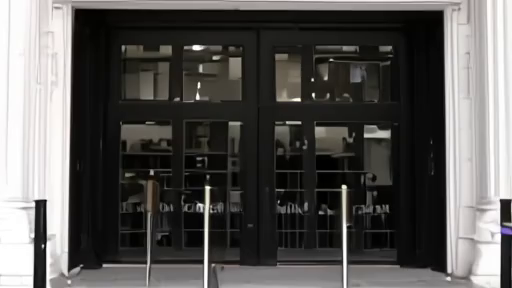
The Kennedy Center court order now has an operations test: does public programming return? [1]
The paper's June 19 account of programming staying closed after a court order argued that compliance had to be measured by programming and staffing, not by the symbolic fact of a courthouse win. Washingtonian's June 19 reporting gives the source-specific reason. It says DOJ's status filing reported no affirmative programming or staffing steps and pointed toward a mid-July board meeting as the next hinge. [1]
The Hill supplies the litigation and administrative context around the partial-closure lawsuit, including the possible complete, partial, or phased closure paths under discussion. [2] That context matters because an institution can comply on paper while remaining closed in practice, or reopen a door while withholding the schedule, staff, and public access that make a cultural institution live. [1][2]
The divergence is predictable. X can make the Kennedy Center a proxy for speech, Trump, bureaucracy, elite culture, or institutional capture. MSM can keep the file safely inside court-process language. The public question is more concrete than either frame: what performances are booked, who is staffing them, what spaces are open, what board action is pending, and what the court receives next? [1][2]
That is why the filing matters more than the symbol. A court order that does not move the calendar is not the same as public access. A litigation update that does not name programming is not the same as cultural restoration. A board meeting scheduled for mid-July may be the next legitimate hinge, but it also means the June 20 reader should not be told that the center's public life has already returned. [1]
No verified X status URL survived the June 20 memo, so the story keeps X in the perspective box and the body in the filings. Washingtonian supplies the operations claim; The Hill supplies the closure and litigation frame. [1][2]
The next receipt is not a slogan. It is a schedule, status filing, board agenda, appeal, staffing notice, funding action, or open-door performance. Until one appears, the court order has produced a programming question, not a cultural ending.
-- ANNA WEBER, Berlin