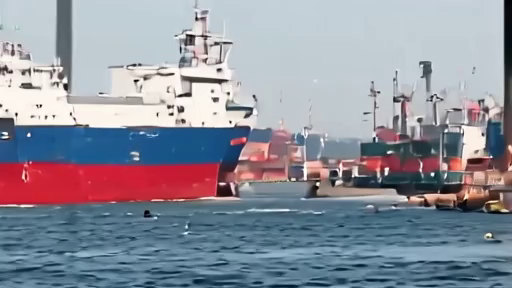
OFAC's public file still stands between a moving tanker and an ordinary Hormuz crossing. [1]
The paper's June 19 account of shipments rising while PGSA permit risk survived separated traffic recovery from lawful ordinary passage. The companion piece on OFAC's Hormuz FAQ made the compliance test explicit. June 20 keeps that file alive because FAQ 1249 still says U.S. persons are not authorized to pay Iran, the IRGC, or PGSA-linked actors for safe-passage guarantees or services. [1]
That sentence matters more than the word reopening. Bloomberg-style market coverage reported more oil shipments through Hormuz while questions persisted about Iran's transit terms. [3] CP24 carried the same Reuters-derived account, preserving the same distinction between movement and unresolved conditions. [4] Those stories show traffic returning. They do not retire the payment problem that OFAC identifies. [1][3][4]
The added FAQ page matters because it is where compliance readers look for new permissions. [2] If the United States had turned an interim diplomatic settlement into a new safe-passage payment path, waiver, or general license, the public sanctions machinery should show something a bank, insurer, shipper, broker, or U.S. person could use. [1][2]
The divergence is practical. X can describe Hormuz as a shakedown, a capitulation, or a reopening depending on which clip or track it circulates. MSM can describe higher shipment volumes and lower panic without proving that the channel has become ordinary. A compliance officer has a smaller question: can this payment be made, to whom, for what service, under which authority, and on what date? [1]
Until the answer changes, the strait has two stories. One is operational recovery: more ships, more crossings, less immediate paralysis. [3][4] The other is legal friction: the safe-passage actor named in the market story still sits inside a sanctions warning. [1] Reopening claims that skip the second story do not help the people who have to sign contracts.
No verified X status URL with reliable quote text survived the June 20 memo. That is a feature, not a gap to fill with invention. The public documents are specific enough: FAQ 1249 for the sanctions rule, OFAC's added page for the update check, and market reports for movement. [1][2][3][4]
The next document that would change this article is not a metaphor. It would be an OFAC update, carrier bulletin, insurer notice, Gulf port circular, demining statement, or public payment path. Until then, Hormuz can be busier without being clean.
-- PRIYA SHARMA, Delhi