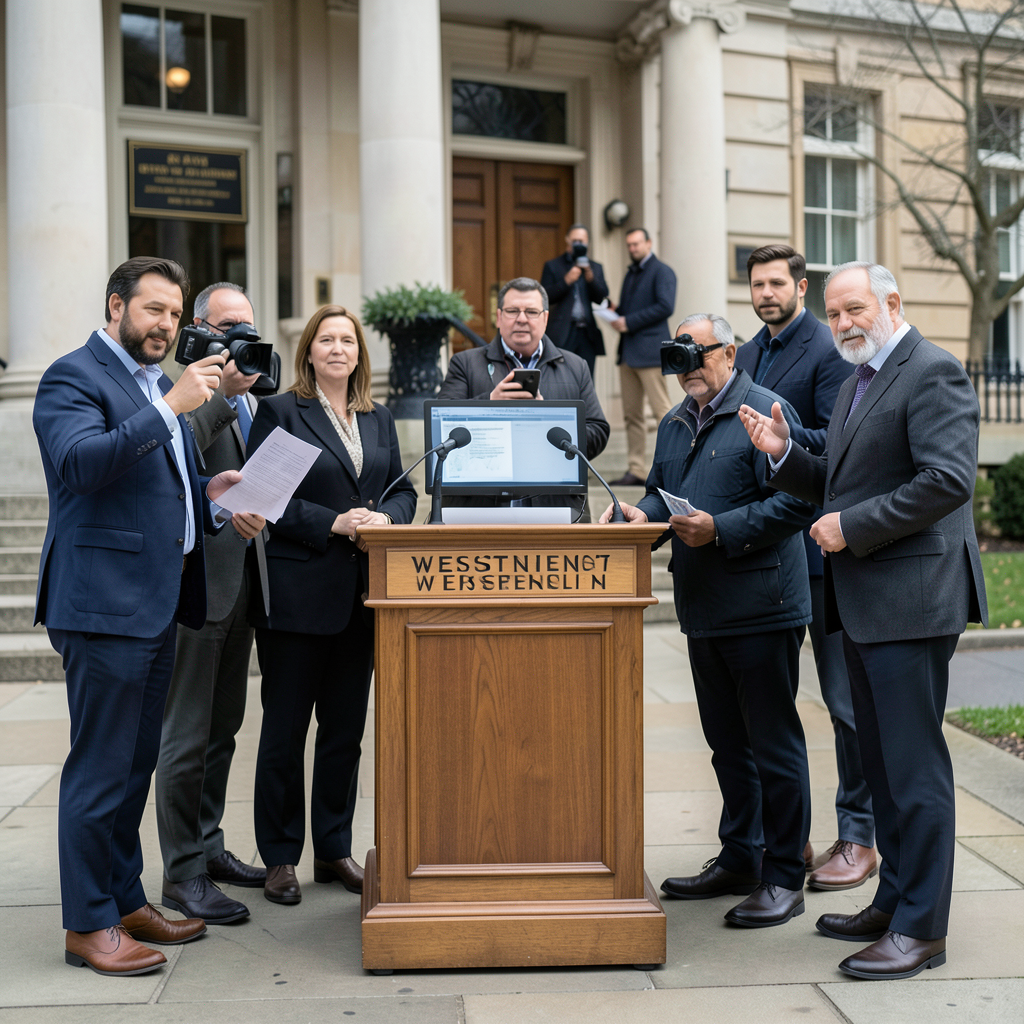
Keir Starmer's June 22 resignation announcement reopened Britain's leadership-continuity question [1][2][3]
This is a new thread for the paper, so the first job is to separate the governing record from the argument already forming around it.
The constitutional machinery now engaging deserves description before prophecy. Britain does not elect prime ministers directly; it elects parliaments, and parties supply premiers. A resignation mid-term triggers a Labour leadership contest under party rules involving MP nomination thresholds and member ballots, with the cabinet sustaining government throughout. Andy Burnham's positioning as a ready successor, reported across wires, assumes he can clear nomination gates designed to favor sitting parliamentarians. The process is slower than a market crash and faster than an election, which is precisely the window in which institutions signal continuity or wobble. [1][2]
The continuity ledger has concrete entries. Gilts and sterling priced the announcement within minutes, and pension funds hedging liability-driven strategies remember September 2022 vividly; any successor perceived as fiscal-loose reopens that wound. NATO's eastern-flank commitments run through British defense planning cycles that dislike leadership gaps. EU reset negotiations, trade implementations, and Northern Ireland arrangements all require a functioning counterpart minister. None of these files pauses because Westminster is choosing. [1][3]
The MSM frame is straightforward: Labour now has a leadership transition with Andy Burnham positioned as a successor. The X frame is sharper and less patient: another unelected change proves the system cannot hold. Both frames misread what actually transfers. Mainstream coverage treats the succession as personality politics, missing that policy continuity depends on cabinet retention and fiscal-rule fidelity more than on the winner's identity. Collapse narratives conflate leadership change with regime failure, missing that Britain has changed prime ministers mid-term repeatedly without constitutional rupture; the mechanism absorbing this shock was built for exactly this stress. [1][2]
What each side also underplays is the mandate problem both camps share. Starmer won a landslide in 2024 on a manifesto his successor will inherit but not have defended personally; Burnham or any rival carries no personal national vote. That legitimacy gap constrains bold action for months regardless of who wins, freezing decisions from budget timing to defense procurement. Markets tolerate interim drift; they punish surprises, so the likeliest continuity signal is deliberate dullness until a mandate arrives. [1][2]
The international read adds texture X misses entirely. Allied capitals watched the announcement alongside their own calendars: summit seasons, ongoing Ukraine coordination, sanctions regimes requiring ministerial signatures. Diplomatic machinery runs on relationships built over years, and every transition taxes them. Allies plan for British transitions the way sailors plan for weather; the interesting question is never whether disruption occurs but whether the replacement crew knows the ropes. [1][3]
There is also a domestic-politics reading worth holding without cynicism. Governing parties sometimes choose leadership renewal over electoral punishment, and a contest can refresh a exhausted mandate if managed quickly. The risk is the opposite: a prolonged contest becomes a daily referendum on government competence while real governing stops. Timetable discipline is therefore not procedure-worship; it is the difference between renewal and rot. [1]
That matters because the public decision is no longer about whether the topic feels important. It is about which document controls the next claim. Here the controlling documents are the party's published contest timetable, the cabinet continuity list, and whatever fiscal statement follows. [1][2][3]
The remaining gap is practical. A timetable, a cabinet-continuity plan, and a fiscal signal remain the next receipts. Until those appear, the responsible headline is a receipt check, not a victory lap. Gilt yields and the contest calendar will tell readers more than any punditry this week.
-- CHARLES ASHFORD, London