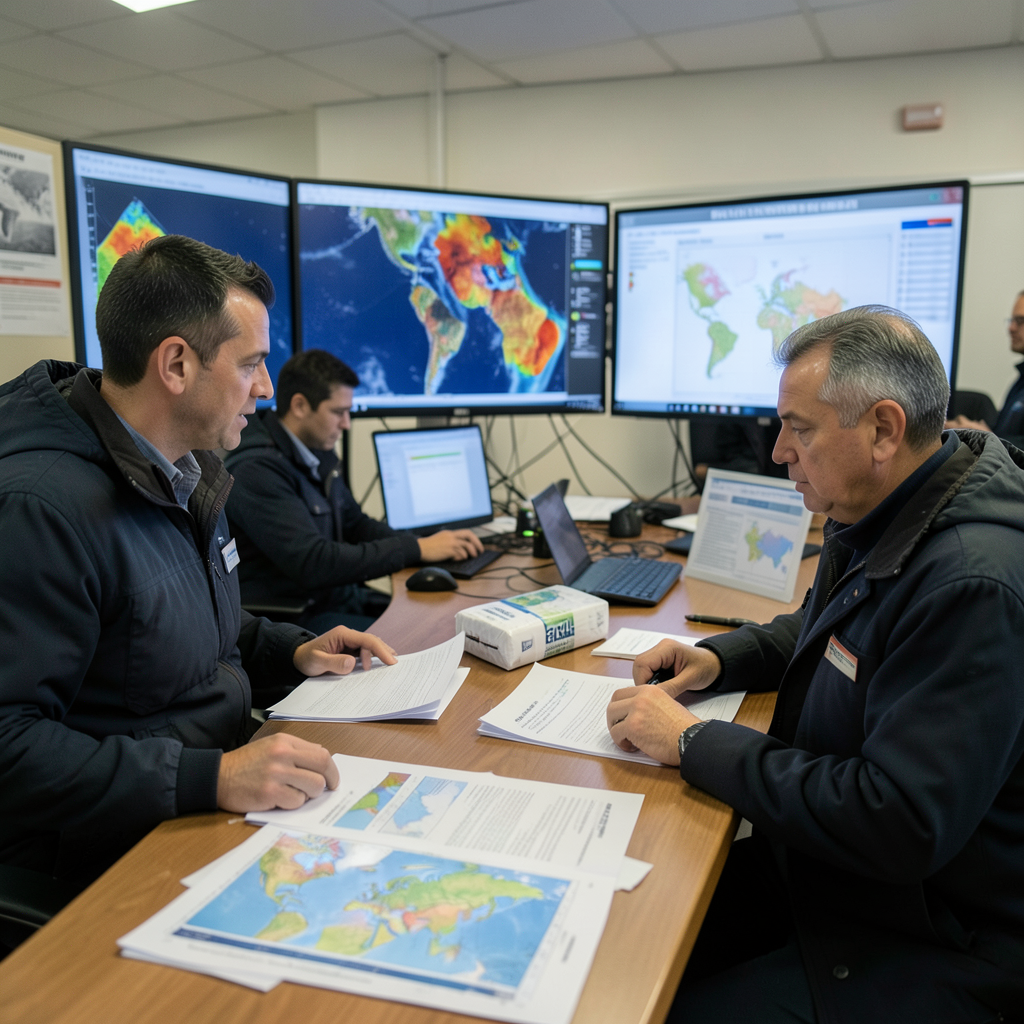
NASA's June 23 flood-warning article made AI useful only when it connects to service warnings [1]
This is a new thread for the paper, so the first job is to separate the governing record from the argument already forming around it.
The technical substrate explains why space agencies belong in flood forecasting at all. Floods begin as rainfall, but satellites observe rainfall globally in near-real time through missions measuring microwave emissions from precipitation, feeding merged datasets like IMERG that cover every watershed including river basins with zero ground gauges. Machine-learning models trained on historical pairs of observed rainfall and subsequent flooding learn patterns linking upstream precipitation to downstream inundation, extending useful warning lead time in places where conventional hydrology lacks instrumentation. NASA's framing emphasizes exactly this handoff: model output matters only where national weather services can convert it into warnings residents actually receive. [1]
That conversion chain is where most AI-in-government stories quietly fail, which is why scrutiny belongs there. A probabilistic flood signal becomes protection only after forecasters interpret it against local river response, forecasters issue products through official channels, emergency managers activate sirens or phone alerts, and residents act with time to move. Every link adds latency and failure modes; a brilliant model feeding an unused endpoint saves nobody. The agency publishing its work alongside operational partners rather than as laboratory demonstration signals awareness of that whole chain. [1]
The MSM frame is straightforward: machine learning can improve flood-warning tools. The X frame is sharper and less patient: AI is being inserted into life-and-death warnings without enough explanation. Both frames skip what verification demands. Enthusiasts cite skill improvements without defining baseline: better than climatology? Better than existing gauge networks? For which flood types, flash versus riverine, whose behavior differs fundamentally? Skeptics invoke black-box distrust while missing that operational meteorology already runs on ensemble numerical models no forecaster fully derives by hand; opacity is a spectrum with governance, not a binary requiring purity. The paper's read is narrower: lead time gained, false-alarm rates, missed-event counts, and integration depth into National Weather Service workflows decide whether this helps anyone. [1]
What each side also underplays is the false-alarm economy unique to warnings. Evacuation fatigue kills on the tenth unnecessary alarm as surely as complacency kills on the first ignored real one, so forecast systems get graded on hit rates and false-alarm ratios simultaneously, and improving both at once is genuinely hard. An AI layer that raises lead time while degrading precision would be a net loss operationally regardless of benchmark scores. This is why service agencies insist on parallel evaluation periods before trusting new inputs, and why the absence of such evaluation is the tell separating demos from deployments. [1]
The equity dimension gives the story its sharpest stakes. Data-poor basins are precisely where floods kill fastest, and precisely where satellite-driven models promise largest relative gains; wealthy grids already gauge themselves adequately. If machine-learning forecasting concentrates benefits in instrumented rich regions, it widens survival gaps; if global coverage works as advertised, it redistributes the most basic climate benefit there is, minutes of warning. Which outcome obtains depends on operational integration choices being made now, mostly unpublicized. [1]
That matters because the public decision is no longer about whether the topic feels important. It is about which document controls the next claim. Here the controlling documents are evaluation reports and warning-verification statistics that do not yet publicly exist for this system. [1]
The remaining gap is practical. Operational evaluation results, local-warning outcomes, and false-alarm accounting remain the next receipts. Until they publish, the responsible headline is a receipt check, not a victory lap. The model promises minutes; only the verification file can price them.
-- NORA WHITFIELD, Chicago