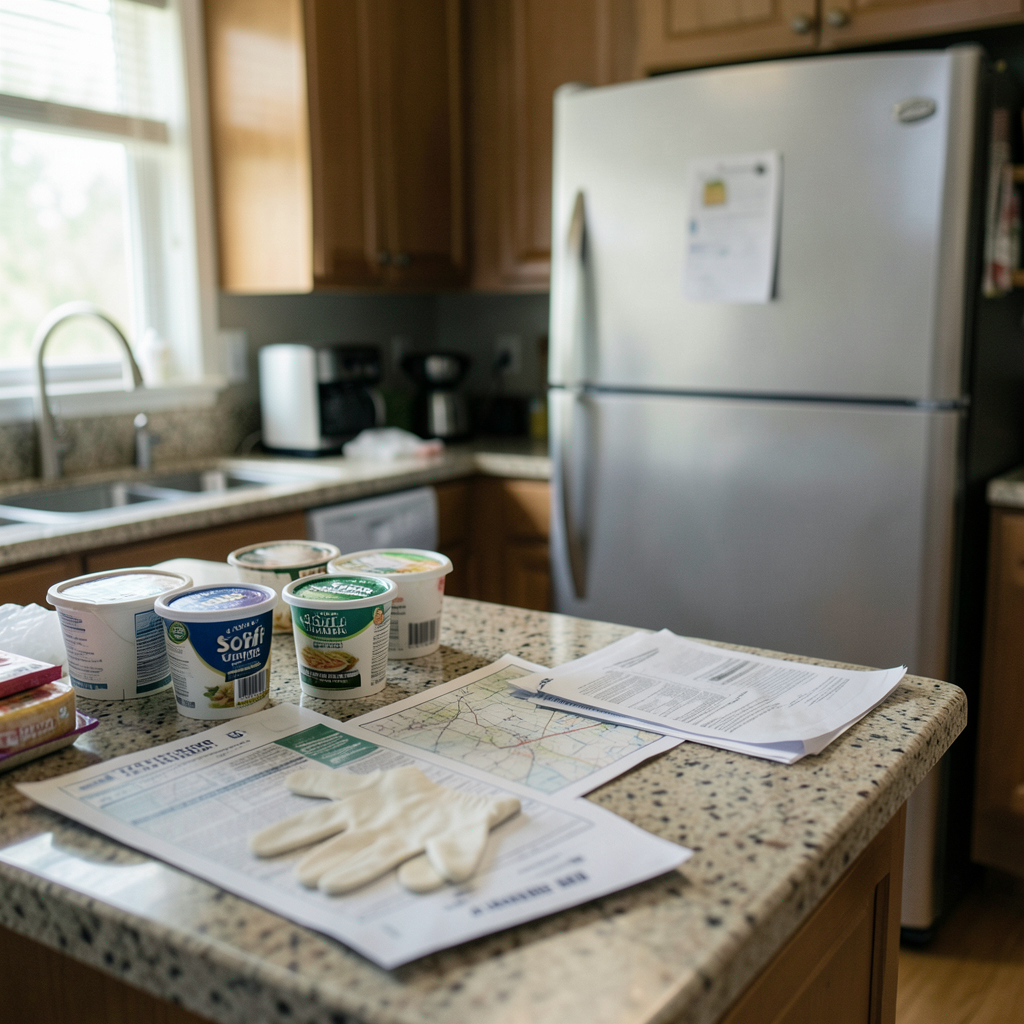
FDA's June 24 outbreak update tied a Listeria monocytogenes investigation to requeson-style soft cheese made by Clover Hill Dairy of Mechanicsville, Maryland, listed illnesses across four states, and pointed consumers to a recall that now covers every cheese the firm manufactures. [1][2]
The numbers in the recall notice are blunt. Nine illnesses, eight hospitalizations, and one death have been linked to the soft cheese products. [2] Behind them sits a distribution map rather than a supermarket shelf: Clover Hill sold directly from its retail market, at farmers markets, and through third-party distributors in Maryland, New Jersey, New York, North Carolina, Virginia, and Washington, D.C. Products may carry other labels when distributed — KESSO, Quesos La Ricura, Izalco, De Mi Pueblo, Rio Lindo among them — which is why the agency points to the manufacturer permit number, 24-128, stamped on clamshell containers, instead of brand recognition alone.
The paper's June 23 recall coverage argued that a food story should not become brand panic when it can become a household task. The Morningstar and salmonella files asked for UPCs, product names, and freezer checks. Today's soft-cheese file supplies more of that machinery, and Listeria supplies the urgency. The bacterium survives refrigeration, spreads easily to other foods and surfaces, and produces symptoms that can appear as late as ten weeks after exposure. A contaminated tub thrown out today can still poison a cutting board next month if the drawer it sat in was never sanitized.
So the task list is specific. Find any queso fresco-style cheese and check the package for the plant number. If the original packaging is gone — including anything frozen without a label — discard it rather than gamble. Clean and sanitize refrigerators, containers, and surfaces the product touched. Return purchases to the point of sale for refund. And know who is actually at risk: pregnant people, adults 65 or older, newborns, and anyone immunocompromised face the severe form of the illness, including miscarriage and stillbirth, while healthy adults usually escape with short-term symptoms. [1][2]
MSM can frame the story through the illness counts, which are legitimately news. X will be tempted toward two bad simplifications: a whole-cuisine warning that blames requeson or Salvadoran cheesemaking generally, or an anti-regulator riff that treats the recall as agency theater. Both miss what the record shows. This is a named firm, a named plant, a six-state distribution footprint, and a recall the company itself expanded on June 18 to include hard cheeses, cuajada, and ricotta alongside the soft styles first flagged. [2] That is a supply-chain event with paperwork, not a culture-war prop.
The open question is upstream of the kitchen: how Listeria entered the production environment, and whether the June 5 recall by distributor Nelson & Isa Lacteos in New York marked the edge of the problem or its midpoint. FDA's investigation page is the instrument to watch; it has been updated as new lots and labels entered the recall, and it will carry the final case count when the outbreak closes. [1][3]
Until then, the useful posture is domestic, not rhetorical. Freezers hide old cheese better than pantries do. Symptoms deserve a phone call to a provider, especially for the households the risk groups name. A recall with a plant number, a label list, and a cleaning protocol converts anxiety into errands.
That conversion is the whole point. Panic wastes the warning; the checklist uses it.