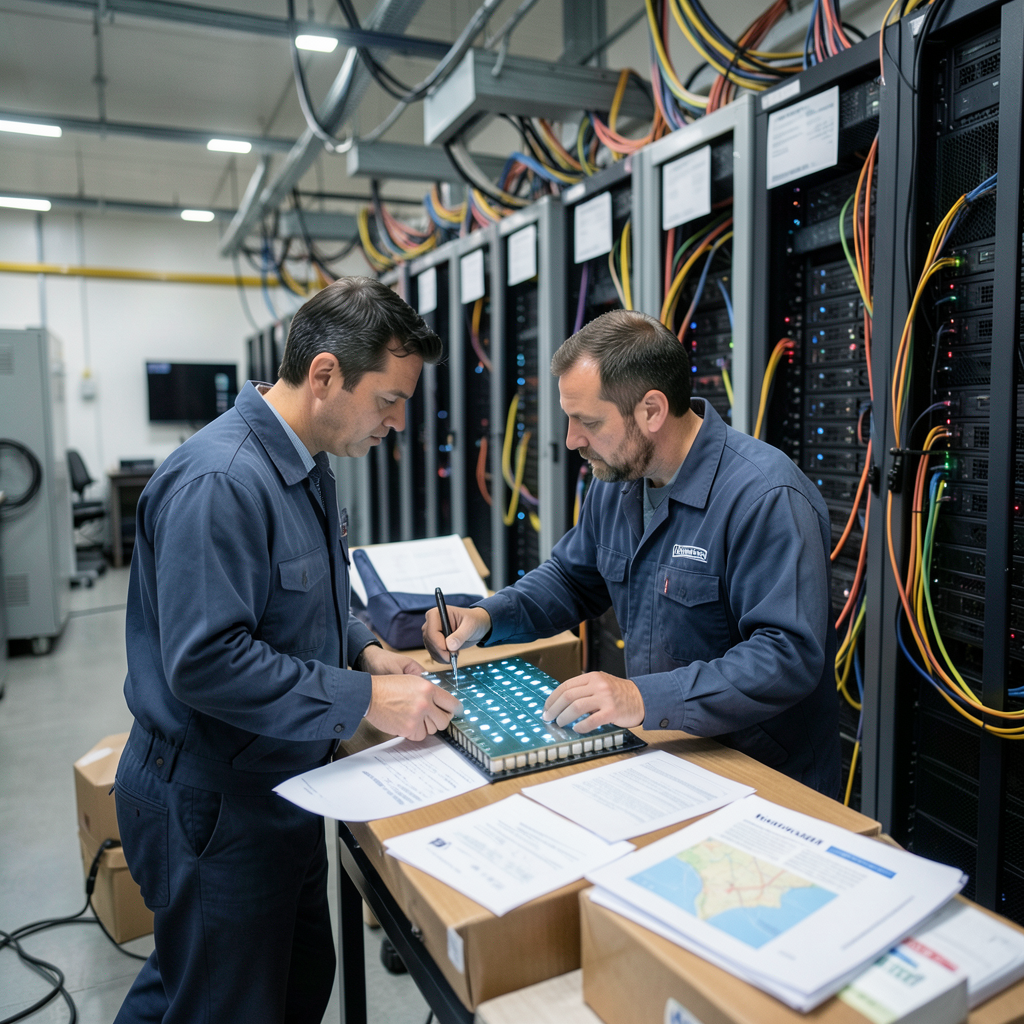
OpenAI and Broadcom unveiled Jalapeño on June 24, describing it as OpenAI's first intelligence processor for large-language-model inference and the opening step of a multi-generation compute platform the two companies intend to deploy at gigawatt scale with data-center partners beginning in 2026. [1][2]
The announcement's facts are concrete enough to audit later. Jalapeño went from initial design to manufacturing tape-out in nine months — a cycle OpenAI calls the fastest ever achieved in high-performance advanced semiconductors, accelerated partly by using its own models to optimize the design flow. Engineering samples already run ML workloads in the lab at production target frequency and power, including GPT-5.3-Codex-Spark. Early testing shows performance per watt substantially better than current state-of-the-art, though final numbers await a technical report promised in the coming months. Broadcom contributes silicon implementation and Tomahawk networking; Celestica handles boards, racks, and systems integration. Hock Tan personally delivered the first chip to Sam Altman and Greg Brockman, which tells you how much symbolic weight each company assigned the moment. [2]
The paper's June 23 account of OpenAI Daybreak kept attention on access rules and public terms rather than product theater. Jalapeno moves that discipline into hardware. MSM will place the chip inside the Nvidia rivalry narrative — The Verge notes Broadcom's chief told Reuters it matches Blackwell-class performance while reducing dependence on scarce Nvidia supply. [1] X will go further, reading Jalapeño as either proof of OpenAI independence or evidence of another vertical power grab. Both frames outrun the receipts. What exists today is a wafer, claimed efficiency metrics not yet published, deployment commitments starting late 2026, and partners whose incentives are worth noting: Broadcom sells networking and implementation to everyone, and Microsoft — OpenAI's largest backer and cloud supplier — is named among the gigawatt deployment hosts. [2]
The architecture claims deserve the same scrutiny as any benchmark. OpenAI says the design reduces data movement and balances compute, memory, and networking so realized utilization approaches theoretical peak — the actual bottleneck economics of inference, where serving costs dwarf training over a model's life. If the technical report substantiates even half the efficiency claim, ChatGPT margins improve and API prices face downward pressure; if it does not, the nine-month tape-out remains a procurement story dressed as a breakthrough. That report is the single document to wait for. [2]
The strategic reading is sturdier than the performance one. Owning inference silicon closes the loop in OpenAI's flywheel argument: models inform chip design, chips cut serving cost, cheaper serving funds better models. It also deepens the same concentration questions Daybreak raised. A company that designs the model, runs the product, operates the cloud relationships, and now co-designs the silicon has fewer independent chokepoints left to negotiate against.
The nine-month timeline carries its own second-order claim. OpenAI argues its models accelerated parts of the design and optimization flow — the same systems users query helping engineers lay out silicon — which would make chip development another domain where AI compresses its own input costs. If that loop holds at industry scale, custom accelerators stop being a two-year moonshot reserved for hyperscalers and become a planning exercise any large lab can schedule. Competitors heard the same message: Microsoft, Meta, and Amazon have all announced custom silicon, and each announcement reprices Nvidia's pricing power at the margin. The chip race is now an inference race, because inference is where the customers are.
Until performance numbers and partner deployments materialize, the honest ledger reads: nine months, one delivered processor, gigawatt promises, no benchmarks. Jalapeño is not independence. It is a promise with a wafer attached — and a publication date attached to the promise.