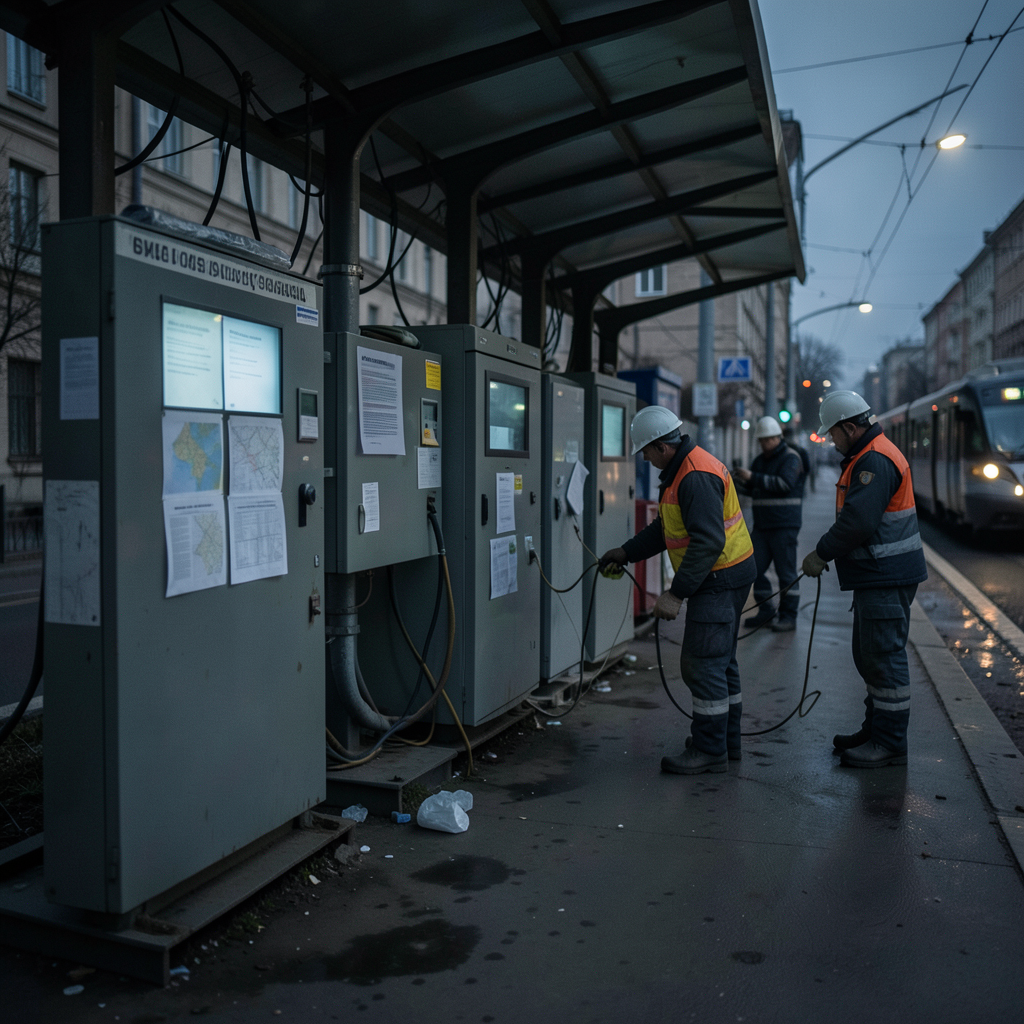
Ukrainian strikes on Russian-occupied Crimea triggered power cuts across Sevastopol on June 24, with the Moscow-installed governor confirming outages at energy facilities, trolleybus service suspended for the day, and residents told to conserve phone batteries as temperatures approached 30 degrees Celsius. Al Jazeera documented the disruption from statements on both sides. [1]
The paper's June 23 story on Russia weighing fuel imports after Crimea strikes argued the logistics campaign had moved from battlefield claim to civilian operating receipt. Electricity adds a second receipt to the same ledger. Governor Mikhail Razvozhayev said some districts would remain dark until at least Wednesday evening, urged residents to help vulnerable neighbors, asked parents to keep children home, and accused Ukraine of trying to deprive the city of normal living conditions. In nearby Kherson region, Moscow-installed authorities reported partial or full power losses too. [1]
The sequencing matters more than any single outage. Crimea has already suspended public fuel sales after strikes on supply lines and a series of hits on refineries and depots across southern Russia that feed the peninsula. Kyiv says Tuesday's targets included a railway bridge and a power plant. Defense Minister Mykhailo Fedorov stated the strategy plainly last week: Ukrainian forces are "isolating Crimea with drones," to the point where "Crimea will become an island." Fuel limits, then transport stops, then blackouts — read in order, these are not separate local incidents but one campaign pressing sequentially on the systems an occupation requires to function as civil administration. [1]
MSM can file another strike update, balanced between claims. X will see proof that occupation logistics are cracking, or Russian counter-narratives about terror tactics, depending on the feed. The paper's job is naming the step in between: what converts infrastructure damage into strategic effect is repetition and system dependency, not any individual blast. Sevastopol's trolleybuses matter because a city where ordinary people cannot get to work is a city whose garrison must devote resources to civilian upkeep rather than combat support. Blackouts during a heat wave are humanitarian events first and military signals second — but occupiers pay for both.
Scale context tempers triumphalism. Overnight exchanges ran heavy in both directions: Russia claimed destroying more than 300 Ukrainian drones, while Ukraine said it downed 95 of 101 launched at its territory. Drone attacks killed civilians in Russia's Nizhny Novgorod and Belgorod regions and in Kharkiv. A campaign measured in hundreds of airframes per night is attritional, not decisive; the question is whose logistics and whose patience deplete faster. US-led talks on ending the wider war remain effectively frozen, with Washington's attention pulled toward the Middle East — meaning neither side currently faces external pressure to stop targeting the grids and depots war has made fair game. [1]
The receipts that will tell the story next are administrative, not ballistic. Whether Moscow imports fuel formally or rations quietly. How long Sevastopol's repairs take, and whether ferry and bridge capacity compensates for the rail interdiction. Whether occupation authorities rotate utility crews under drone threat or conscript locals to do it. Each choice publishes itself in queues, schedules, and price boards.
Occupation is a logistics system before it is a flag. Ukraine is auditing it nightly.