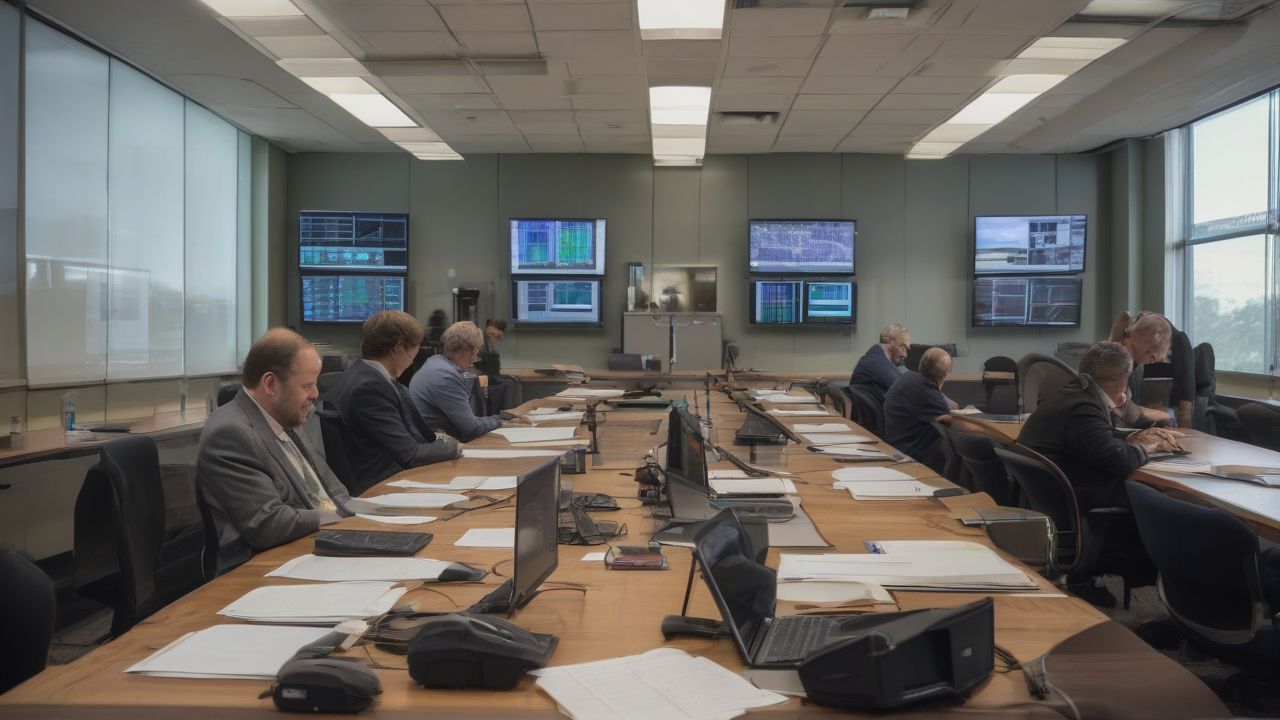
The data-center power fight has a docket number and a meeting room.
The Federal Register notice for FERC Docket No. AD10-12-017 says Commission staff will convene a technical conference on July 7 and 8, 2026, in the Kevin J. McIntyre Commission Meeting Room in Washington, to discuss increasing market and planning efficiency through improved software. The first day runs two panels: one on grid-enhancing technologies, and a second on load forecasting. [1]
That second panel is why this is a technology story, not only an energy one. The notice says load forecasting "is becoming increasingly important as the bulk power system faces historic demand growth driven in part by data centers and other large new loads." The panel is set to address forecasting for data centers and other large loads, software improvements to increase forecast accuracy, options to enhance data sharing, and the underlying assumptions and computational techniques behind the numbers. [1]
On X, a data center is either the prize of national AI supremacy or a private burden dumped on a public grid. Mainstream coverage usually asks whether utilities can build enough wires and generation. FERC's notice asks a prior, colder question: whether the software and assumptions used to forecast load are good enough to decide what gets built and who pays for it.
The agenda is not anti-AI; it is full of it. The conference's second day, July 8, is given over to individual presentations on cutting-edge research, building on prior conferences in the same series, where machine-learning approaches to operating and planning the bulk power system have been a recurring theme. The June 10 supplemental notice keeps the calendar firm, confirming the two-day structure and the panel-then-presentations format under the same docket. [1][2]
A docket is a receipt. If a vendor, grid operator, or academic wants to claim that better software can make new AI load cheaper, faster, or safer to serve, the claim belongs in the conference record, where staff and rivals can read the assumptions. If a utility wants to argue that data centers make forecasting impossible, that case belongs there too, with its computational techniques exposed rather than asserted.
The public argument has been about whether AI deserves power. The institutional question is narrower and more consequential: which forecast gets believed. That answer will shape transmission, rates, reliability, and the next decade of industrial siting, and FERC has put it in the Federal Register before anyone puts it in a victory thread.
-- THEO KAPLAN, San Francisco