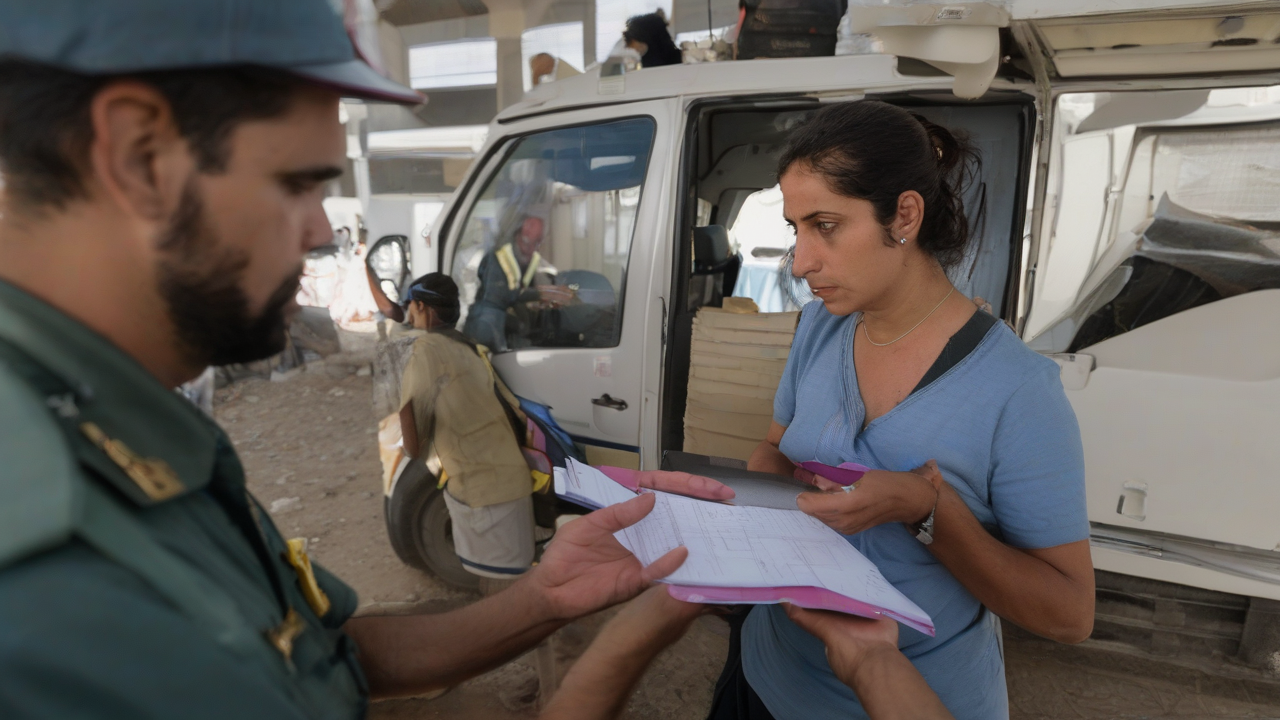
A verdict on Gaza is delivered daily online. A medical evacuation is delivered one patient at a time.
The two scales rarely meet. On X, Gaza is argued at the level of the whole — genocide or hoax, with the certainty rising as the evidence cited falls. The World Health Organization keeps a different kind of record, built at the level of a single patient. Its evacuation page explains the unglamorous mechanics: a referral form initiates the process to move a patient out of Gaza for care, but the form does not guarantee evacuation. [1] Approval, a receiving hospital, a passable crossing, and a security window must all align.
That record is where the argument should be tested. WHO's medical-evacuation snapshots track which corridors are open and which are suspended, by date, including the closure of specific crossings used to move the sick and wounded. [2] A claim about Gaza that cannot say whether a given crossing was open in a given week is operating above the data, not from it.
The United Nations humanitarian office holds the wider ledger. OCHA's occupied Palestinian territory record documents aid access, displacement, and the conditions under which any of this is possible — the slow accounting that does not trend but does hold up. [3] It is the difference between a number that fits in a post and a number that fits in a logbook.
This is the divergence the paper keeps. X is fast at moral verdicts and slow at patient manifests. Mainstream coverage — AP, the BBC — is better at the aggregate, reporting totals of casualties and trucks, but it too often skips the mechanism that decides whether one child reaches a hospital in Amman or Cairo. The mechanism is where suffering becomes specific enough to verify.
Nothing here softens the catastrophe. The point is the reverse: the catastrophe is most provable, and least deniable, at the smallest scale. A referral form with a name on it cannot be argued away by a thread. A suspended crossing on a dated WHO snapshot cannot be reframed by an outlet's house style. [1][2]
The evacuation record also assigns responsibility with precision. When a corridor closes, someone closed it; when a referral stalls, the file shows where it stopped. [2] That specificity is uncomfortable for everyone who prefers Gaza as a symbol rather than a logistics problem with patients in it.
Until a feed can name the patient, the referral, and the crossing, the loudest verdicts on Gaza are being rendered above the only evidence that counts one life at a time. [3]
-- NORA WHITFIELD, Chicago