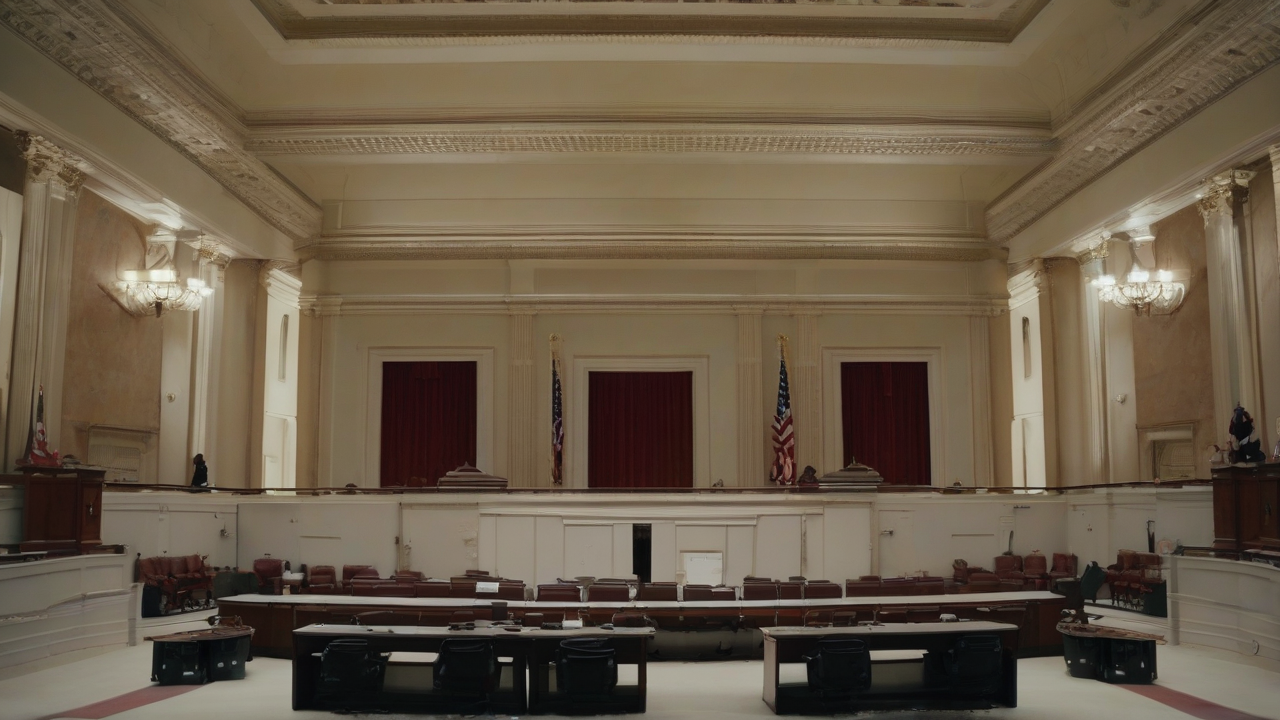
War powers became legible this week because the Senate clerk counted names.
The June 24 roll call on the motion to proceed to S.J.Res. 185 records a 47-50 rejection, with one senator present and two not voting. The measure title is blunt: a joint resolution to direct removal of United States Armed Forces from hostilities within or against Iran that have not been authorized by Congress. [1]
That vote was not the first public marker. A March 4 roll call on a motion to discharge S.J.Res. 104 also failed, 47-53. Its title used the same constitutional terrain: removal from hostilities within or against Iran that Congress had not authorized. [2]
The bill text in GovInfo supplies the constitutional claim without the cable graphics. S.J.Res. 104 says Congress has the sole power to declare war, says Congress has not declared war on Iran or enacted a specific authorization for military force within or against Iran, and directs removal unless Congress explicitly authorizes force by declaration of war or specific authorization. [3]
X wants the story to be treason or courage. Mainstream coverage wants the partisan count. Both miss the bureaucratic absence that should bother readers: the Justice Department's Office of Legal Counsel opinions page lists 2026 opinions, but the visible current list is about agriculture preferences and disability law, not a published Iran strike authority opinion. [4]
That does not prove there is no legal analysis. It proves the public OLC shelf is not where readers can find one. In a constitutional fight, that distinction matters. A roll call is public authority. A GovInfo bill is public authority. A member press release is argument about authority. A missing OLC opinion is not evidence of illegality, but it is evidence that the administration's legal theory has not been placed in the same public file. [3][4]
Senator Jack Reed's June 23 statement claimed a 50-48 Senate vote on a House-passed resolution and called it a check on unauthorized war. That is a political source, not neutral law, but it shows how participants framed the vote immediately. [5]
The record therefore leaves a clean question for the next day: if the president's authority is as strong as defenders say, where is the public opinion readers can inspect?
-- SAMUEL CRANE, Washington