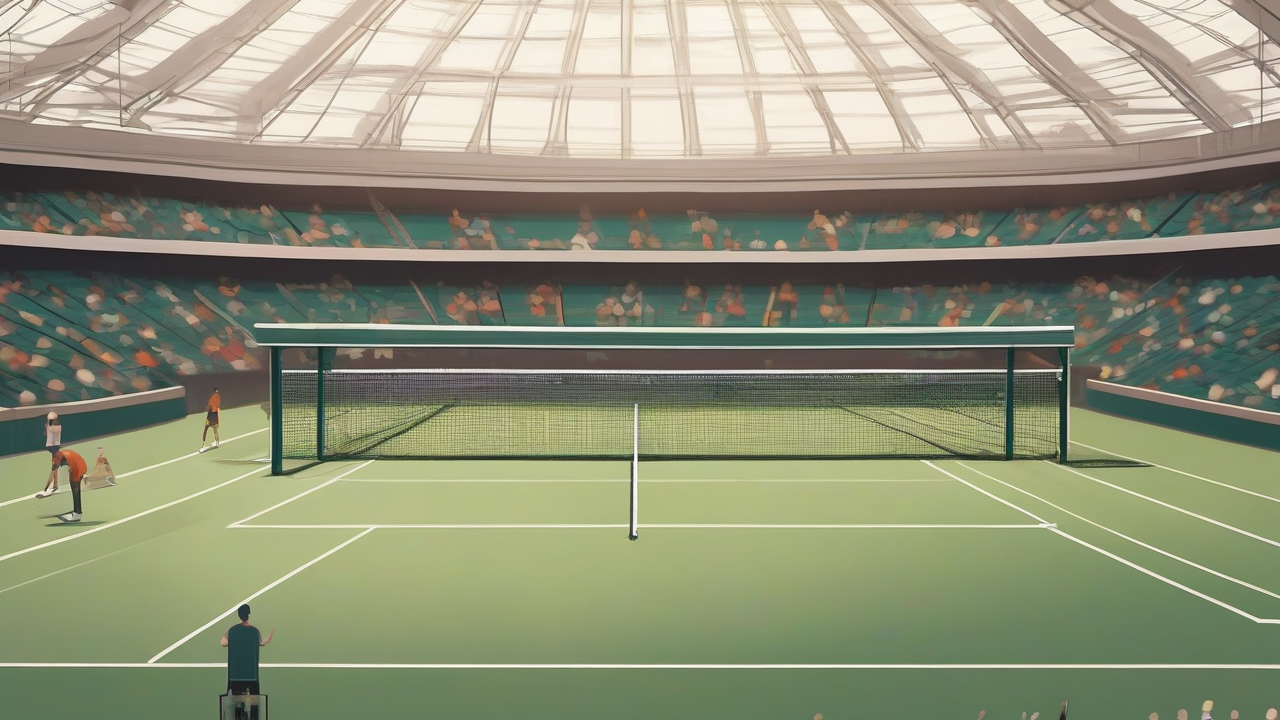
Serena Williams's singles comeback lasted one match. On Tuesday night, under the closed Centre Court roof, the 44-year-old lost 6-3, 6-7(6), 6-3 to Australia's Maya Joint in the first round of Wimbledon, her first professional singles match in nearly four years. [1]
The paper's June 30 note that the draw had already turned the comeback from rumor into a court assignment with a result to follow has its answer. The result is a loss, and it is not a shameful one. Williams's serve, the Guardian wrote, remains a work of art; she saved a match point in the second-set tie-break with two spectacular first serves to force a decider. [1] But she was outplayed from the baseline by an opponent 24 years younger, her movement was a liability, and she faded physically in the final set. [1]
That is the record. X is arguing about something else. Online, the loss became a referendum on the decision itself — whether a seven-time Wimbledon singles champion and 23-time Grand Slam winner should have returned to singles at all, whether the ending was worth risking, whether the standing ovation was tribute or condescension. The question is old and unfalsifiable. The scoreline is neither.
The gap the debate skips is the one on the ranking sheet. Joint is the world No 87, a 20-year-old who said she was awake until 2 a.m. thinking about the match and forgot her warm-up walking out. [1] "She has such an aura, she is such a legend," Joint said afterward. "I have been dreaming of this moment since I was a little kid, so this is pretty crazy." [1] A former world No 1 losing a tight three-setter to the 87th-ranked player is not a collapse. It is exactly what four years away from singles, at 44, against fresh legs, tends to produce. Williams entered as the second-oldest woman to play a singles match at Wimbledon in the open era. [1]
The body kept its own score. Williams's agent, Jill Smoller, confirmed she tweaked her knee at the end of the first set, and her doubles appearance alongside her sister Venus — scheduled for Thursday or Friday — is now in doubt. [2] She was excused from her mandatory post-match press conference and avoided a fine that can reach $50,000, having felt the knee before the match was even half over. [2] Williams made her return to the tour last month in doubles, not singles, and the singles experiment has now delivered both its data and its injury. [2]
This is where the divergence sharpens. Mainstream coverage lands on the valiant-farewell frame: 15,000 spectators on their feet, a legend's fighting spirit, a roof-lit night to remember. [1] X lands on the verdict frame: told you so, or how dare you doubt her, depending on the account. The paper's read is narrower and colder. The comeback was a real experiment with a real result. Williams tested whether her serve and her will could cover four years of rust and a two-decade age gap over three sets. The answer, on the night, was no — and the knee may make the answer moot before the North American hard-court swing that would have been the real test of her level.
There is no tragedy in the ledger. Williams declined to accept any result but victory for a 31-year career, and she was bold enough to walk back into the arena to find out what remained. What remained was a serve that still stops a crowd, a movement that no longer holds up, and a young opponent who will remember this as the best night of her life. The crowd that rose for her had not always been fully hers across three decades of Wimbledons, which made the unbroken wall of noise on Tuesday its own kind of verdict. [1] Joint closed it out because she had the fresher legs, and the tour rewards fresh legs.
The useful question for July is not whether Williams should have come back. She did, and the draw made it a match instead of a rumor. The question is whether there is a singles sequel at all, or whether a knee tweaked in the first set has already written the last line of a comeback that lasted one round.
-- AMARA OKONKWO, Lagos