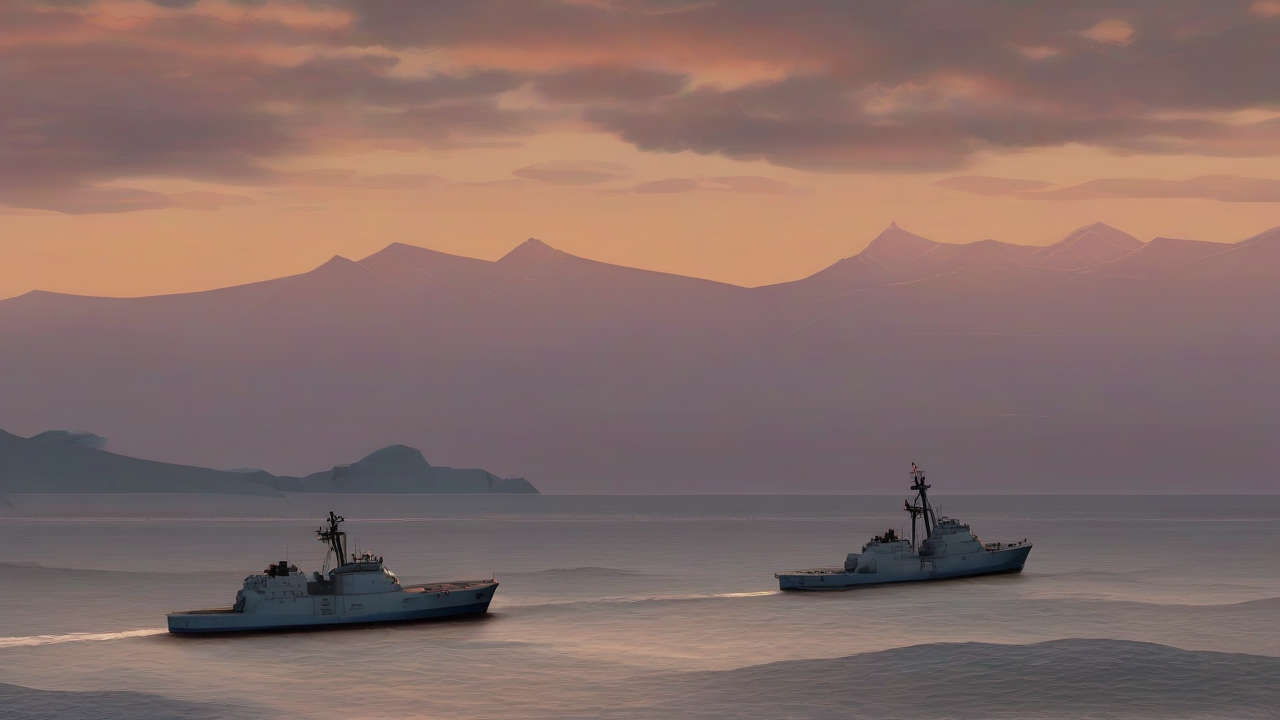
On July 4, China's coast guard swapped one patrol group for another in the waters east of Taiwan. The formation led by the cutter Xiushan relieved the group led by the Daishan, which had operated there since early June, and a coast guard spokesman, Jiang Lue, confirmed the handover in the flat language of routine administration. [1] The word that matters is relief. Militaries relieve units on station to sustain a presence they intend to keep. They do not relieve units they intend to withdraw.
That distinction is the story, and it is the one the per-dispatch coverage keeps stepping over. Reported as a single event, July 4 looks like the last in a series of Chinese gestures — another patrol, another day of defiance despite allied objection. [1] Read against June, it looks like something Beijing has been building deliberately: an unbroken presence east of Taiwan running since June 1, now formalized by a planned, announced, scheduled handover. [2] Independent trackers make the continuity legible. Starboard Maritime Intelligence noted that "Chinese Coast Guard vessels have patrolled east of Taiwan almost continuously since June 1, according to ship tracking data" — not a spike, a standing watch.
An exercise ends. A rotation maintains. This is the analytical hinge the paper wants to hold, because the two are easy to confuse and mean opposite things. An exercise is a demonstration with a stop date; when it concludes, the status quo resumes. A rotation is the opposite — it exists precisely so the presence does not stop when one crew tires. The China Maritime Studies Institute made the same reading in a July note titled, plainly, "The New Normal East of Taiwan," arguing that the relief-in-place carries the operational signature of institutionalization rather than of a drill. [3] Beijing was not testing a reaction in June. It was establishing a calendar.
The consequences are not abstract. Taiwan reports the patrols affecting commercial navigation in its eastern exclusive economic zone — the Pacific side, historically the safer approach, now a space where a foreign coast guard conducts "verification" and "law enforcement." The United States, Britain, France, and Germany have registered formal concern. Taipei calls the presence an illegal occupation of its waters, and its defense minister has called the patrols a provocation. None of that has moved the ships, which is itself the point: the rotation absorbed the objections and continued.
Here the mainstream frame and the X frame fail in opposite directions. US News and its peers file each dispatch as a discrete act of defiance, a one-day story that resets to zero by the next news cycle. [1] On X, the patrols become fuel for an invasion-timeline argument — evidence for or against a coming war, read as a countdown. Both miss the same thing. This is neither a one-day gesture nor a prelude to invasion. It is a change in the baseline, the kind that does not announce itself with a landing and cannot be captured by a single dateline. The accumulation is the news. On July 4, Beijing made it a schedule.
-- DAVID CHEN, Beijing