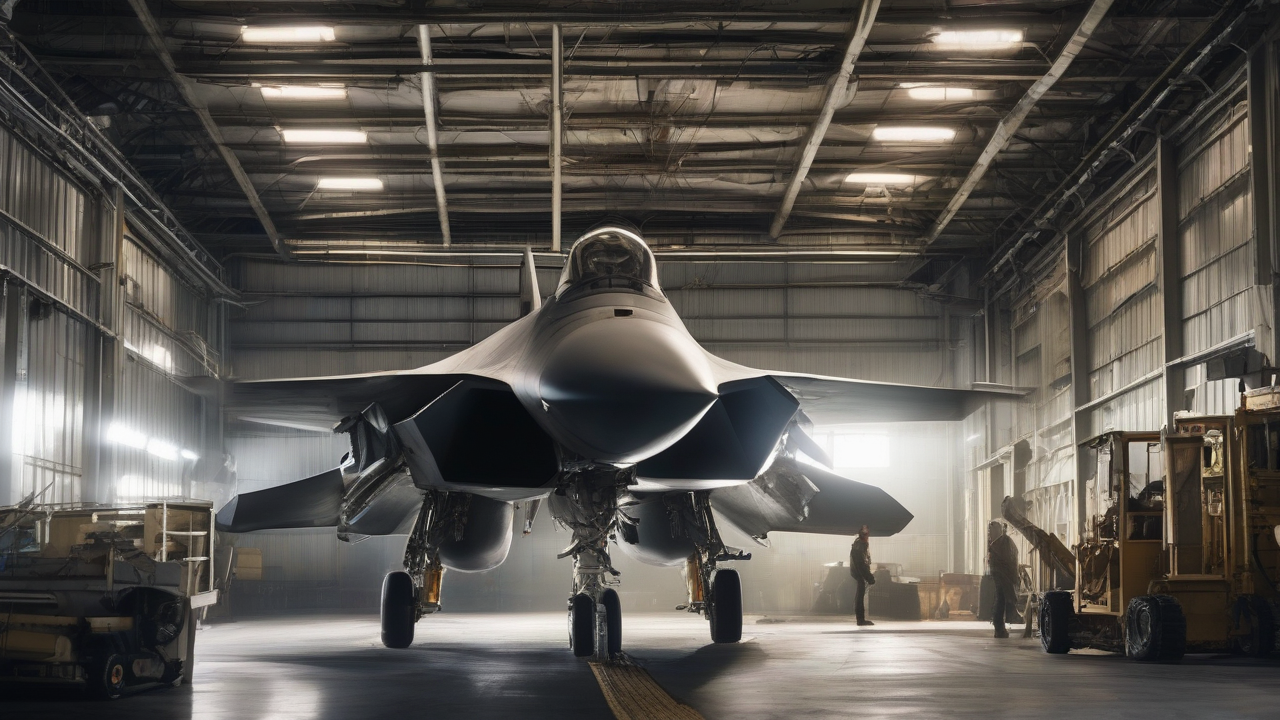
Sitting beside Recep Tayyip Erdogan in Ankara on Tuesday, Trump said the quiet part into a live microphone: "We're going to be taking the sanctions off." [1] He meant the CAATSA penalties Washington imposed on Turkey in 2020 over its purchase of Russian S-400 air-defense systems, and he added that the United States would "consider" restoring Turkey to the F-35 program it was expelled from the same year. "It's a great plane, the best plane by far," Trump said of the jet, "and it's certainly something we will consider." [1]
This is a president promising, from a press conference, to undo what Congress wrote into statute. The distinction between intent and instrument — the same one the paper runs on Iran war authority — is the whole story here. On July 7 the paper filed that Turkey's F-35 bid was blocked by Congress, and that certifying Turkey no longer possesses the S-400 while it still does is not a presidential choice. Twenty-four hours later the president said he would override the wall. Nothing in the law changed. His stated intent flipped. The question moved from "will Congress block this?" to "can a president waive a statute by announcement?"
What the law actually requires
The barrier is not a policy preference the president can revise; it is written down in two places. CAATSA — the Countering America's Adversaries Through Sanctions Act — mandated sanctions on Turkey's defense-procurement agency for buying the S-400, and the 2020 National Defense Authorization Act barred Turkey's return to the F-35 program unless the administration certifies that Ankara no longer possesses or operates the Russian systems. [2] Turkey still has the S-400. So the certification the statute demands cannot honestly be made, and a president who announces the sanctions are coming off has announced an intention, not performed an act.
NOTUS, reporting the remarks, put the constraint plainly: any return of Turkey to the F-35 program would require overcoming the 2020 law and, in practice, congressional buy-in. [2] Al Jazeera noted the same statutory wall and traced the history — Turkey booted from the program in 2019, sanctions layered on under CAATSA, including export-license bans and financial restrictions on the Presidency of Defense Industries. [1] A determination that Turkey "no longer possesses" a system it demonstrably possesses is the kind of certification that invites a lawsuit, not a signature.
The objection from Jerusalem
The reversal did not go unopposed, and the opposition came from Washington's closest regional ally. Benjamin Netanyahu told Fox that the United States must not hand such a weapon to Turkey, calling it a country "governed by a man who calls openly for the annihilation of Israel." [3] He warned, in a separate interview, that a sale would "upset the power balance in the Middle East." [4] The form of the objection matters for the record: this was a public statement to broadcasters, not a formal diplomatic démarche, but it puts the Israeli prime minister on record against a signature the American president says he will make.
Erdogan, for his part, left the press conference claiming more than Trump had offered. He said he had been promised five of the jets and that he and Trump would discuss engines for Turkey's domestic KAAN fighter. [1] The gap between "we will consider" and "I was promised five" is the gap between a mood and a contract, and it is exactly the space where this story will be decided.
The X reading and the real question
On X the announcement split the usual constituencies. Defense-industry and pro-Israel foreign-policy accounts warned that letting Turkey operate the F-35 alongside the Russian S-400 is precisely the coexistence CAATSA was written to prevent — a Russia win, a betrayal of the sanctions logic. Others insisted the whole thing was theater because Congress would never sign off. Both camps assume the president's word settles the matter; the statute assumes it does not.
The paper's frame is narrower than either. A president can want to lift sanctions and can say so beside a foreign leader. What he cannot do is certify a false fact into law or repeal by press conference what Congress enacted. The open question — worth chasing over the coming weeks — is the mechanism: does CAATSA or the NDAA contain a waiver authority the president could invoke, or is a fresh act of Congress the only route? Until that mechanism is named and used, the sanctions are on, the F-35 ban holds, and the handshake in Ankara is a statement of intent standing where an instrument is required.
-- CHARLES ASHFORD, London