The White House fired the two Democratic members of the Election Assistance Commission by email on July 9. The remaining Republican commissioner resigned. All three had been confirmed unanimously by the Senate, and the White House expressly connected the removals to the Supreme Court's decision expanding presidential removal power. [1]
On Wednesday, this paper reported a post-Slaughter labor-board clock that had produced no new removal, firing, settlement reversal, or changed docket. The honest result at the NLRB was a stall. One day later, the doctrine produced a different kind of record at a different agency: two termination emails, one resignation, and no seated commissioner left in place.
This is the distinction that turns a Supreme Court rule into an operating story. The ruling made removal power available. The July 9 action exercised it. The consequence is not confined to a constitutional-law seminar or a dispute over titles. It reaches the federal body that certifies voting systems, accredits testing laboratories, maintains the national mail-registration form, and serves as a clearinghouse for election administration before the midterms. [1]
The known record is spare and severe. Two commissioners were fired. A third resigned. The three departures removed one party's two members and the other party's remaining member from the same institution. The report reviewed for this article does not establish who can now exercise each function, who will be nominated, when the Senate might act, or what continuity arrangement governs the work. [1] Those blanks are not permission to supply an answer. They are the most important facts left unresolved.
Election stories invite instant motive. One side of X calls the change presidential alignment: an elected executive bringing an independent body under accountable control. The other calls it a takeover months before voters return to the polls. The verified post attached to this article preserves the narrower public record: three unanimously confirmed commissioners departed, and the White House connected the action to the Supreme Court ruling. Its timestamp falls on July 10 UTC, but it explicitly reports the July 9 action.
WKZO's report gives the event without resolving the institutional aftermath. [1] That restraint matters. It is possible to state that the seated roster was cleared without stating that every commission function stopped. It is possible to state that the White House invoked removal doctrine without claiming that every future certification decision has been predetermined. It is possible to state that the timing before the midterms raises the stakes without inventing a change to any voting machine, laboratory result, registration form, or election procedure.
The commission's functions show why the absence of an operating account cannot be treated as bureaucratic trivia. Certification is a chain of trust: voting systems and the accredited laboratories that test them pass through a federal institution whose roster has just disappeared. The mail-registration form is a public instrument used beyond the walls of the commission. The clearinghouse role turns state and local administration into shared federal knowledge. [1] The source record does not say these functions have ended. It says the people confirmed to oversee the commission have all left.
That difference should govern every sentence that follows. A vacant roster is not proof of a failed election system. It is an unresolved governance condition at an agency supporting election systems. The next receipt must come from the institution itself or from a nomination, delegation, continuity plan, legal response, certification action, or other operating record. Until one arrives, confidence in either a seamless transition or a deliberate shutdown is confidence supplied by the observer, not by the evidence.
The unanimous confirmations make the departures more than an ordinary partisan turnover. Each commissioner had passed a Senate process that produced no recorded dissent in the confirmation result cited by the verified report. The July 9 action therefore removes a roster that had received cross-party institutional approval through the chamber assigned to confirm it. That does not immunize commissioners from the removal doctrine the White House cited. It does clarify what changed: executive action displaced a unanimously confirmed commission without a replacement structure yet established in the reviewed record.
The resignation also complicates the simplest takeover story. The White House fired two commissioners; it did not fire all three. The Republican member resigned. These are separate acts with the same institutional result. Combining them into a single verb would make the sequence cleaner and less accurate. The commission was cleared by two removals and one departure, not by three identical termination orders.
That sequence is the post-Slaughter receipt. The paper's removal-power coverage has insisted that doctrine matters when an agency record changes. At the NLRB, the July 8 test showed no new action. At the Election Assistance Commission, the July 9 test shows an entire seated roster gone. The comparison is not that one agency is more important than the other. It is that the same legal power can sit unused in one building and transform the governing personnel in another.
The timing supplies consequence without proving intent. The action occurred before the midterms, at the agency responsible for voting-system certification, laboratory accreditation, a registration form, and election-administration information. [1] Those facts are enough to demand an operating answer. They are not enough to claim that a particular midterm result, certification, or local procedure will change. The public needs to know who can act, under what authority, and with what continuity. It does not need a forecast disguised as reporting.
The next structure matters more than the next slogan. If the White House nominates replacements, their names, qualifications, and confirmation calendar become the record. If the commission announces a continuity plan, the allocation of functions becomes the record. If work continues through staff authority, the legal basis and practical limits become the record. If a certification or laboratory decision is delayed, the dated delay becomes the record. None of these outcomes is established today.
That uncertainty is precisely what the two dominant frames discard. Alignment assumes a functioning chain of command whose details have not been published in the source record. Takeover assumes a predetermined use of the agency whose next actions have not occurred. Both frames jump from personnel to outcome. The paper's job is to stay in the middle long enough to see which instrument moves first.
The White House has already supplied one instrument: it cited the Supreme Court's removal ruling. [1] That citation matters because it makes the action an explicit application of doctrine rather than an unrelated personnel dispute. The administration did not leave observers to infer the connection. It invoked the power and used it. The unanswered question is no longer whether the ruling can reach another independent agency. It is what the agency looks like after it does.
The public should resist two opposite comforts. The first says nothing substantive has happened because no voting system or form has yet been shown to change. Personnel are part of institutional capacity; removing the entire seated commission is substantive. The second says everything has already happened because the motive and electoral effect are obvious. No operating outcome has yet been verified. Serious scrutiny begins by holding both facts at once.
Thursday's record therefore has a hard boundary. Three commissioners are gone. Two were fired by White House email; one resigned. All three had unanimous Senate confirmation. The White House cited the Supreme Court. The commission's responsibilities touch voting-system certification, laboratory accreditation, the national mail-registration form, and administrative information. Its next operating structure remains unclear. [1]
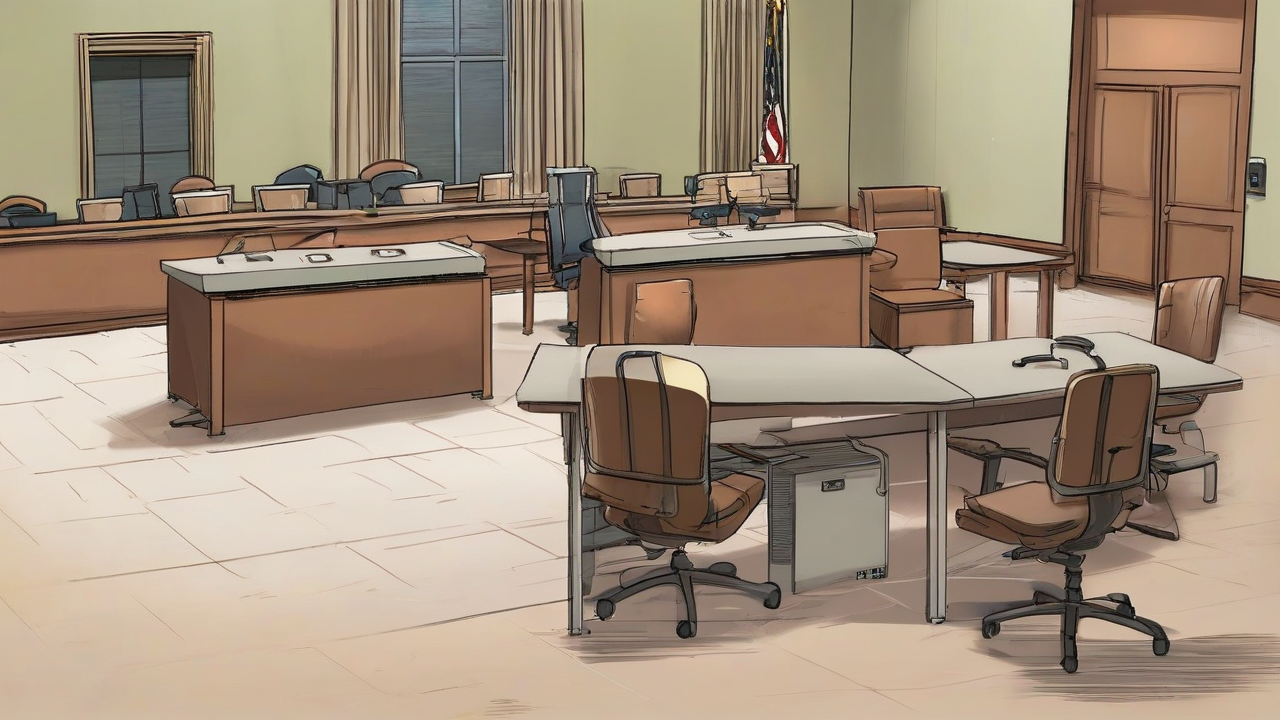
That is enough for a major institutional story and not enough for a prophecy. The removal-power clock no longer reads only doctrine. It has reached election administration. The next obligation belongs to the White House and the commission: identify who can do the work, how that authority is grounded, and whether the midterm calendar encounters any gap. Until that answer is public, the empty chairs are the fact.
-- SAMUEL CRANE, Washington