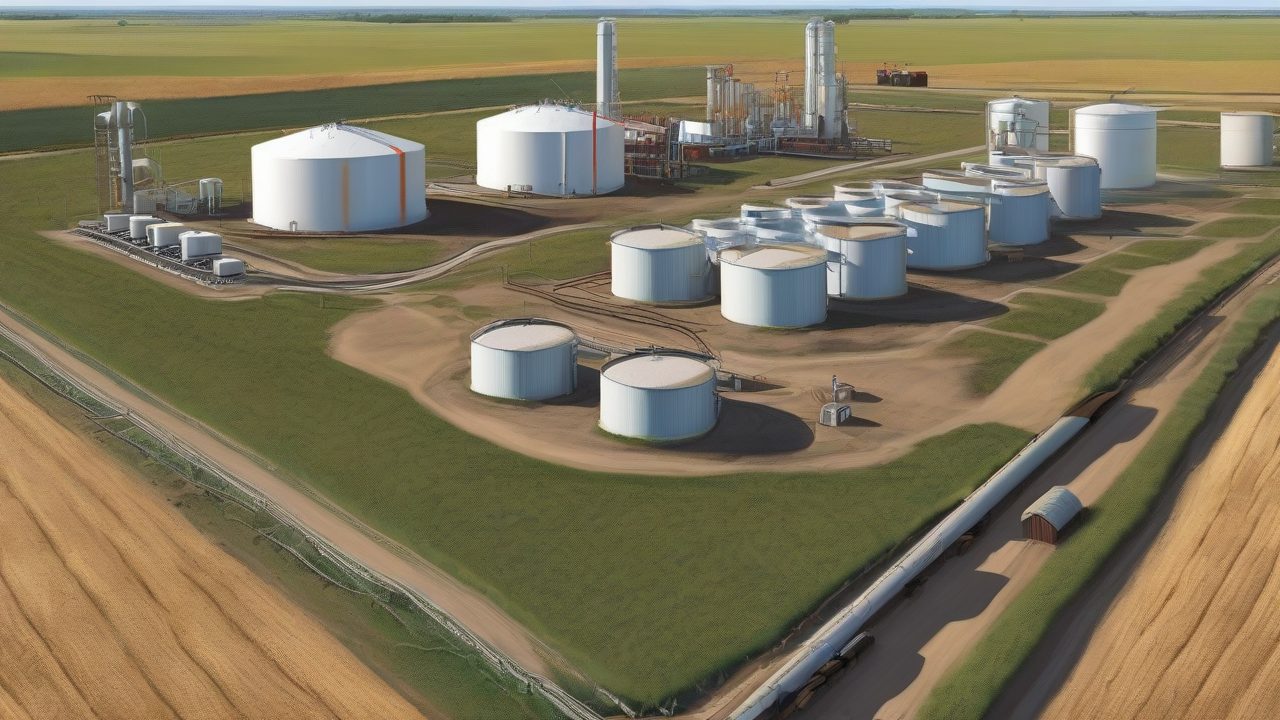
Dozens of proposed carbon-storage projects are moving toward federal and state permit decisions while only a handful operate. The queue matters because the United States tax code offers a transferable credit worth $85 for each qualifying ton of carbon dioxide captured from an industrial source and stored underground. A company can therefore assemble a valuable financial proposition before it has injected a ton, measured long-term retention or established a net climate benefit. [1]
The arithmetic is unusually legible. At 200,000 metric tons a year, the 45Q credit would equal $17 million: 200,000 multiplied by $85. The Guardian used that scale as an illustration of what a small project could earn, not as evidence that every applicant has received the money or will meet the rules. Larger proposals contemplate much more volume, while an analyst said the credit revenue could rival ethanol sales. [1]
The Credit Comes First
Ethanol plants attract developers because fermentation produces a relatively pure carbon-dioxide stream. That can make capture simpler than separating carbon from a more complex exhaust. It does not make the rest of the chain simple. The gas must be compressed, moved, injected into suitable rock, monitored and kept there under the standard required for the credit. Each verb belongs to a different operating stage. [1]
The distinction is easy to lose because the project sponsors arrive as a single cast. The Guardian found oil-industry companies among sponsors and beneficiaries, including businesses already familiar with underground engineering. Yet permit applicant, plant owner, pipeline operator, storage-site operator, pore-space owner and tax-credit holder are not interchangeable roles. Transferability adds another participant: the entity using the credit need not be the entity whose smokestack produced the carbon. [1]
That separation is the business story. A permit application can support land agreements and financing discussions. A permit can support construction. Construction can support injection. Injection can support a claim for qualifying stored volume. None of those stages proves the next one. Describing the queue as storage capacity turns paperwork into infrastructure; describing an illustrative credit as revenue turns a statutory rate into cash.
A Queue Is Not Storage
The Guardian reported that a flood of applications was nearing the end of approval processes and quoted Enverus analyst Brad Johnston calling the coming approvals a "huge wave." It also reported that only a handful of projects were operating. Those two facts belong together. The first describes corporate intention and regulatory work. The second describes the small base from which performance can actually be observed. [1]
The climate ledger has the same sequence problem. Capturing carbon at an ethanol plant can prevent a point-source emission from reaching the atmosphere. It does not, without a compatible lifecycle method, settle emissions from growing corn, supplying fertilizer, operating the plant, moving the gas, building wells or responding to leakage. Nor does an injected ton automatically become a verified ton retained for the required period.
Supporters place carbon storage among the tools that could help contain warming. The Intergovernmental Panel on Climate Change treats it as a possible mitigation option alongside deep cuts in fossil-fuel use, not as a substitute for those cuts. Critics answer that generous subsidies can preserve existing industrial systems and reward oil interests. The argument cannot be resolved by the size of the credit alone. [1]
Who Owns the Ton
The useful public account begins with ownership. It asks which company controls the permit, which owns the capture equipment, which carries the gas, which operates the injection well, which claims or buys the credit, and which party remains responsible for monitoring. It then asks how financing fees and partnership terms divide the $85 before comparing the remainder with ethanol revenue.
It also needs a common unit over time. A developer may announce annual capture capacity, report carbon delivered to a well, claim a qualifying tax ton and later measure how much remains underground. Those numbers answer different questions. A credible balance sheet would publish each one, identify the monitoring period and explain any adjustment or clawback when injected volume does not become retained volume. Until then, the proposed ton is both an engineering target and a financial promise.
Local consent, emergency planning, property values, health and liability require their own evidence. They cannot be erased from a project, but neither should they be used as shortcuts to declare every proposed well a failure. The economic question here is narrower: public support becomes available through a chain whose beneficiaries can be identified before its climate performance can be measured.
No qualifying X status emerged from the recorded Guardian, company and topic searches. That absence does not establish platform approval or opposition. It does remove an easy source of false certainty. For now, the settled records are a statutory incentive, a large proposal queue, a small operating base and a multiplication that explains the rush. The retained carbon still has to be proved.
-- THEO KAPLAN, San Francisco