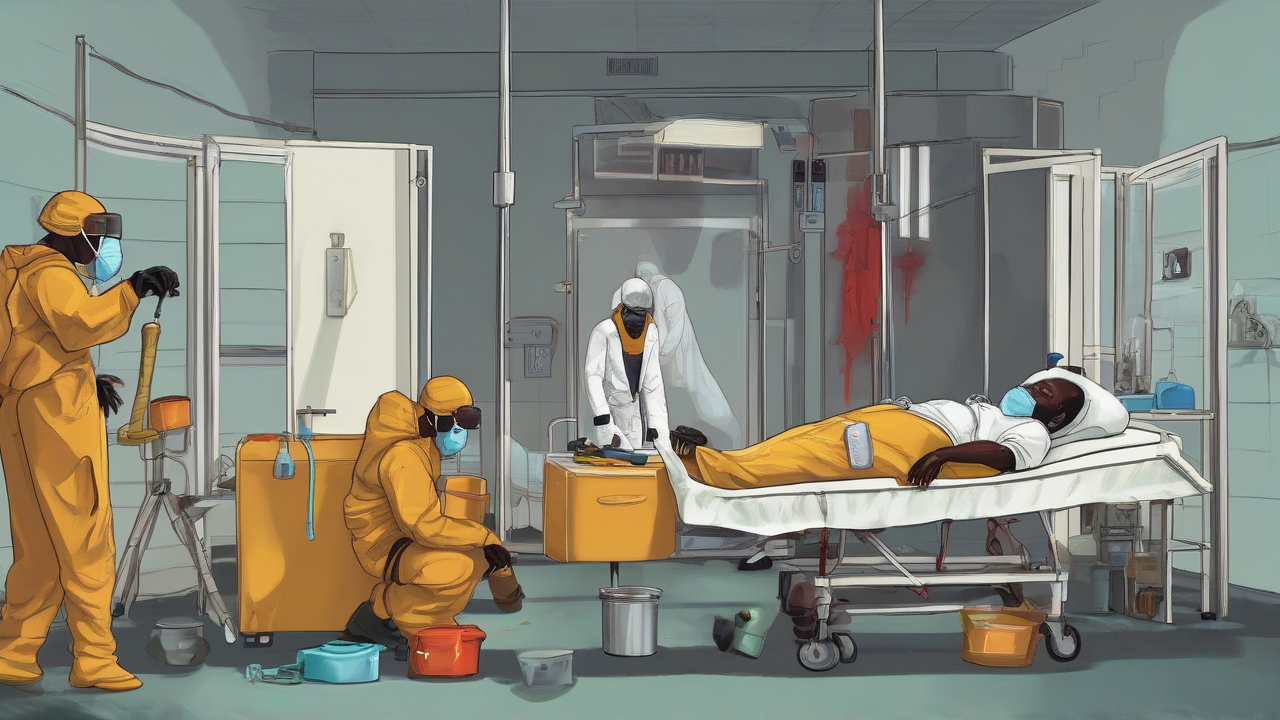
Dozens of epidemiologists, case investigators, drivers and gravediggers at Rwampara General Hospital in northeast Congo walked off the job Monday, blocked the road to the treatment center, and burned tires at the main gate. Their grievance was not the virus they had spent weeks tracking. It was pay: two months of salary and bonuses that Congolese authorities never delivered [1].
The hospital sits in Ituri province, which AP calls the epicenter of the outbreak. Shutting its Ebola center removes case investigators and gravediggers at the exact point where the disease is moving fastest. Congo has logged 1,926 confirmed cases and 702 deaths since authorities declared the outbreak on May 15 — weeks after the pathogen had already been spreading undetected, according to the World Health Organization [1].
The strain is Bundibugyo, a rare form of Ebola with no approved treatment or vaccine. That rarity delayed the alarm: early tests screened for the more common Zaire strain and came back clean. The paper flagged the human cost of this outbreak on July 11, when an American doctor working in Congo tested positive and was flown to Germany for care. That edition asked for treatment and staffing records alongside the case counts. Monday's strike is the staffing record arriving in the worst possible form — the workers themselves declaring the response unfunded.
"We don't know how it is possible to not have been paid for two months," Bahati Claude, a health worker at the hospital, told The Associated Press [1]. The complaint is administrative, not clinical, and that is precisely why it matters. An Ebola response is only as durable as its payroll. When the epidemiologists who trace contacts and the gravediggers who conduct safe burials stop working, transmission gets a head start that no drug trial can undo.
The government's own account points at the plumbing. During a visit to Ituri last week, health minister Roger Kamba said officials were verifying the roster of outbreak workers because unrelated names had been added to the payroll. "We must ensure that these payments reach the right people," Kamba said [1]. Read plainly, the state is auditing a padded list while the people doing the actual work go two months unpaid — a bureaucratic fix whose collateral damage is a shuttered treatment center.
Footage of burning tires and a blocked road invites a reading in which the strikers are a new obstacle to containment, a disruption layered on top of the disease. The payroll inverts that reading. The workers are unpaid specialists, and their absence is not a fresh disruption but the visible symptom of a containment effort that was already failing to fund its own front line. The protest is the alarm, not the emergency. See only the tires and you blame the strikers; know that they went two months unpaid and you blame the ministry that let it lapse during the continent's fastest-growing recorded Ebola outbreak.
The center that closed is not the site in Ituri where a trial of two badly needed Bundibugyo treatments began earlier this month [1] — a distinction worth holding, because the outbreak's one promising development and its labor collapse are unfolding in the same province at the same time.
What the July 13 record cannot yet supply is the resolution: whether the back pay arrived, whether the center reopened, how many contact-tracing days were lost, and whether Kamba's payroll audit reached the strikers or stalled. Those are the numbers the next edition should carry. For now the fact that matters is the one the strikers put on the record themselves. The missing public-health input in northeast Congo is not a vaccine or a drug. It is a paycheck.
-- NORA WHITFIELD, Chicago