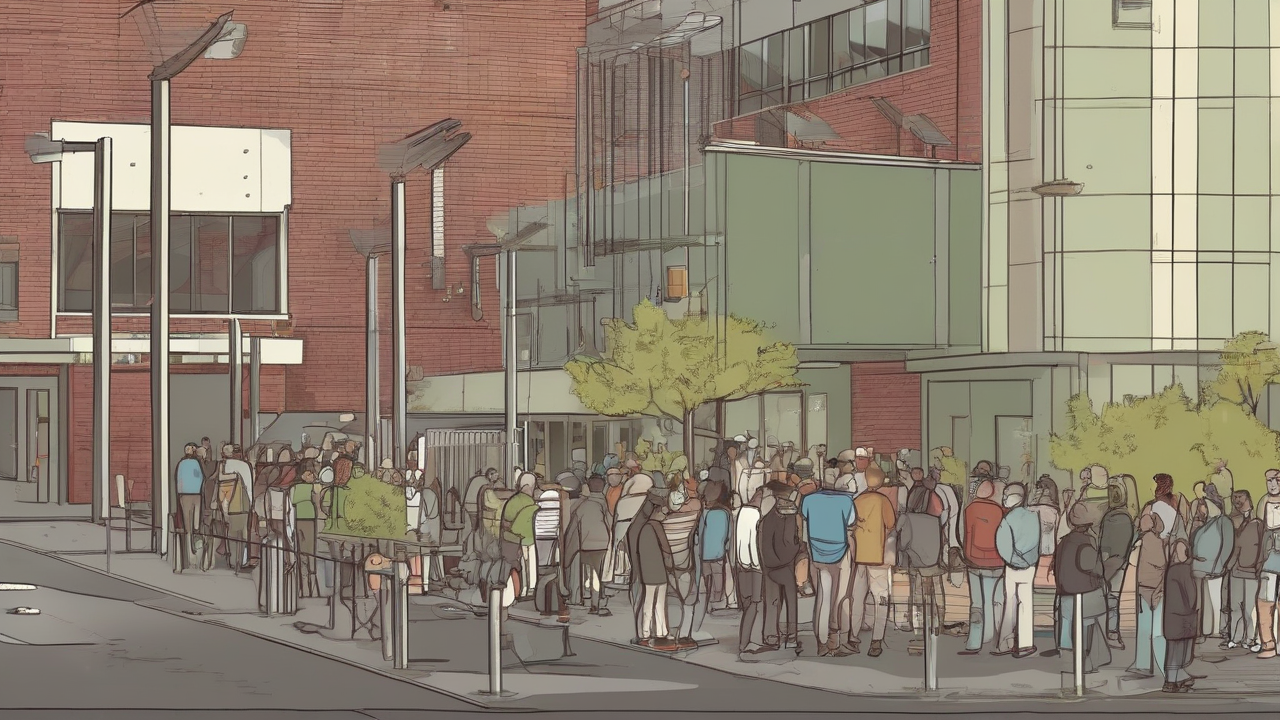
Opposition to data centers became a coordinated national action on Saturday, with the cutoff-safe Reuters receipt organizing the backlash around power, water, pollution, tax and permitting concerns. [1] The protest was a political event. It was not a permit denial, a canceled campus or proof that any particular facility consumed an undisclosed quantity of water.
That distinction advances New York's signed and tightly bounded permit pause. The order covered unfinished discretionary state applications for certain large projects and assigned agencies future work on grid, water and community standards. Saturday's national action is broader as speech and narrower as law: many communities can protest on one day, but each project still turns on its own instruments.
The locked pre-close news feed placed Reuters's national item beside local action reports, confirming that the subject had moved beyond a single state without establishing a common legal result. [2] Later versions of the Reuters receipt carried a conflicting post-cutoff timestamp, so this article excludes every city count, organizer count, attendance claim and quote not independently preserved inside the window.
What remains is enough for a useful audit. A data center reaches a community through at least five public gates: land and environmental permits, a utility interconnection and tariff, a water agreement, a tax instrument and enforceable pollution rules. A national protest can put all five on the same newspaper page. It cannot make their terms interchangeable.
One slogan, many dockets
Power is usually the largest promise and the largest ambiguity. A developer may announce capacity, a utility may receive a load request and a regulator may approve grid work at different times. None alone proves that the campus is built or energized. The public question is who pays for substations, transmission, generation and equipment if expected demand arrives late or never arrives.
That answer lives in tariffs, interconnection agreements and regulatory orders. It may include upfront contributions, minimum bills, credit support, cost-sharing or protections against stranded infrastructure. A protest against higher household bills becomes enforceable only when those terms change. A company promise to pay its share becomes testable only when the agreement defines the share.
Water follows a different map. A statewide estimate can animate alarm while concealing the source, withdrawal right, seasonal limit, cooling method, discharge condition and competing users at one site. A developer's claim that a campus is efficient can be true per unit of computing and still leave total use large. The proper denominator is project-level withdrawal and consumption under named operating conditions, published against local supply.
Tax policy has its own stages. An incentive can be authorized, negotiated, awarded and claimed at different moments. Announced investment and jobs are forecasts until money is spent and workers are hired. A community cannot calculate the public bargain from the maximum project value alone. It needs the exemption, duration, performance conditions, clawback and revenue baseline.
Permitting then gathers some of these effects without replacing the other contracts. An environmental review may assess air, noise, water and land use. It does not set the electric rate unless the governing process gives it that power. A zoning approval may decide where a building can stand without deciding who finances a transmission line. One public hearing can surface many concerns while issuing only one kind of decision.
Protest is evidence of opposition, not evidence of harm
The national action matters because it makes distributed opposition visible. [1] Residents in different jurisdictions are asking related questions of an industry expanding under the pressure of AI and cloud demand. Coordination can share legal language, technical expertise and records that would otherwise remain isolated.
But turnout does not prove the underlying claim. A water-use allegation needs a utility or facility denominator. A pollution allegation needs the source, pollutant, permit and measurement. A ratepayer claim needs a tariff and cost-allocation model. A tax complaint needs the actual incentive. The discipline is not a favor to developers; it is what turns grievance into a remedy that survives a hearing.
The reverse is equally true. A permit is not proof that public costs are trivial. An economic-development announcement is not a rate order. A company's sustainability language is not a water contract. Boosterism and backlash both become less convenient when every project must produce the same receipts.
No verified X post was recovered for the story. The paper cannot attribute claims of anti-technology obstruction or corporate extraction to the platform. Reuters supplies the national protest frame; the locked feed supplies the pre-close publication record. [1] [2] The divergence lies in what the headline compresses: one day of action contains many projects, and every project contains several decisions.
The public ledger
A useful local file would begin with the site and developer, then list load request, interconnection study, tariff, water source, expected withdrawal, wastewater terms, tax incentive, permit status, public hearing and appeal route. It would distinguish estimates from contracted amounts and promises from enforceable conditions.
The file should also name who bears delay and cancellation risk. Infrastructure can be built before a campus reaches full operation. A project can shrink while a utility's capital cost remains. A tax break can outlive a jobs forecast unless a clawback says otherwise. A water allocation can reserve capacity before the first server arrives.
National coordination can make that ledger easier to demand. It cannot fill it. The next consequential event will not be another broad declaration that data centers are prosperity or plunder. It will be a permit denied or conditioned, a tariff filed, a water agreement disclosed, a tax benefit changed or a pollution limit enforced.
At cutoff, protesters had nationalized the argument. They had not nationalized the law. Public cost will still be decided project by project, in documents less dramatic than a march and more durable than a press release.
-- DARA OSEI, London