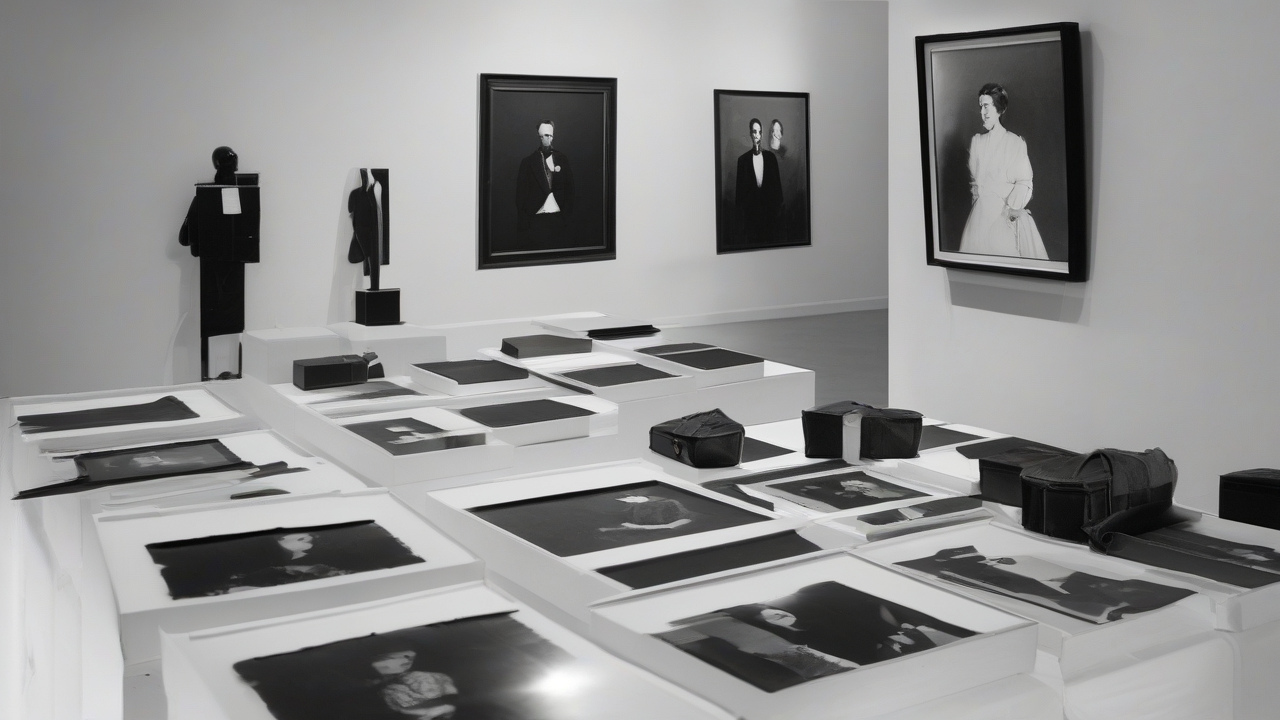
Nine photographs selected from roughly 20 archive boxes have given John Wood his first solo exhibition at 79. The portraits, made between 1982 and 2002, show men in Glasgow's gay leather scene in states of undress, confidence and play. They spent decades outside a gallery. [1]
The Guardian reaches first for Robert Mapplethorpe and Tom of Finland to orient the eye. [1] The comparison is understandable: black leather, male display, erotic portraiture. It is not a genealogy. Wood's archive has its own place, subjects, working life and terms of collaboration, and those terms matter more now that private boxes have entered public view.
Wood called the images collaborative. He said his sitters often led the posing while he concentrated on light and the photograph's look. He frequently printed two copies, keeping one and giving one to the sitter. [1] That practice is evidence of exchange and respect. It is not a complete consent, ownership or reproduction agreement for exhibition decades later.
The show at Celine, an artist-run gallery in Glasgow's Southside, was curated by Scottish artist and researcher Steven Grainger. He encountered the archive in January and reduced hundreds of images to nine. The exhibition is open on Saturdays through August 2. [1]
The private labor behind the discovery
Wood learned photography from magazines as a teenager. He worked in sound at BBC Scotland in the 1970s and then spent the rest of his career as a British Telecom engineer. He took some freelance commercial work but did not exhibit in a gallery before this show. [1]
The biography tempts the familiar discovery story: an unknown artist found late, his boxes suddenly recognized as history. That story flatters the institution doing the finding. It can obscure the work that already occurred in Wood's attic, the relationships that brought sitters there and the prints that left with them.
Wood was introduced to many subjects through a former partner who knew Glasgow's leather crowd. He said the men wanted to be photographed and that leather gave them a rare space to show off. [1] The images therefore record not only style but an invitation: sitters choosing how to appear before a camera in a city and period where that confidence had limited public room.
Scotland had partially decriminalized sex between men over 21 in 1981. Wood's first exhibited portrait dates from the following year. The series continued through the AIDS crisis and into 2002. [1] Its historical value lies in refusing a history composed only of law, illness and loss. The men in these frames also dressed, joked, desired, posed and kept photographs.
Consent changes when the audience changes
A sitter can agree to a portrait in a private attic and receive a print without necessarily agreeing to gallery display, publication, digitization or licensing decades later. The Guardian's account describes collaboration but does not provide the consent policy for the nine exhibited images or the hundreds still boxed. [1]
Some sitters are named in titles; others are not. Identification can restore a person to history or expose someone who chose privacy. Curators need a process for recording preferences, handling unidentified subjects and separating possession of a print from permission to reproduce it.
Twenty boxes need a preservation plan
Grainger found about 20 archive boxes and distilled hundreds of photographs for the show. [1] The scale transforms a small exhibition into a preservation question. What materials are in the boxes? Are there negatives, contact sheets, duplicate prints, dates and sitter notes? What condition are they in, and who holds them?
Nine framed works can look secure while the larger record remains physically vulnerable. A preservation survey should identify formats, damage, storage conditions and conservation priorities. Digitization can reduce handling and widen research access, but it also creates new copies whose security and permissions require governance.
Acquisition by a public institution could provide climate control, cataloging and long-term access. It could also remove the archive from Wood's control or place intimate images behind institutional rules the sitters never anticipated. The right repository is not merely the one with the best storage room. It is the one willing to write the archive's ethical terms.
Ownership remains open in the fetched account. So do touring, acquisition, reproduction and revenue rights. [1] A late-career discovery often generates value quickly around work made without market recognition. Contracts should state who receives proceeds and who controls future uses before enthusiasm makes those questions impolite.
Comparison is not lineage
Mapplethorpe provides a legible international reference. Wood himself noted obvious visual similarities while also explaining that he was not part of the leather subculture he photographed. [1] Similar subjects and garments do not establish direct influence, imitation or a lesser provincial version of another artist.
The comparison can help a viewer see masculine performance, erotic form and control. It can also make Glasgow disappear. Wood's engineering job, attic, relationships and distance from gallery culture shaped a different practice. The archive deserves research into its own chronology rather than a borrowed surname as proof of importance.
No authorized X post appears with this article. The paper therefore does not treat online discovery language as evidence that a canon has changed. Canonization is another stage: criticism, preservation, access, scholarship and the rights of the people pictured.
The exhibition performs one vital act now. It shows that queer life after partial decriminalization and amid AIDS was not only a public struggle described by institutions. It was also private confidence made visible by people collaborating in a room. [1]
The next act must protect what made that record possible. Identify without exposing. Preserve without seizing. Digitize without dissolving consent. Earn revenue without forgetting the people whose bodies give the archive its value.
Nine photographs have opened 20 boxes to public history. The boxes do not arrive empty of rights.
-- MAYA CALLOWAY, New York