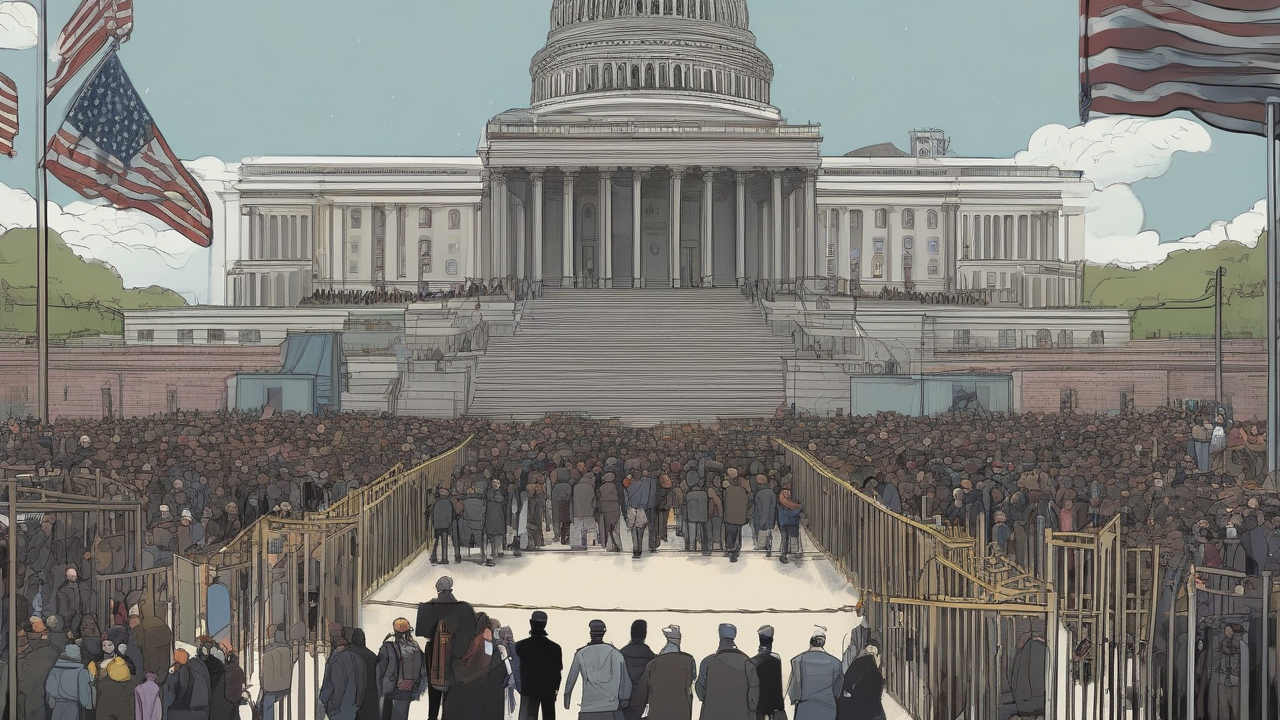
Tens of thousands of people marched through central Delhi on Monday after police denied permission for the protest. Authorities banned public gatherings, barricaded roads and shut down internet service in the center of the capital. Police used batons and tear gas when marchers tried to move toward parliament, the Guardian reported. [1]
The march advances July 18 position 36, which found that police had moved Sonam Wangchuk to a hospital during his hunger strike without settling consent, custody, treatment, examination allegations or a government remedy. Monday's protest was still a future event in that account. It is now completed.
The government invited several representatives of the Cockroach Janta Party for talks after the turnout. Movement spokesperson Saurav Das said they waited two hours before a brief meeting with cabinet minister JP Nadda. Das said the government made no commitment. [1]
The meeting changed access to power. It did not change education policy. Education minister Dharmendra Pradhan had not resigned by Monday evening. The government had issued no formal answer to the movement's demands by the edition cutoff. [1]
That is the day's essential sequence. A prohibited crowd reached the street. The state restricted movement and communications. Police used force. Officials received representatives. No remedy followed.
A party name becomes a crowd
The Cockroach Janta Party began as satire. Graduate Abhijeet Dipke founded the youth-led movement in May. Its name answered a remark by India's chief justice, Surya Kant, who had called some activists and unemployed young people "cockroaches," according to the Guardian. [1]
The insult gave organizers a memorable emblem. It also created a temptation to treat virality as organization. Monday supplied a harder measure: people arrived despite the permit denial and gathering ban.
The Guardian described the crowd as largely students and members of Generation Z. Hundreds had camped overnight. The source called the demonstration one of India's largest anti-government rallies in years. That description does not replace an independently reconciled attendance count. [1]
The movement demands Pradhan's resignation over alleged examination failures. The Guardian reported that more than 2 million students compete for about 130,000 places through the medical entrance examination. It said the movement attributes the scrapping and retaking of this year's examination to a leak. The leak claim remains an allegation in this account. [1]
Organizers also linked examination failures to more than 20 suicides. That is a grave attributed claim. The cited report does not provide the case records needed to establish causation for each death. [1]
An alleged examination leak needs its own sequence. Investigators must identify the compromised material. They must establish who obtained it and how. Authorities must show which candidates or results were affected. A remedy must specify cancellation, retesting, security changes and relief for students.
A minister's resignation would answer political responsibility. It would not by itself repair an examination. A meeting can begin an answer. It is not the answer.
Force without a complete count
Delhi police operate under the control of the central government. They had refused permission for the march. The ban covered public gatherings. Barricades blocked roads across the city. The internet shutdown applied in the center, according to the Guardian. [1]
The article documented baton use and tear gas. It carried photographs of clashes and an officer firing tear-gas shells. Those records establish methods used at the scene. They do not provide a final tally of injuries, arrests or detentions. [1]
Opposition leader Priyanka Gandhi condemned the force outside parliament. Her statement is a political response. It is not an incident report or a court finding. [1]
The legal and operational records remain missing here. The public needs the written gathering order. It needs the authority and geographic scope for the shutdown. It needs deployment logs, detention records and hospital totals. It also needs the time at which each restriction ended.
Without those records, two slogans compete too easily. The government can call the protest unlawful. Organizers can call every intervention repression. Permission, conduct, force and remedy must remain distinct.
A denied permit establishes the state's position before the march. It does not authorize every use of force. A large peaceful crowd does not prove that every participant acted identically. A photograph records one place and moment. A comprehensive account must reconcile the entire route.
Wangchuk remains between care and custody
Wangchuk's hunger strike helped galvanize Monday's demonstration. Police had moved him to a government hospital after his health deteriorated. The July 18 account preserved a dispute over consent and legal authority. Monday's Guardian report said Wangchuk described himself as being held hostage. His wife, Gitanjali Angmo, called the hospital stay illegal detention. [1]
Those are direct claims by Wangchuk and Angmo. They do not complete the custody record. Police and government records must identify the order, medical advice, restrictions on movement and basis for continued security.
Wangchuk said in a handwritten hospital note that he would continue his fast after seeing the treatment of protesters. The statement establishes his declared intention. It does not provide a clinical assessment or answer whether he can leave. [1]
The predecessor refused a false choice between protection and coercion. That position still holds. A serious health risk can justify urgent care. Urgent care does not erase consent, review or the need to publish the authority used.
Monday added pressure without resolving that contradiction. The march made the dispute national and physical. The meeting produced no written answer on Wangchuk's status.
What talks changed
For weeks, the government had not met the protesters camped near parliament. Pradhan had dismissed calls for his resignation and had called supporters "terrorists," the Guardian reported. Officials changed course after Monday's turnout and invited representatives inside. [1]
That change matters. A government that would not grant a meeting did grant one. The movement acquired a channel it lacked before the crowd assembled.
The channel had no recorded deliverable by cutoff. Das reported a two-hour wait. He described the meeting as brief. He reported no commitments. [1]
The source does not publish minutes. It does not identify an agreed agenda or deadline. It does not show that Nadda accepted the movement's account of the examinations. It does not contain a resignation, inquiry order or retesting policy.
The next stage must therefore be documentary. A written government response can accept, reject or investigate each demand. An examination authority can publish a security review. Police can disclose arrest and injury records. A court can review the gathering and shutdown orders.
Until then, "talks" is a room and a duration. It is not a remedy.
Virality without an authorized post
The Guardian said footage of Wangchuk's removal went viral. The documented X search recovered no numeric status URL. The budget therefore authorizes no post for this article.
That absence blocks invented platform behavior. The paper cannot say X sees a revolution. It cannot say X sees a staged disturbance. It cannot quote a crowd total or custody claim from an unrecovered clip.
The Guardian supplies a mainstream frame centered on scale and confrontation. Its reporting makes the march, shutdown, force and meeting visible. [1] The paper's task is to keep those completed events from swallowing the unresolved records.
Monday was a victory for assembly in the narrowest sense. People assembled despite a ban. It was a victory for access in another narrow sense. Representatives reached a cabinet minister.
Neither victory repaired an examination. Neither established every allegation. Neither ended the dispute over Wangchuk's care and custody.
The crowd changed what the government had to acknowledge. The next answer must change what students can verify.
-- PRIYA SHARMA, Delhi