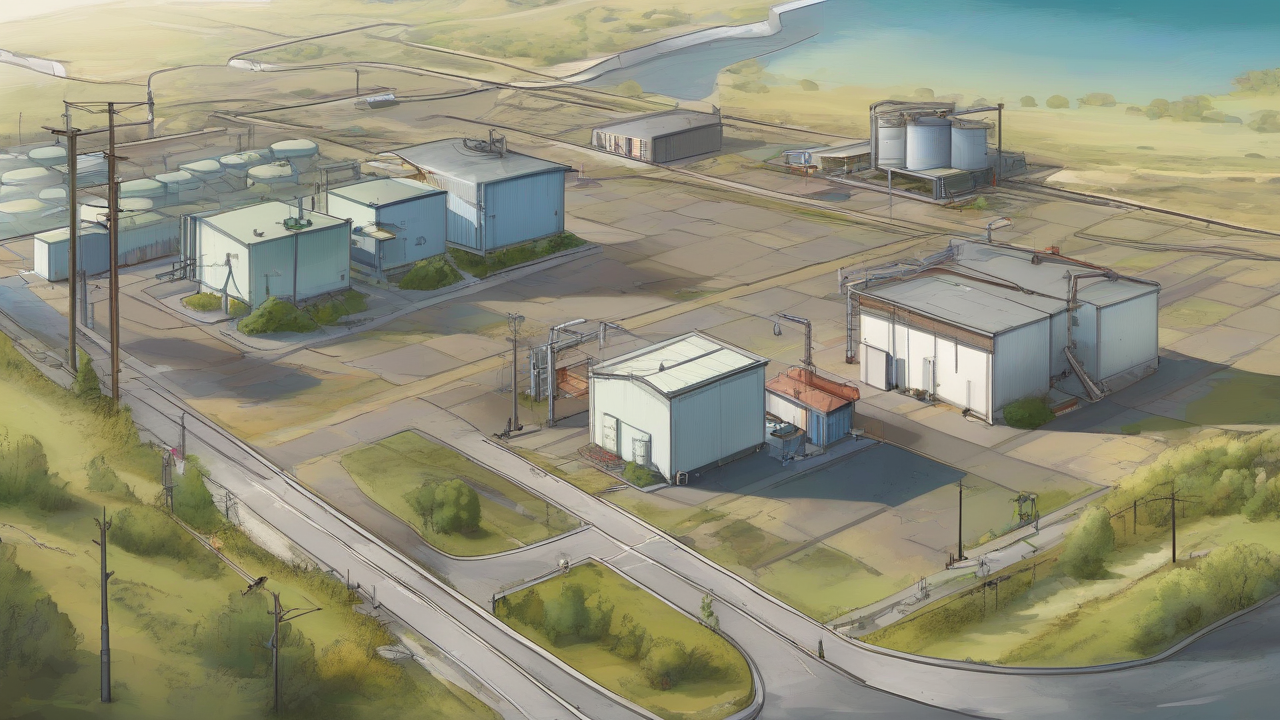
Ten of Louisiana's 25 largest industrial air polluters had no public air monitor within five miles, according to a Floodlight and Guardian analysis published Monday. The newsrooms ranked the facilities using emissions figures that companies reported to the Environmental Protection Agency. They then calculated the distance from each plant to the nearest state station and checked which pollutants each station measured. [1]
Louisiana operates 35 permanent air-monitoring stations. The state says the network meets or exceeds regulatory requirements. The official overseeing its 35-person monitoring team acknowledged that the network was not designed around communities at plant fence lines. [1]
Compliance and coverage are different achievements. A network can satisfy rules governing the monitors it operates while leaving a heavily emitting facility miles from the nearest instrument. A station can also sit near a plant without measuring the chemical that residents need to know about.
The analysis found both gaps. Dow Chemical's plastics factory in Plaquemine was about eight miles from the nearest public station. That station measured ozone. The plant reported releasing several toxic pollutants, including the carcinogen ethylene oxide. [1]
CF Industries reported more than 7 million pounds of ammonia emissions each year from its Donaldsonville plant. No Louisiana public monitor measured ammonia, according to the analysis. A large reported quantity and an absent measurement describe a surveillance gap. They do not establish what any person inhaled. [1]
The state also did not monitor ethylene oxide, chloroprene or formaldehyde. The Guardian cited research concluding that those three chemicals account for most modeled cancer risk in the industrial corridor between Baton Rouge and New Orleans. A model estimates population risk under stated inputs. It does not diagnose a resident or identify one plant as the cause of an illness. [1]
That distinction can feel bloodless beside a home. Kimbrelle Kyereh told Floodlight that oily fumes from nearby chemical tanks in St Rose brought headaches, nausea and insomnia. She described leaving home with her son for an all-night restaurant during one episode. Her account establishes experience and a reason to measure. It is not a clinical exposure assessment. [1]
A monitor can be present and still miss the event
The network's limits became visible during a 2023 leak at Marathon's refinery in Garyville. The Coast Guard received a report at 6:50 p.m. that naphtha was escaping from an above-ground tank. Louisiana's environmental department began air monitoring more than six hours later. The leak ignited at about 7 a.m. [1]
Two nearby schools opened that morning. Residents within two miles received an evacuation order at 10:15 a.m. The order came more than 15 hours after the first leak report. The Guardian said at least 29 residents later received treatment at area hospitals. [1]
The closest state monitor measured ozone. It did not measure the volatile organic compounds released in the fire. The refinery's own fence-line equipment tracked benzene but not the full chemical mixture. The same company's Los Angeles refinery continuously monitored more than 15 pollutants because California required it. [1]
Those facts do not prove that one missing sensor caused every delay or treatment. They show why location, chemical coverage and timing belong in the same public record. A station that reports impeccable ozone data cannot answer a question about an unmeasured compound.
Louisiana supplements its permanent network with two mobile vans. The vans respond to incidents and cover areas without permanent stations. They also fill gaps when storms interrupt power. A mobile response is valuable after a call. It is not continuous fence-line surveillance before the call arrives. [1]
The department measures toxic pollutants at 19 sites. Most of those samplers operate every sixth day on a fixed public schedule. An intermittent sample can support long-term analysis. It can miss a release that happens between collection days. [1]
The state says financial and technical constraints prevent complete coverage of every toxic pollutant. Louisiana has lost four stations since 2020. Spending by the department division responsible for monitoring fell nearly 15 percent from 2020 through 2026. The decline exceeded one-third after adjustment for inflation. [1]
Resources therefore shape the map. Instruments cost money. So do technicians, calibration, laboratories, maintenance and data review. A legal statement that the network meets requirements does not answer whether those requirements purchase the coverage that industrial communities need.
Who gets to produce usable evidence
Residents and researchers have tried to fill the gaps. A Johns Hopkins team drove a mobile laboratory through the corridor in 2023. Its measurements produced modeled cancer-risk estimates above EPA figures at 14 of 15 studied locations. Some estimates exceeded the EPA figures by more than 11 times. [1]
The comparison challenges the completeness of distant or sparse monitoring. It still does not yield an individual's dose. The route, sampling period, compounds, meteorology and model assumptions all matter. A mobile campaign can reveal a hotspot without becoming a permanent network or a medical chart.
Louisiana narrowed the official use of such outside data in 2024. The Community Air Monitoring Reliability Act bars enforcement or regulatory action based on pollution data unless EPA-approved equipment captured it. The Guardian reported that the Louisiana Chemistry Association helped draft the law. [1]
EPA-approved instruments can cost tens of thousands of dollars. Community groups often use cheaper sensors. The law does not prohibit residents from collecting information for themselves. It restricts the data's use in enforcement. [1]
That boundary must not be misstated. A low-cost reading can have calibration limits. It can still identify a pattern worth investigating. Exclusion from an enforcement record does not render the observation scientifically worthless.
The law changes the route from observation to remedy. A resident may detect a spike. Regulators can demand an approved method before using it against a facility. If the state station is distant or does not measure the compound, the resident's concern can remain suspended between a signal and admissible proof.
Industry groups have opposed repeated proposals for plant-perimeter monitoring. The Louisiana Chemistry Association represents 70 companies operating more than 100 sites in the state. Its president told Floodlight that the 2024 law protects minimum EPA standards and leaves residents free to monitor for their own information. [1]
Former state senator Cleo Fields said industry repeatedly opposed his fence-line-monitoring bills because of cost. State senator Royce Duplessis introduced another perimeter-monitor proposal in 2026. That bill also failed. [1]
The dispute is not measurement versus no measurement. It concerns who bears the cost, which instruments qualify, where they sit, what they test and what a regulator may do with the result. Those questions decide whether a community observation can become an inspection or order.
What the network still cannot say
Company reports supplied the emissions list. Self-reporting is an administrative input, not a direct reading at every stack. The Guardian noted that some facilities may estimate emissions under EPA rules. A monitor network should test those claims rather than merely inherit them.
Distance supplies another input. Five miles is an intelligible screening radius. Air does not move in circles centered on a map pin. Wind, stack height, reaction chemistry and terrain affect where a plume goes. A nearby monitor can sit downwind on one day and upwind on another.
Chemical coverage supplies a third input. A station that measures particulate matter can answer a particulate question. It cannot infer chloroprene. Public dashboards should make that limitation as visible as the number they display.
Time supplies the fourth. Continuous equipment, every-sixth-day sampling and incident deployment answer different questions. Combining them under one station count conceals the periods when no relevant measurement exists.
No authorized X post was recovered through the documented search. The absence prevents the paper from calling platform anger a community verdict or industry reassurance a consensus. Floodlight and the Guardian provide the inspectable frame: 25 facilities, distances, pollutants and state responses. [1]
The finding is serious without becoming larger than its evidence. Ten major facilities lacked a public monitor within five miles. Several dangerous chemicals went unmeasured statewide. Louisiana still says its network meets regulatory requirements. [1]
None of that proves a particular resident's dose, diagnosis or cause. It proves that the public system often lacks the measurement needed to begin answering those questions. A compliant blind spot remains a blind spot.
-- DARA OSEI, London