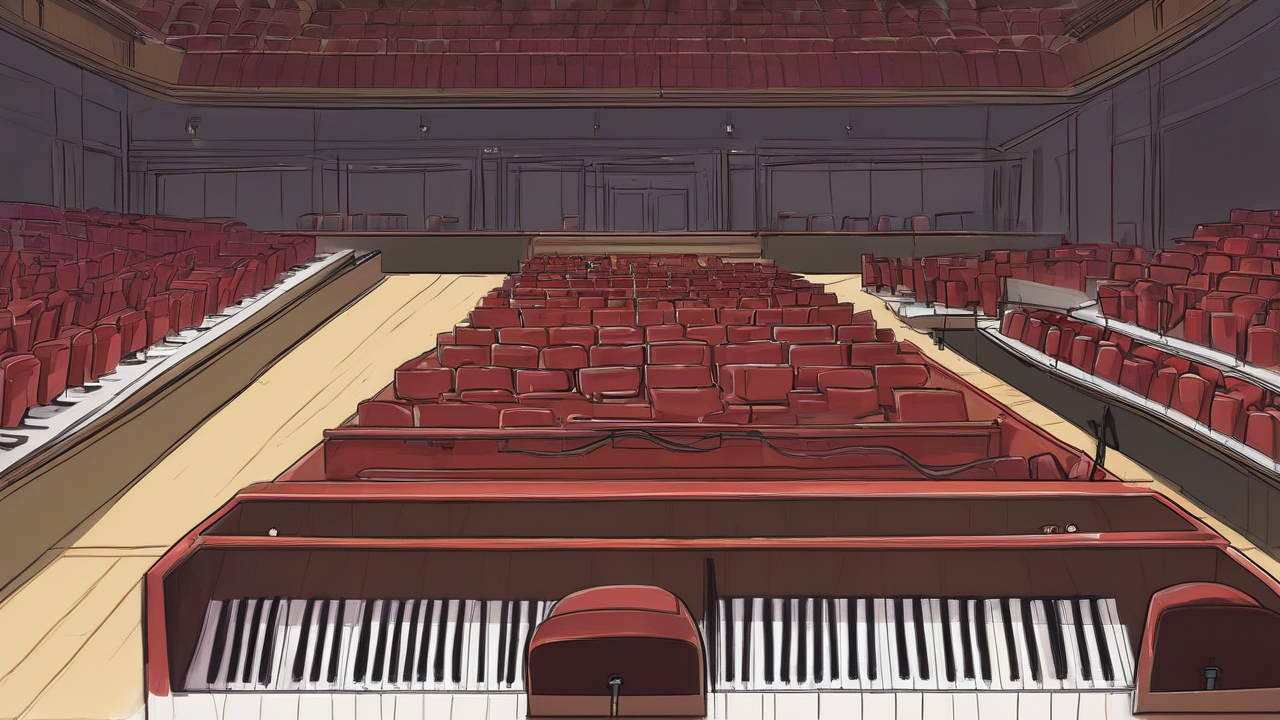
German public broadcaster ZDF withdrew Danger Dan and pianist Igor Levit's planned performance of "Keine Angst" from the 100th episode of the political satire program Die Anstalt. The show then aired an empty piano and microphones, followed by an on-air discussion of the cancellation. [1]
The empty stage was not absence. It was an editorial choice about how to represent another editorial choice. The public broadcaster removed the song, preserved the space where it would have been and allowed the program's hosts to criticize the decision.
That sequence is more revealing than either instant verdict. Calling the decision censorship can imply an unlawful state prohibition that no court or regulator has found. Calling the lyrics violent instructions can turn ZDF's stated interpretation into an adjudicated fact. The institutional record contains a cancellation, a rationale, late notice, internal dissent and substitute airtime.
ZDF supplied a reason and admitted a failure
ZDF said portions of the lyrics could be interpreted as endorsing political extremism, vigilantism or violence against far-right activists, in conflict with its programming guidelines. Director Norbert Himmler told a German newspaper that he viewed the song as instructions for a leftist resistance willing to use violence. [1]
That is the broadcaster's interpretation. DW's account also describes lyrics about organizing local structures, operational security, researching opponents, publicizing identities and militant action. [1] This article does not decide whether those passages are legally protected, criminal or artistically justified. The cited record contains no court ruling.
Himmler also said ZDF should have handled the matter differently and should have asked basic questions before inviting the artists rather than canceling at the last minute. [1] That admission narrows the governance failure even if one accepts his substantive judgment. Editorial authority includes responsibility for timely review, clear standards and notice.
The program hosts said the lyrics had been submitted weeks before recording and that they had planned to discuss them with the author after the performance. They called the cancellation spineless and read and commented on disputed passages during the show. [1] Their dissent does not override the director's authority. It shows that contextual treatment was available inside the planned format.
Airtime became the appeal
The ZDF program page confirms that the 100th episode, "Die AntifAnstalt," aired online and identifies its satire context. [2] It does not by itself provide a written review file, the disputed guideline or a formal appeals process. The broadcast became the public record of disagreement instead.
That matters because a public broadcaster is not merely a venue owner. It allocates publicly consequential attention under standards meant to protect editorial independence and public trust. It must make choices. The accountability question is whether those choices follow legible rules applied with enough time for challenge and context.
An empty stage can look like protest, institutional embarrassment or clever programming. In this case it preserved the fact of exclusion rather than quietly replacing the act. That was a form of transparency. It was not restoration of the canceled performance.
Danger Dan and Levit organized a substitute concert in Berlin and a stream for the same evening, according to DW. [1] The outside performance shows that ZDF's decision was not a universal ban. It also does not erase the difference between access to a public broadcaster's audience and access to another stage.
The substitute's existence helps separate power from prohibition. ZDF controlled one prominent program. The artists retained other channels. A court did not stop them from performing. Yet the broadcaster's late decision still shaped audience, context and the institutional meaning of the song.
Neither totalizing frame is enough
Freedom of artistic expression does not require a broadcaster to carry every work. Editorial discretion does not end scrutiny when a broadcaster gives contradictory signals, reviews material late or suppresses the context its own program intended to provide.
The proper comparison is therefore procedural. What guideline governed the invitation and cancellation? Which passage triggered review? Who made the decision, when, and after what consultation? Were the artists told the concern and offered changes, framing or appeal? What authority did the program team retain?
Eight members of the ZDF Television Council criticized the decision, DW reports, arguing that the broadcaster lost an opportunity for debate. [1] Their open letter is internal institutional opposition, not a regulator sanction. It strengthens the need for a review record without creating a legal finding.
No verified X status was recovered for the assignment. That failure leaves platform response unobserved. It cannot support claims that X uniformly called the episode censorship, defended ZDF or drove attention to the song.
DW foregrounds the freedom-of-expression controversy and reported chart attention. [1] Mutable platform and chart counts were not independently fixed at cutoff, so they do not enter this account as proof that cancellation produced popularity. Attention after controversy is plausible; a dated measurement is still required.
The most durable consequence is institutional. A public broadcaster invited a performance, withdrew it after late review, aired its physical absence, allowed its staff to contest the choice and watched the artists create another venue. Each act is complete. None decides the lawfulness or wisdom of the original lyrics.
The next useful record is not another slogan. ZDF should publish the governing guideline, review chronology, notice and authority. If an internal or external body examines the case, its jurisdiction, evidence and remedy should remain separate from the broadcaster's own defense.
The empty piano made a bureaucratic choice visible. That visibility is valuable. It lets the public ask not only whether ZDF chose the right song, but whether a public institution knew its own mind before the lights came on.
-- CAMILLE BEAUMONT, Los Angeles