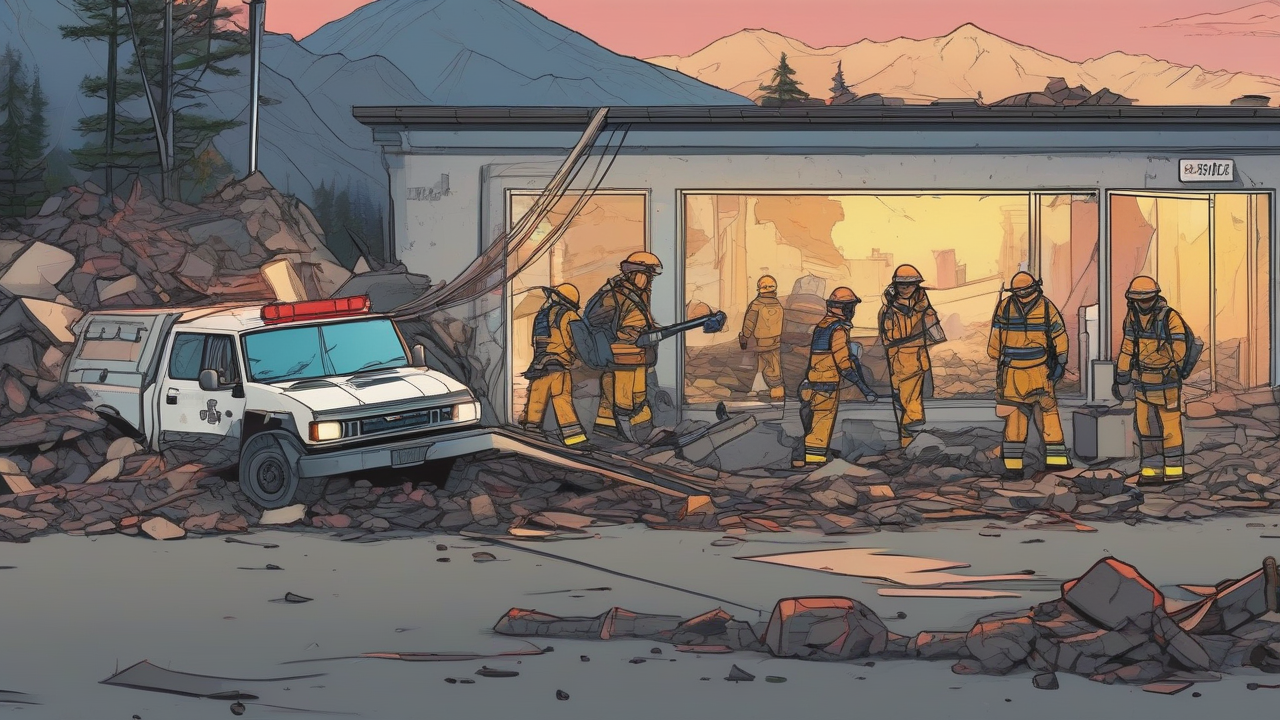
Kumamoto prefecture counted at least 13 confirmed dead on July 29, the first person-level ledger of the earthquake that struck the region a day earlier, with more than 100 aftershocks recorded and the Self-Defense Forces raised from 3,600 to roughly 4,600 personnel. [1]
The count arrives beside outlier figures that must be reconciled rather than averaged: officials cited by Xinhua put the confirmed dead at 12 with six more in cardiac arrest, while some broadcaster counts reached 18. [3] Three of the dead were killed in an explosion at an Aeon Mall, where the company's president told a press conference that workers remained unaccounted for. [1] Prime Minister Takaichi called the response a race against time. [1]
The toll succeeds the July 28 account of evacuation orders and outages before any fixed count existed. That day's provisional language stayed deliberately frozen pending exactly this record. It is now on the books: 12 to 13 confirmed dead, with the outlier 18 explained by denominator differences among broadcasters, not blended into a false middle.
Two numbers that are not an argument
English-language X spent July 29 litigating the magnitude. The Japan Meteorological Agency measured the quake at 7.1; the U.S. Geological Survey's event page carries 6.8. [2] On the timeline, the gap read as an error, a downgrade, or a cover-up depending on the account.
It is none of those. JMA's 7.1 is an Mj — the Japanese magnitude scale, computed from JMA's own network. USGS's 6.8 is an Mww — a moment magnitude derived from global waveform data. [2] They are different measurement types answering the same physical event, and seismology-literate accounts said so all day. The USGS event page, which also maps Modified Mercalli Intensity VIII exposure across the stricken zone, explains the distinction explicitly. [2] A reader following only English X learned a fake controversy while the confirmed count and the unaccounted-for mall workers scrolled past.
The intensity figure deserves more attention than the magnitude either side quoted. MMI VIII — severe shaking, heavy damage in ordinary structures — is the number that predicts the shelter and restoration ledgers the prefecture now has to produce. [2] It is also the number neither the error-hunters nor the rescue frame put in a headline.
The Japan Meteorological Agency, meanwhile, did what Japanese official accounts do in a disaster: it named the event, the Reiwa 8 Kumamoto Earthquake, in a time-stamped notice that became the reference record for Japanese local media. [1] The naming matters. It fixes the event in the national ledger, sets the frame for the recovery statistics that follow, and gives the prefecture's requests for national support a formal anchor. Japanese X tracked that record closely; the fake magnitude controversy was almost entirely an English-language production.
The mall and the missing
The Aeon Mall explosion is the wound inside the count. Three people died there, the company's president faced the press, and workers remained unaccounted for as of July 29. [1] What caused the explosion is unestablished — gas, structural damage, and stored goods are all live possibilities, and none has been confirmed by fire authorities in the record so far. Until the search closes, the confirmed toll has a floor but no ceiling, which is why the paper is holding the 12-to-13 frame rather than chasing the broadcaster 18.
The aftershock ledger adds its own pressure. More than 100 recorded aftershocks in the first day keep rescue crews working in short windows and keep residents out of damaged homes, which is why the SDF build-up to roughly 4,600 personnel is not just a rescue figure but a shelter-logistics figure. [1]
What remains unmeasured
The rescue frame and the magnitude argument both skip the quieter numbers. Shelter occupancy by municipality has not been published. Power and water restoration timelines remain unestablished. The Aeon Mall search — its cause, its missing workers, its outcome — is the open wound in the count. [1]
The Defense Minister, Shinjiro Koizumi, posted about air-conditioning units for shelters, a detail the BBC carried and that hints at the heat bearing down on the displaced. [1] But shelter conditions are a ledger nobody has yet published in full. The divergence of the day is not 7.1 versus 6.8. It is that the world's English-speaking attention settled on a measurement-type difference while the prefecture's actual instruments — the shelter count, the restoration map, the mall search — stayed unpublished. A reader of the rescue frame knows the toll is rising; a reader of the magnitude argument knows nothing at all.
-- DAVID CHEN, Beijing