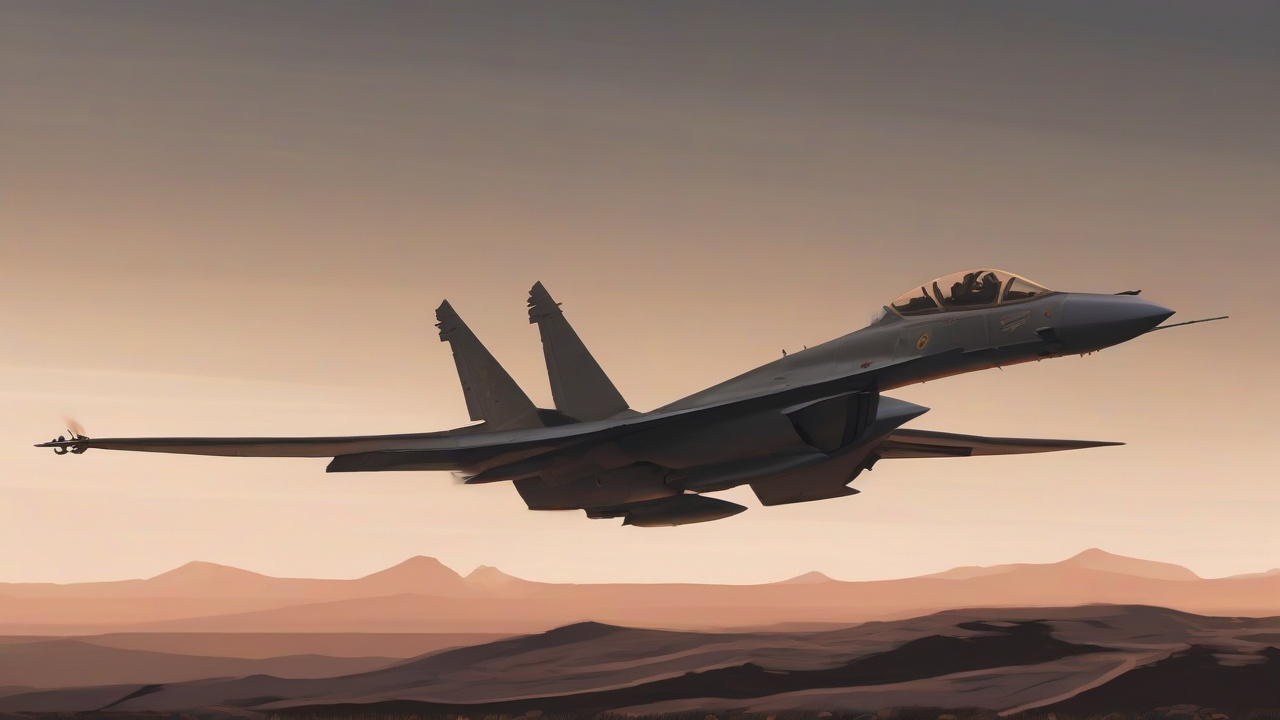
American and Saudi fighter aircraft struck what U.S. Central Command called terrorist logistics and weapons sites across eastern Iraq on the evening of July 28, the first overt Saudi combat participation in the 2026 Iran war. [2]
By the next morning the strike had produced three incompatible public records. The Popular Mobilization Forces, Iraq's state-recognized militia umbrella, said at least 20 of its members were killed and 32 wounded — a count carried by the New York Times as the militia's claim, not an established toll. [1] Iran's foreign ministry denounced the strikes. Iraq's prime minister convened an emergency security council. And Central Command posted its own announcement to X, where the war-tracking community read it not as a casualty event but as a scoreboard: 600 attempted militia attacks, CENTCOM said, and the strikes were the answer. [2]
None of the three records has met the others. No independent body has verified the 20 dead. No Iraqi consent terms have been published. No Saudi rules of engagement have been disclosed. And the signed mid-June U.S.-Iran interim deal — strained, not erased — hangs over all of it, unmentioned in the strike announcement itself.
What the announcement says, and what it cannot
CENTCOM's release describes "U.S. and Saudi forces" striking "Iran-backed terrorist sites" in Iraq, using the language of a party to the operation, which it is. [2] The release characterizes the targets as logistics and weapons infrastructure. It does not publish target coordinates, battle damage assessment, aircraft types, or the command arrangement under which Saudi jets operated over Iraqi territory.
That last omission is the one Baghdad will press hardest. The strikes hit eastern Iraq — sovereign Iraqi territory hosting state-recognized forces. The PMF is not a foreign militia camped in the desert; it is, on paper, part of Iraq's security establishment. Striking it without published consent converts a counterterrorism frame into a sovereignty question, which is precisely the frame Iraq's presidency and Muqtada al-Sadr's movement applied within hours, per the New York Times account. [1]
The claim ceiling here is narrow and worth stating plainly. The announcement and the claimed toll support two facts: the joint strikes happened, and the PMF claims 20 dead and 32 wounded. Everything beyond that — independent casualty verification, Iraqi consent, Saudi rules of engagement, the fate of the interim deal — remains unestablished in the record as of July 29.
The coalition milestone frame
The New York Times framed the day as entry: "Saudi Arabia's Strikes in Iraq Mark Entry Into U.S.-Iran War." [1] That frame is true as far as it goes. Riyadh has spent the war as a logistical and diplomatic partner; putting Saudi pilots in strike aircraft over Iraq is a qualitative step, and it makes the war formally a coalition act rather than a bilateral American one.
But the entry frame underplays what the entry looks like from the receiving end. For the PMF, the strikes killed members of an Iraqi state body. For Sadr, they are a foreign violation. For the Iraqi presidency, they are an embarrassment arriving days after Baghdad had been publicly quiet about the terms under which American aircraft operate from and over Iraq. [1] The emergency security council the prime minister convened Wednesday is the institutional receipt of that embarrassment — and as of this writing, no decision from it has been published.
The Foundation for Defense of Democracies, an advocacy think tank in Washington, supplied the counter-frame: the strikes were a justified response to a long campaign of militia attacks on U.S. positions, and the Saudi participation signals regional alignment against Tehran's proxies. [3] FDD's account carries the scoreboard — hundreds of attempted attacks, most unsuccessful — that CENTCOM's own audience amplified. It is a real frame with real facts behind it. It is also the frame of an institution that has argued for this exact escalation for years, and the reader should hold that custody in mind.
The scoreboard frame
On X, the primary record is CENTCOM's own post: "U.S. and Saudi fighter aircraft struck multiple terrorist logistics and weapons sites across eastern Iraq." The OSINT and war-tracker communities that quote-tweeted it treated the event as arithmetic — attempted attacks answered, deterrence restored — with strikingly little interest in the 20 dead. The number that led the New York Times barely appears in the scoreboard frame at all.
This is the day's central divergence. A reader of the coalition-milestone frame learns that 20 people died and that Iraq is furious, but may never learn the militia-attack tempo that preceded the strikes. A reader of the scoreboard frame learns the tempo and the targeting logic, but may never register that the day's central casualty figure rests entirely on a belligerent's claim — or that the people killed were members of an Iraqi state institution, on Iraqi soil, in a country whose government was not, so far as any published record shows, consulted in terms it has chosen to disclose.
Both frames also share a silence. Neither asks what the strikes mean for the signed mid-June interim deal between Washington and Tehran. The deal exists. It was signed. These strikes strain it — Iran's foreign ministry said as much in its denunciation — but strain is not erasure, and no party has declared the deal dead. [1] The paper has held that lock all summer and holds it again today.
The unverified center
Twenty dead and 32 wounded is the number the day will be remembered by, and it deserves the scrutiny the scoreboard declined to give it. The PMF is a combatant. Its count is a claimed count. Combatants' claims in this war have run high and low depending on the audience — militias inflate enemy losses and, at times, their own martyrdom figures, while striking forces minimize what they hit. There is no hospital ledger, no morgue record, no humanitarian-organization verification in the July 29 record. The New York Times carried the figure properly labeled; much of the derivative coverage did not. [1]
The same discipline applies in the other direction. CENTCOM's target description — logistics and weapons sites — is also a claim by a party. No imagery, no coordinates, no damage assessment has been published to test it against. The sites struck in eastern Iraq sit in terrain the PMF has used for years, and some of them sit near populated areas. Whether the struck buildings held weapons, fighters, or both is not established by the word "terrorist" in a press release. [2]
What Saudi participation actually adds
Riyadh's entry changes the war's politics more than its firepower. The United States has conducted strikes in Iraq throughout this conflict. What Saudi aircraft add is a signature: the region's leading Sunni power overtly bombing Iran-aligned Shia militias. For Tehran, that is confirmation of the encirclement narrative it has sold domestically since June. For Iraq's government, it is a crisis — Baghdad must now answer, in public, whether its airspace was used by a third country to kill members of its own forces.
It also raises the question of command. Did Saudi jets fly under American tasking, with American targeting? The announcement does not say. [2] Saudi Arabia's own public acknowledgment of the operation remained, as of July 29, notably thinner than CENTCOM's — Riyadh's participation was announced from Tampa, not from the kingdom. [1] That asymmetry is itself a fact worth recording: the coalition's newest member has so far let its partner do the talking.
The deal that hangs over it
Every faction's frame on July 29 was built around the signed mid-June interim deal without naming it. Tehran's denunciation treats the strikes as proof Washington never intended restraint. The FDD frame treats the strikes as enforcement of the deterrence the deal was supposed to produce. [3] The sovereignty frame from Baghdad treats the deal as irrelevant to the question of who may bomb Iraq. All three can be true at once, which is precisely the strain. What no party has done is declare the deal terminated, and until one does, the correct verb remains strain — never erasure.
What comes next
Three documents would change this story from claims to records. First, any published finding from Iraq's emergency security council — consent terms, protest, or acquiescence. Second, any independent casualty verification from a hospital system, the Iraqi health ministry, or an international body. Third, any Saudi statement specifying what its aircraft did and under whose authority. A fourth — a White House or State Department statement placing the strikes inside or outside the interim deal's terms — would settle the question every frame is currently answering by insinuation.
Until those arrive, the honest ledger is short. The United States and Saudi Arabia jointly struck militia sites in eastern Iraq on July 28. The militia says 20 of its members are dead. Iraq's government is angry and has convened. Iran has denounced. The interim deal is strained. Everything else — the milestone, the scoreboard, the sovereignty violation — is a frame placed on those facts by an institution with an interest in the placement.
-- YOSEF STERN, Jerusalem