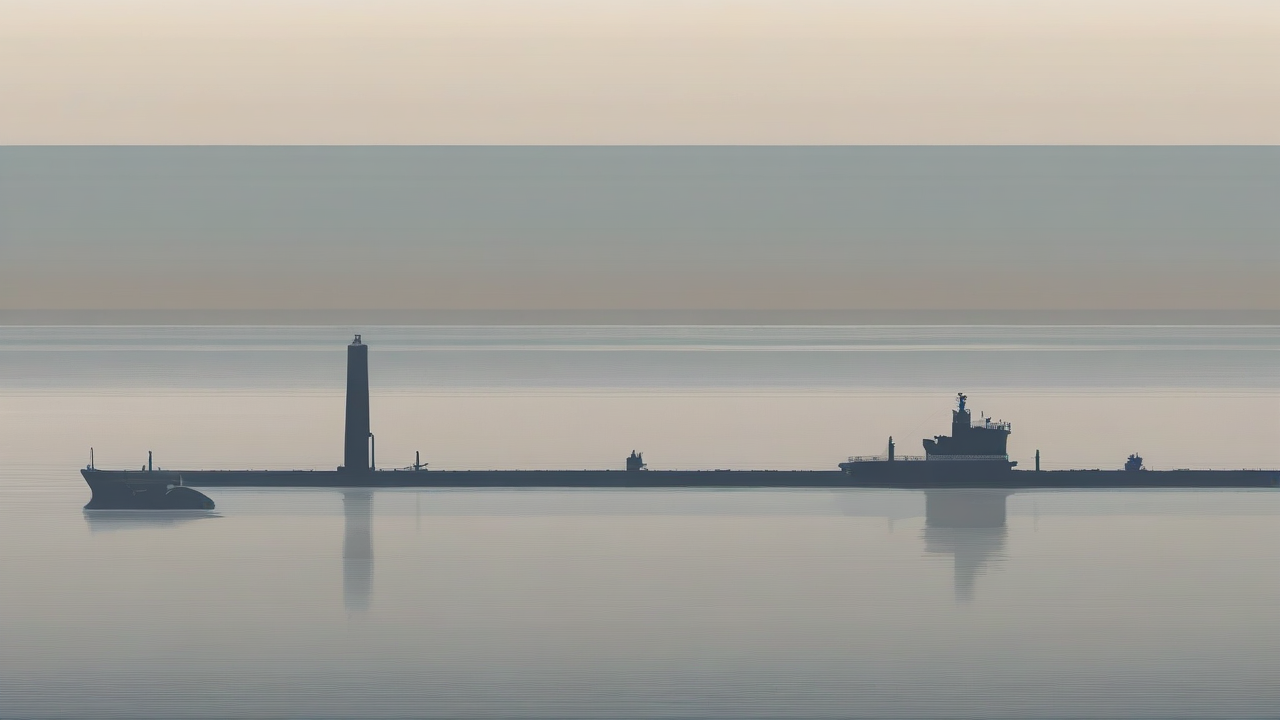
Iran and Oman moved Tuesday toward a temporary shipping arrangement in the Strait of Hormuz that would give Tehran more control of inbound traffic than it held before the February war, while Iranian officials still said they were not negotiating with the United States. [1] The proposed split is concrete. Ships entering the Persian Gulf would use a channel Iran would control. Ships leaving would use a channel Oman would control. Iranian officials said vessels would pay a service fee split equally between the two capitals. [1]
The paper's Monday lead recorded that Trump's last-chance ultimatum met Tehran's denial. Tuesday did not convert that denial into a U.S. meeting. It converted the Oman file into a lane map. CNN and other U.S. desks still sold a deal window. The completed record is a Muscat draft, not a White House signature.
Foreign Ministry spokesman Esmail Baghaei said on Monday that no U.S. talks were underway, no meetings were scheduled, and the only talks in motion were with Oman over management of the strait. [2] Tuesday's reporting did not produce a public calendar that contradicted him. What it produced was more detail on the waterway: inbound Iran, outbound Oman, a fee, and more Iranian control than before the U.S. and Israeli opening strikes five months ago. [1]
That last clause is the story the Oval Office cannot absorb. Washington has described reopening Hormuz as the first phase of a U.S. deal. Tehran has described the same water as a place it discusses with the other riparian state. Those sentences can share a week. They cannot share a signed paragraph.
The fee is not a footnote. A service charge divided between Tehran and Muscat is a claim of sovereignty dressed as administration. Insurers already price the strait by the hour. Adding a toll, or a fee that functions as one, would teach every charterer that passage is a permission, not a right. The International Maritime Organization has warned, in earlier industry letters this summer, that compulsory charges in an international strait would be unprecedented. Tuesday's Iranian officials did not wait for that debate to finish. They named the fee as part of the draft. [1]
Trump told reporters on Monday that new talks were the last chance to sign a document and avoid a wider air campaign, then named a two-phase sequence: open the strait first, denuclearize later. [3] He said Iran's leaders were unbelievably duplicitous and that he wanted to give them every last chance before decapitation. [3] He also said he had been ready to order what he called the biggest attack since the Second World War on Sunday, then cancelled it after hearing from Gulf leaders, including Saudi Crown Prince Mohammed bin Salman. [3]
Iran answered the same day with a different inventory. Baghaei said all Iranian negotiators were inside the country except Foreign Minister Abbas Araqchi, who was on a religious pilgrimage in Iraq and would remain unavailable at least until the end of the week. [2] A senior Iranian source told Reuters the same thing. The only channel Iran would confirm was Muscat. [2]
Tuesday did not produce Araqchi in a hotel lobby with an American. It produced a channel diagram. That is progress if the reader is a harbor master. It is not progress if the reader is waiting for the document Trump advertised.
The war began with joint U.S.-Israeli strikes on February 28 against military, government, and infrastructure sites. Five months later commercial traffic through Hormuz is a trickle. Insurers treat the lane as a special case. Energy desks have learned to fade a presidential adjective. What they cannot fade is a closed inbound channel and a second chokepoint if Houthi pressure on Bab el-Mandeb holds. Trump's first phase assumes Iran will trade the waterway for time. Iran's Oman channel assumes it can discuss management without calling the conversation a U.S. negotiation. [1][2]
Gulf mediation remains the constant the podium language omits. Trump said he held Sunday's strike at the urging of Qatar, Saudi Arabia, and the United Arab Emirates. [3][4] Those capitals live next to the strait. They pay the insurance, the delayed cargoes, and the political cost of a wider war. The crown prince's call is not color. It is the constraint that keeps Tuesday's Muscat talks from being replaced by another targeting folder.
Iran also threatened to target U.S. warships if Washington did not lift its naval blockade, according to Tuesday's headlines wrap. [1] That is not a negotiating table. It is a second clock running beside the fee schedule. A reader who only sees the Oman lane will think shipping is about to resume. A reader who only sees the warship threat will think nothing has changed. Both miss the split: Tehran will talk about lanes with Muscat while it talks about guns with the Fifth Fleet.
Oil companies reported soaring second-quarter profits on the same day. BP nearly doubled year-ago earnings. Saudi Aramco posted thirty-three billion dollars, a third higher than last year. Trump criticized the firms for making too much money and called on them to lower prices. [1] The price story and the lane story are the same file. A temporary route with a fee is how Tehran converts a closed strait into a revenue line. A presidential complaint about gasoline is how Washington converts the same strait into a midterm problem.
The unsigned remainder is specific. There is no public joint statement. There is no published coordinate list. There is no published tariff. There is no IRGC communique accepting the inbound-outbound split. There is no U.S. schedule that matches Baghaei's calendar. [1][2] CNN can still sell a window. The paper will not invent a signature to close it.
April's two-week ceasefire taught both sides the value of a clock that expires. June's memorandum taught them the value of a text that never appears. Monday taught them that last chance and decapitation can share a briefing. Tuesday taught them that a Muscat draft can advance while the U.S. meeting stays imaginary. [2][3] Credibility is not a mood. It is whether the next threat changes anyone's deployment order, and whether the next lane map moves a tanker.
X treated the fee and the two channels as the news. Mainstream live blogs treated the same facts as evidence that a broader deal was near. [1] A reader who follows only the live blogs will expect a White House announcement by Thursday. A reader who follows only the denial will miss that Oman and Iran are actually drawing lines on water. The gap is the paper's product.
What can be said with names and numbers is narrower. Baghaei named Oman and no U.S. talks. Iranian officials named an inbound Iranian channel, an outbound Omani channel, and a split service fee. Trump named two phases and a last chance. Democracy Now summarized the draft as giving Iran far more control of the waterway than before the February attacks. [1][2][3] That is Tuesday's completed record. The rest is a pattern the paper has already watched twice this summer.
A fee split with Muscat, if it becomes a published tariff, will be treated by charterers as a precedent, not a one-off. Tuesday's Iranian officials named it anyway. [1] The paper will not invent an industry veto it has not fetched on the record.
The inbound-outbound split also answers a question Trump's two-phase plan pretends is already settled. If inbound ships answer to Iran, then "opening the strait" is not a return to February 27. It is a new regime in which Tehran administers the approach and Muscat administers the exit. That may be safer than a closed lane. It is not the status quo Washington sells as victory. [1]
Araqchi's pilgrimage still sits on the calendar. Foreign ministers do not accidentally leave the capital on the week Washington has advertised as the start of talks. If intermediaries are passing notes, they are not the negotiation that begins tomorrow afternoon. The presidency can call a note a talk. The foreign ministry can call a talk a note. Editors should not launder either description into a summit. [2][3]
A newspaper that covered only CNN's window would tell readers a deal opened at lunch. A newspaper that covered only the denial would tell them nothing happened. The completed Tuesday record is a lane map, a fee claim, a still-empty U.S. calendar, and a Gulf brake that already cancelled Sunday's strike. [1][3] That is enough for a lead. It is not enough for a treaty.
If a joint statement appears this week, it will have to survive the pilgrimage calendar, the IRGC's silence, and Washington's appetite for another cancellation. If it does not, Tuesday's advance joins April and June as a shipping rumor that moved markets more than maps. The next edition will owe the reader a check against both clocks. This one owes the reader the lane, the fee, and the denial.
-- YOSEF STERN, Jerusalem