President Donald Trump announced on Thursday what he called the most crushing economic operation ever taken against any country. In a social media post, he warned that countries trading with Iran would face tremendous economic consequences. "This will be Economic Warfare and Isolation on an unprecedented scale," he wrote. He offered no new sanctions, no targets, and no timeline. [1] Within hours, headlines had baptized the threat "economic D-Day." [2]
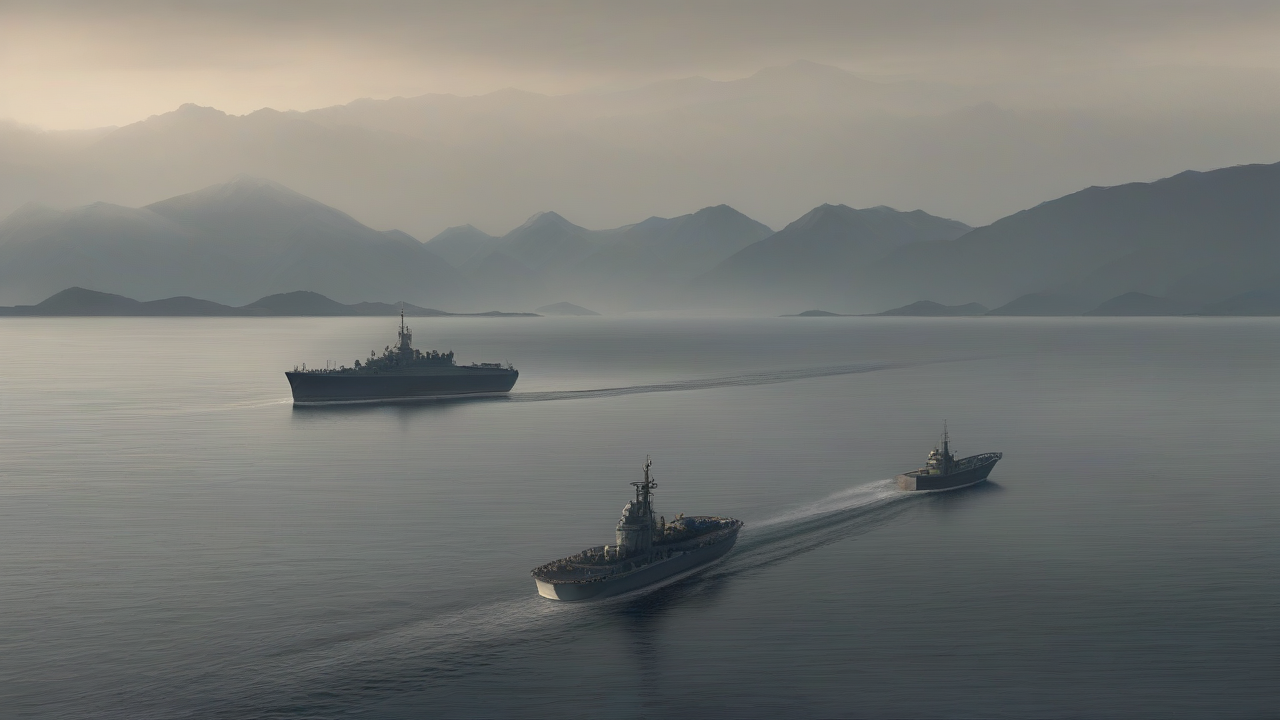
The paper's Wednesday lead recorded that Trump still called Hormuz open while Kpler counted ten crossings a day and a crew member lay dead in Omani waters. On Thursday the vocabulary changed. The adjective "open" became a promise of siege. What did not change was the water. Commodity vessel transits through the Strait of Hormuz totaled nine on Thursday's count, unchanged from Tuesday, according to Kpler shipping data carried by Reuters. [3] A president promising economic annihilation of a neighbor governs a strait moving less than one percent of the hulls it once did. Before the war, the water carried more than twenty million barrels a day; the Energy Information Administration put flows at 4.9 million barrels a day in the second quarter, less than a quarter of the pre-war level. [5]
Start with the hulls, because nobody else does. Nine transits on Wednesday, nine on Tuesday. Only three confirmed crossings on August 16, per Associated Press tallies compiled by Quiver's event tracker, with the usual caveat that some ships sail with transponders off and escape the count. [5] Lloyd's List Intelligence counted 73 transits for the week of August 10 through 16, down from 91 the week before. At the war's other gate, traffic slowed further: 27 commodity vessels passed Bab el-Mandeb on Wednesday, down from 32 a day earlier. [3][4] The White House sells escalation. The ledger answers flatline.
The ledger also shows who still moves, and it is not the mainstream. Lloyd's List Intelligence describes a small core group of operators holding the route: at least 22 vessels entered the Gulf and 21 departed during the week of August 10, most of them crude tankers, with figures expected to rise as dark transits are identified. High-risk operators are exploiting the shortage of willing owners. At least four very large gas carriers with a history of carrying Iranian LPG have loaded cargoes in the UAE and Qatar, and thirty non-sanctioned shadow fleet tankers and gas carriers have lifted compliant cargoes since the conflict began. [4] Washington's own enforcement table tells the same story from the other side. U.S. Central Command reports 64 merchant vessels redirected from Iranian ports, three disabled, and two boarded to ensure compliance. One seafarer was killed this week when a bulker was struck. [4]
The cost of doing business on the water is now the tell. Spot tanker rates on the Middle East Gulf to China route have surged above $520,000 a day. Abu Dhabi's ADNOC has responded by buying its way out of the market's fear, disclosing acquisitions of six very large crude carriers and five gas carriers worth a combined $1.3 billion so its cargo no longer depends on third-party owners willing to transit. DP World is spending around $100 million a month to keep Jebel Ali ready for a reopening that has not come, with container throughput stuck near ten percent of normal while cargo reroutes through Fujairah and Oman. [4] None of this appears in the D-Day copy. All of it appears in the freight bill.
The United Arab Emirates delivered the week's structural change, and it has a commercial signature rather than a military one. After Iranian drones struck two ADNOC-linked tankers on August 13, an attack Abu Dhabi described as piracy, and an unidentified projectile hit an outbound vessel in Omani waters on August 18, killing a crew member, the UAE suspended economic and financial transactions with Iran. [5] This is the first formal Gulf break with Tehran in the war. The Emirates functioned as Iran's largest window onto the world economy, the entrepot through which goods, parts, and payment channels reached Iranian households. Closing it does not sink a navy. It raises the price of imported medicine, phone parts, and groceries in Tehran's bazaars, which is where a financial blockade is actually felt. Iranian negotiators have linked unrestricted passage to an end of the U.S. blockade, access to frozen assets, and sanctions relief; the UAE decision removes one of the few valves pressure had left open. [5]
Trump's answer to questions about leverage is to threaten everyone who trades with Iran, which in practice means China and India first and American partners shortly after. The June memorandum that briefly calmed the water expired August 17 without a comprehensive deal. The president said on August 18 that no talks were planned and the strait was open. [5] Treasury Secretary Scott Bessent has promised the toughest sanctions in history. [6] The diplomacy that remains runs through Muscat, where Oman has floated a system for managing commercial traffic with Iran, and Washington objects that any such arrangement grants Tehran leverage over international shipping. [5] So the dispute is no longer about whether the strait opens. It is about who would collect the tolls if it did.
The argument over tolls deserves more attention than the D-Day rhetoric, because it is the only live diplomatic track left. Supporters of an Omani role argue that coordination between the strait's two coastal states offers a practical route toward safer passage, with published rules replacing improvised convoys. American officials counter that any system Iran helps administer hands Tehran influence over the arteries of the world economy, which is precisely the leverage the blockade exists to destroy. [5] Both positions cannot hold, and neither side has moved. Meanwhile the market has stopped waiting for the diplomats entirely.
What the market is pricing instead is a permanent bifurcation. Lloyd's List Intelligence describes access to transportation capacity itself becoming a strategic asset, with owners willing to transit commanding premiums and everyone else withdrawing tonnage, while national oil companies buy ships outright rather than depend on third parties at all. An extended crisis sustains elevated freight rates and vessel values even as global oil exports shrink, because scarcity enriches whoever dares to move cargo. [4] That is the quiet verdict of the people who actually own hulls on every government in this story: they believe the closure lasts. Presidents announce reopenings. Shipowners buy steel accordingly.
Iranian Foreign Minister Abbas Araghchi answered the D-Day rhetoric with a budget line. He said the announcement is designed to distract from America's unprecedented national debt and surging interest costs. [1] The timing supports him. The same week the White House promised economic annihilation abroad, Treasury reported the national debt passing $40 trillion, months earlier than expected, driven by lost tariff revenue and a Pentagon seeking tens of billions more for the war, after an April request to lift war spending toward $1.5 trillion. [1][7] In 2016, Trump pledged to completely eliminate what was then a $19 trillion debt within eight years. [1] A country preparing to besiege a nation of ninety million while auctioning its own bonds at two-decade-high yields is making a wager about who exhausts first.
Oil has already voted. Brent crude settled near $94 a barrel on Thursday, up about two percent, with West Texas Intermediate above $86, prices near a three-week high that treat the D-Day speech and the flatline transit count as the same fact. [6] The AP's survey of sanctions historians cut the other way: Tehran has absorbed nearly five decades of American sanctions, Foundation for Defense of Democracies analyst Richard Goldberg called the coming campaign uncharted waters, and the International Crisis Group's Ali Vaez dismissed pressure without an open door as an exercise in futility. [2] Both can be right. The squeeze is real and the target is hardened; what is new is not the tool but the collateral, because secondary sanctions land on allies and neighbors before they land on the regime.
Escalation has a geography too. The Financial Times reported, in accounts carried by Democracy Now, that Iran could target American military installations in Europe if Washington escalates, with bases in Bulgaria and Cyprus among the potential targets. The war's American casualty count stands at more than 750 wounded and 18 dead. [1] An economic siege that invites retaliation against NATO territory is not a substitute for war. It is a second front with a different currency.
Here is the gap this page exists to name. X is running the D-Day clip on loop, cheering the siege and daring Tehran to blink, treating the strait as a prop in a sanctions highlight reel. Mainstream desks are running barrel math, pricing the three-week premium and moving to the next earnings call. Neither is counting the nine hulls that still move, the $520,000-a-day freight rates that price the risk, the shadow fleet quietly flipping into compliant trades, or the Emirati suspension that will show up first as pricier shelves in Tehran. The blockade's true ledger is written in import costs and grocery queues, not in press conferences. Thursday it read: siege declared, water unchanged, and the country next door beginning to pay retail for its own isolation.
-- SAMUEL CRANE, Washington