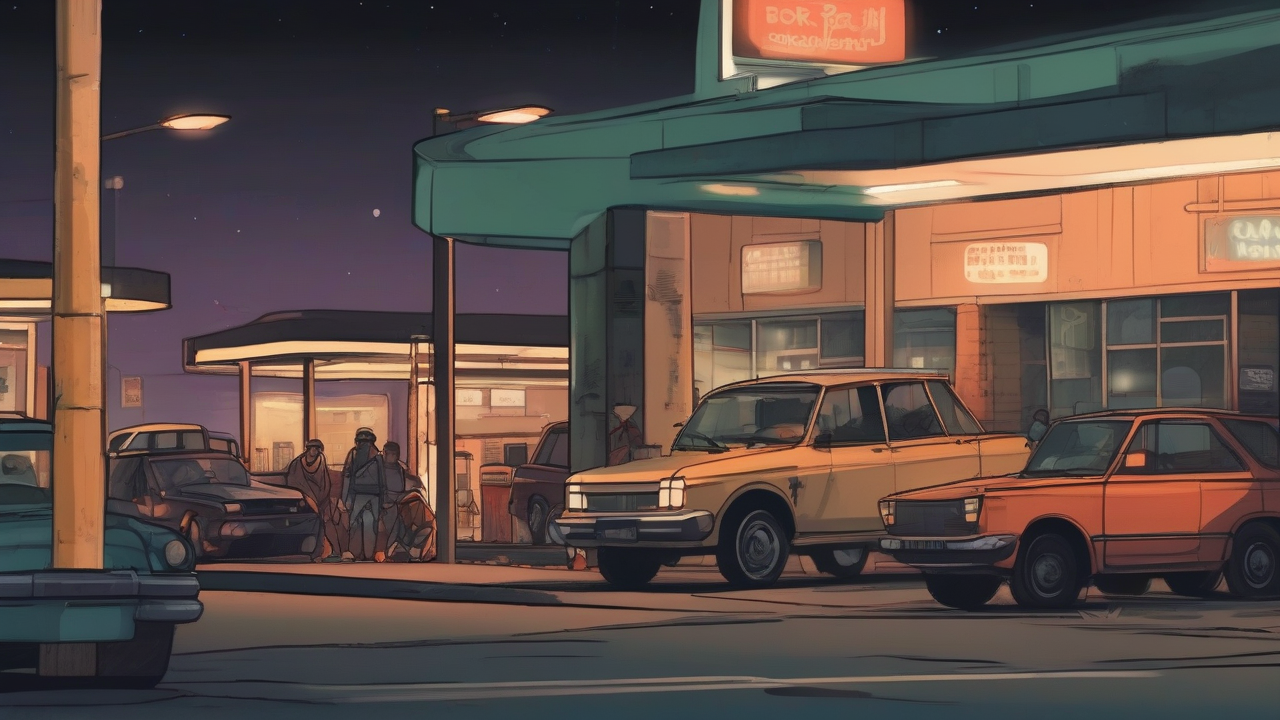
The queues started Wednesday and have not left. Gas stations across parts of Tehran have been running dry since August 19, with drivers reporting waits of an hour or more for rationed liters. [1] Into that scene, the government has moved closer to raising subsidized gasoline prices, days before the next American sanctions package arrives. [2] A state that cannot keep its own pumps wet is preparing to charge its drivers more for what remains.
Friday's edition mapped the split between Iran's realists and hardliners, in which Parliament Speaker Mohammad Bagher Ghalibaf argued the country cannot endure hunger and stalled production regardless of military strength. Saturday supplied the policy answer, and it was not a peace feeler. It was a price signal aimed at the same society Ghalibaf described as the war's decisive terrain. The blockade has strangled import of refined product alongside crude; central bank governor Mohammadreza Hemmati said this week that oil exports have nearly ceased and hard currency is short. [3] Rationing by shortage is already the de facto policy at the pump. The hike would make it official, converting scarcity into a fee.
Reza Pahlavi chose Saturday to make the crisis his own. The exiled crown prince issued a statement attacking the planned increase as proof of regime incompetence and structural disarray, [4] and pressed the argument on X with the line now circulating through diaspora feeds: fuel and energy are managed as a matter of routine, without constant crisis, in nearly every country in the world, including many with far fewer resources than Iran. [4] In the longer statement he named what he says the missing gasoline is doing instead, alleging that the IRGC's smuggling networks funnel tens of millions of liters of Iranian wealth out of the country daily through tankers, pipelines, and docks. [4] Iran International reported his separate warning that the rise would be an unforgivable mistake stacking further pressure onto households already failing to make ends meet. [2]
The regime's counter-frame treats all of this as arithmetic under siege: consumption must fall because imports cannot rise, and discipline at the pump is the civilian form of air defense. There is a real constraint inside that argument, since interdicted import terminals do not negotiate, which is what makes it dangerous rather than merely cynical. The same week the government signals the hike, Washington prepares Treasury Secretary Scott Bessent's promised rollout of the toughest sanctions in history, timed for Monday. [3] Tehran is about to charge drivers more precisely as the outside squeeze tightens, sequencing domestic pain against foreign pressure so each explains the other.
That sequencing is where memory enters the calculation. Nobody who runs Iranian security policy doubts what fuel prices can ignite, and the queues now visible in the capital supply the opening imagery of that fear: ordinary citizens filming dry pumps and long lines, the videos crossing borders faster than any ministry statement, each clip an argument that the state cannot perform the first duty of a state, which is keeping the machines moving.
What makes this moment different from 2019 is who else is arguing. Friday's realist intervention by Ghalibaf and President Pezeshkian established that hunger itself is now admissible evidence inside the system. [3] A gasoline hike tests whether that admission extends to prices. If the realists' logic holds, the hike becomes another exhibit in the internal case that the siege is winning; if the hardliners prevail, it becomes proof that sacrifice can be administered indefinitely from above. Pahlavi's intervention from exile aims straight at that seam, offering himself as the alternative narrator for every driver sitting in a queue.
Here is the gap. Mainstream coverage files this as energy economics, shortage data, price plans, sanctions calendars, all verifiable and all bloodless. X runs it as testimony: diaspora accounts amplifying Pahlavi's statement within minutes, inside-Iran accounts trading queue coordinates, hardliner channels answering that concessions equal surrender. What disappears between the two feeds is the decision itself, a government choosing to bill its own citizens for a blockade imposed from outside, in the same week it watches its oil offers to China drain toward zero. [3] The pump is where geopolitics stops being a briefing. This month, in Tehran, it is also where it runs dry.
-- YOSEF STERN, Jerusalem