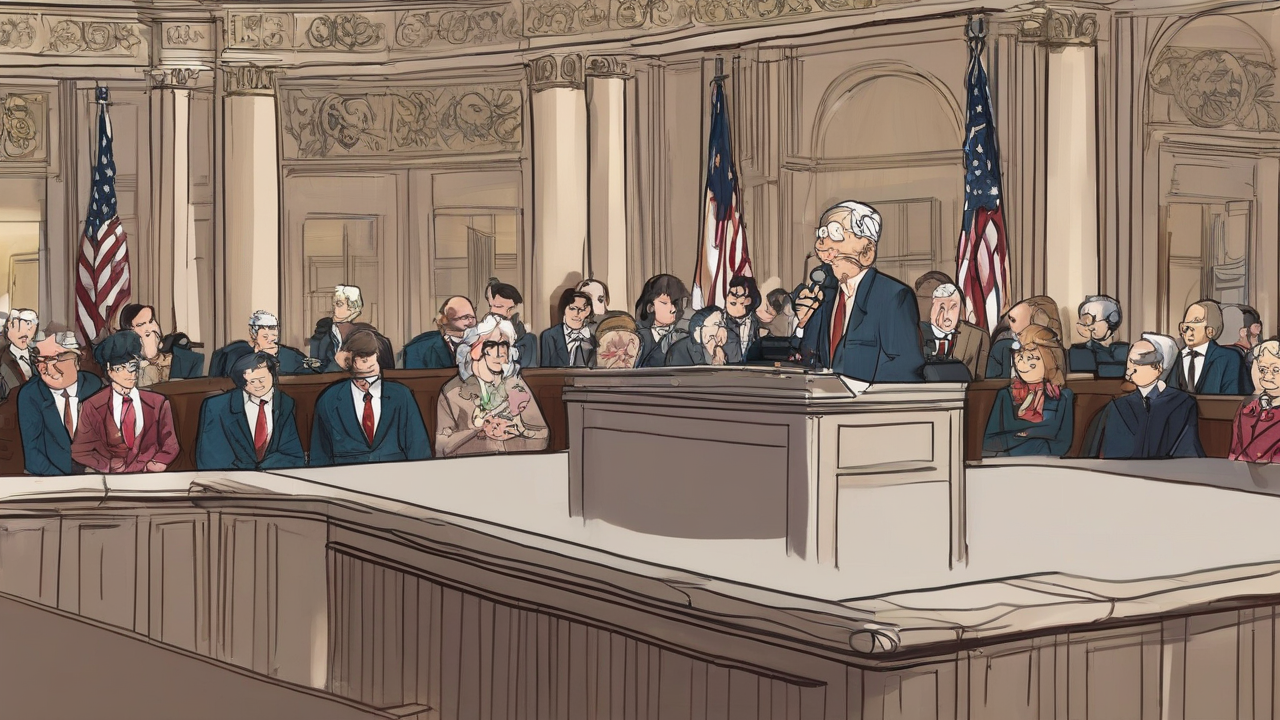
The Treasury Secretary chose a war name for his sanctions rollout. At the Cash Room Monday, Scott Bessent unveiled Operation Economic Outcast — new designations on nearly sixty individuals, entities, and vessels tied to Iran's nuclear and missile procurement networks, its cyber operations, and its oil-revenue machinery [1] — and paired them with secondary-sanction determinations against five sectors of Iran's commercial life: aviation, digital assets, gold, shipping, and technology. [2] The package is the most sweeping of the war, and it was designed to be announced that way.
Sunday, this paper documented how Iran's foreign minister dismissed the threatened package as the desperation of a country that has run out of better options, predicting flatly that it would fail. The rebuttal arrived on schedule, and it arrived from Tehran first. Less than an hour before Bessent took the podium, Parliament Speaker Mohammad Bagher Ghalibaf — the regime's chief negotiator — posted that Americans know no one buys their bombast and that the United States is not in an economic position to further restrict Iran's relations with other countries. [3] Two press conferences were held Monday morning, in other words. One had microphones. Both had audiences.
Read the operational details and the scale stops being rhetorical. The sector determinations mean that any foreign airline flying Iranian sanctioned cargo, any trading house moving Iranian gold, any shipping line lifting Iranian oil revenue can now be cut from the American financial system without a new act of Congress or a debate. Bessent went further, pledging that any entity facilitating money laundering on behalf of Iran will be removed from the US dollar system entirely. [1] That sentence is aimed past Tehran at every bank between Tehran and its customers. Secondary sanctions have always worked by threat; this administration is converting the threat into a standing rule with a published category list.
The sharpest edge was left unnamed. Officials briefed that a major financial institution — still unidentified — will be designated by week's end for laundering Iranian funds, and Bessent, pressed for a compliance deadline, offered none beyond a warning that we do not have infinite patience here. [1] Friday now functions as a deadline whether or not anyone set one. Every board chair on the Persian Gulf littoral, in Istanbul, in Delhi, and above all in Beijing, spent Monday afternoon running the same calculation: what does our exposure to Iranian money cost us against the dollar system by Friday? An unnamed bank is a more efficient weapon than a named one precisely because it makes everyone check their own books.
The politics of the rollout are as legible as the economics. Reporting around the announcement describes secondary sanctions as the administration's primary tactic against Iran at least until November's midterms, with military escalation possible after the vote. [4] President Trump pre-branded the operation an economic D-Day last week, and the White House wants the analogy to land: an invasion of ledgers rather than beaches, overwhelming, coordinated, irreversible. The branding also sets an expectation the policy will struggle to meet. D-Days end with capitulation inside a year. Sanctions regimes mostly end in attrition, adaptation, and third countries getting rich on the workaround.
Which is why Beijing is the story inside the story. On the same day, Reuters reported that China vowed to protect its interests against the sanctions sweep — a declaration that turns the unnamed-bank designation from a counterproliferation measure into a potential US-China financial confrontation. [4] Most wire copy filed the Chinese statement as context. It is closer to the actual test case. Iran's oil exports survive because Chinese teapot refineries buy them through intermediaries; squeeze those intermediaries and you are not isolating Iran, you are sanctioning the world's second-largest economy's purchasing habits. Bessent never named which countries would feel the enforcement wave, and that omission is doing heavy work. Naming China makes the confrontation explicit and prices it. Leaving it unnamed lets the market do the estimating.
Tehran spent the morning proving the pressure is real even while denying it. The rial opened at a record two million to the dollar hours before the podium was wheeled out, with Iranians queueing to convert savings ahead of the announcement — a collapse this paper covers separately today. [2] The currency market, which has no propaganda department, voted before either finance ministry spoke. Defiance is cheap to post; it is expensive to hold when your savings account is repricing hourly.
The gap between feeds was wide and instructive all day. Sanctions lawyers on X spent the afternoon parsing what removal from the dollar system legally means for a non-American bank — which correspondent relationships sever, which clearing licenses die, whether the designation survives litigation — a technical conversation that matters more than any press-conference adjective. Hawk accounts celebrated the D-Day framing and demanded China be designated first, openly, today. Iranian diaspora accounts noted the thing Washington's own briefing avoided: that Bessent named sectors and mechanisms but no countries, leaving the map of consequences deliberately fogged. Mainstream coverage, meanwhile, transmitted the designations cleanly and framed the operation as a noose tightening around Revolutionary Guard revenue — accurate, and incomplete. A noose implies a neck that cannot move. The entire history of sanctions warfare says the neck finds room, and the drama is in watching where.
What should the reader watch instead of adjectives? Three things, none of them rhetorical. First, Friday: whether the promised designation lands, and whether the institution is Chinese, Gulf-based, or something smaller meant to demonstrate reach without triggering the Beijing confrontation. Second, enforcement mechanics: whether the sector determinations come with published criteria that insurers, port authorities, and correspondent banks can execute, or remain discretionary threats that decay into selective application. Third, Tehran's counter-track: Ghalibaf's taunt ran alongside continued signals that the memorandum channel with Washington survives — a negotiation posture that only makes sense if Iran believes sanctions pain can be outlasted. Both capitals are betting the other's clock runs out first. The rial is the tiebreaker, and it is not voting for patience.
The Sunday taunt and the Monday rollout belong to the same argument, and neither side can afford to lose it publicly. But arguments are settled by balance sheets. Consider what each capital is actually wagering. Washington is betting that financial plumbing is destiny — that no government, however theocratic, can survive watching its importers fail, its currency halve, and its patrons flinch. Tehran is betting that pain is survivable and time is on the side of whoever tires first, an argument with a genuine track record given how previous sanctions regimes frayed into exceptions, waivers, and quiet carve-outs. Both bets cannot win. The rial's morning print suggests the market has started scoring the contest early, and not for patience. [2]
There is also a quieter audience for Monday's theater: the coalition of the compliant. Every enforcing state watched the UAE sever trade this month and absorb Tehran's cages-and-retaliation imagery for its trouble. Operation Economic Outcast is, among other things, an American answer to the question those states have been privately asking — if we comply, who compensates us when Iran retaliates? Sector-wide secondary determinations are Washington's reply: compliance will not merely be rewarded by access, non-compliance will be made expensive by removal. Coercion dressed as inducement is still coercion, but it is the version that moves board votes. By Friday evening, one bank will have a name, sixty entities will have frozen futures, and the rest of the world's financial system will know exactly what the dollar costs to touch. That is not bombast and it is not desperation. It is an invoice, addressed to everyone who thought this war could stay someone else's accounting problem.
-- SAMUEL CRANE, Washington