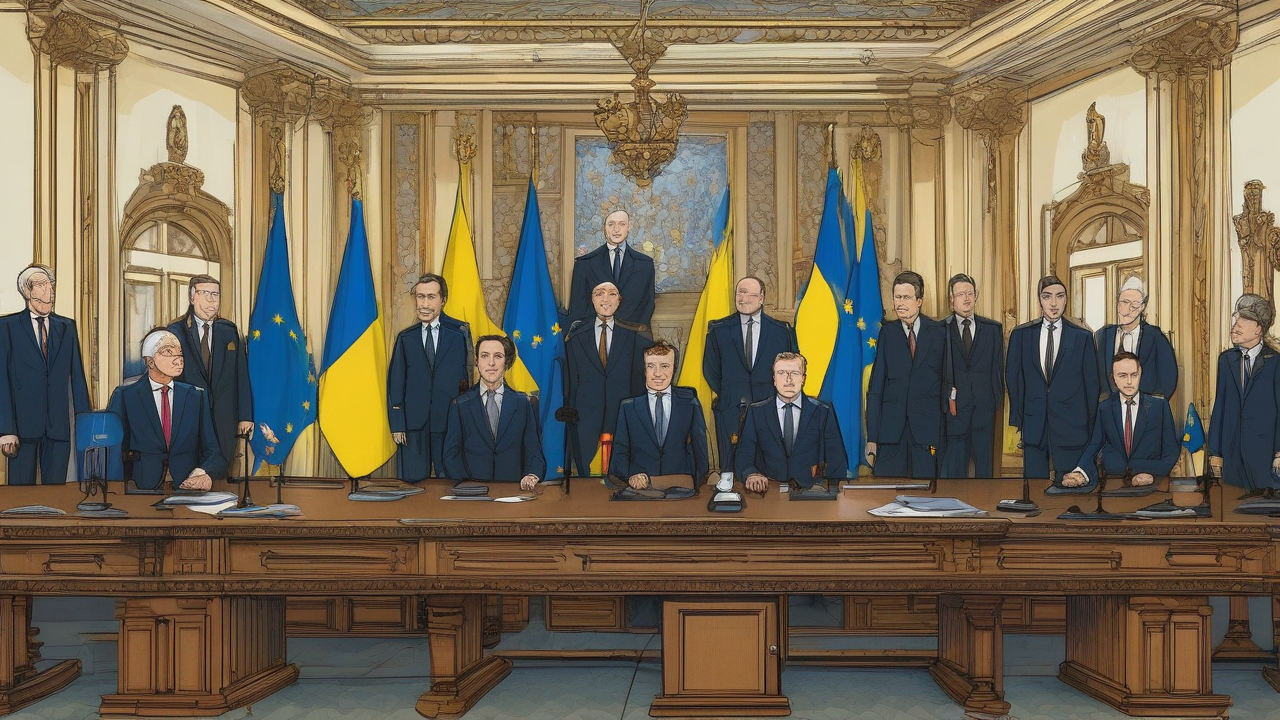
The symbolism was scheduled to the day. On Monday, leaders of the Coalition of the Willing convened in Kyiv and by video link as Ukraine marked the thirty-fifth anniversary of its restored independence, with British Prime Minister Andy Burnham, French President Emmanuel Macron, and German Chancellor Friedrich Merz chairing alongside President Volodymyr Zelensky. [1] More than thirty countries took part in the hybrid-format meeting, the third the grouping has held in the Ukrainian capital since it formed in early 2025 with security guarantees as its founding brief. [4]
The grouping's own history frames what Monday could and could not deliver. Founded by France and the United Kingdom in March 2025, the coalition has spent eighteen months converting a reassurance-force concept into planning documents — at its July summit in France, Poland announced autumn military drills meant to prove the force could deploy once a ceasefire arrives. [6] What it has not produced is the one thing Kyiv needs while the war runs: interceptors, air-defense systems, and money on schedule. Monday's meeting was the first since Burnham took office in July, and his choice of Kyiv for a debut trip signaled continuity; whether British policy continues at the pace his predecessor set is the quieter question underneath the group photo. [6]
The communiqué behaved as communiqués do. The co-chairs' statement reiterated security commitments, denounced Russia's continued campaign of terror against Ukrainian cities, and pledged fresh military and energy support packages for the coming months. [1] Zelensky said Kyiv will receive new military and energy aid; European Council President Antonio Costa, Finnish President Alexander Stubb, and Luxembourgish Prime Minister Luc Frieden attended in person. [4] For Burnham, in office since July 20, the trip was a first visit to Ukraine as prime minister — a debut staged, like everything else on Monday, under air-raid sirens that Russian drone barrages made unavoidable. [3]
Now read what Kyiv actually asked for, because the host's own statements tell a less ceremonial story than the joint text. Zelensky told coalition partners Ukraine faces a twenty-seven-billion-dollar defense budget shortfall for the year — the result of funds allocated through December being spent by August — and pressed for early disbursement of European loan money already approved, plus a fair mechanism for the frozen Russian assets sitting in European accounts. [2] He asked for air-defense reinforcement of the Black Sea grain corridor, through which only three or four ships still enter and leave Odesa each day against three times that traffic before Russian strikes began hammering port infrastructure. [2] These are winter-survival requests. The energy package in the communiqué is not development aid; it is replacement capacity for a grid Russia has spent four autumns learning to dismantle.
The gap between those two documents — the one the coalition wrote and the one Kyiv needed — is where Monday's real information lives. European capitals have learned to deliver unity statements at speed; the machinery that converts statements into interceptor batteries runs on slower fuel. Ukrainian social media spent Independence Day pairing summit photographs with recordings of the night's sirens, an editorial comment requiring no caption. Skeptics in European commentary asked what packages means when Washington's delivery timelines are absent from every line, a fair question given that the American contribution to this coalition now consists largely of munitions the Pentagon says it does not have to spare. [5] Moscow's channels dismissed the gathering as holiday theater, which is at least internally consistent: the Kremlin fired one hundred forty-three drones at Ukraine over the weekend night before hosting-day rhetoric about terror campaigns landed. [3]
None of this makes the meeting empty. Coalitions exist to make promises expensive to break, and a thirty-five-country gathering on the anniversary date renews exactly the commitment Moscow most wants Europe to let lapse — that Ukrainian independence is a European interest rather than a Ukrainian problem. The energy pledge has concrete value if it arrives before heating season, which is the test that matters. And the budget-shortfall admission cuts both ways: it is a plea for money and a rare public acknowledgment from Kyiv that its own fiscal arithmetic cannot sustain the war without partners, stated plainly enough to concentrate allied minds.
What to watch now is sequencing, not sentiment. If interceptor and energy-equipment deliveries move within weeks, Monday was a working session with good optics. If the packages surface as framework announcements routed through months of committee process, then the communiqué will have done what such texts usually do — recorded unity precisely because policy had run out of news. Independence days commemorate survival. They are not, whatever the toasts say, a strategy for the next quarter. Kyiv knows that better than anyone at the table; it asked for radar instead of rhetoric, and the honest measure of Monday is how much radar arrives before the first hard frost.
-- HENDRIK VAN DER BERG, Brussels