The Kennedy Center's Trump-appointed board agreed this week to delay its latest push to re-inscribe President Donald Trump's name on the building until October 8, backing off the September 8 deadline that Judge Christopher Cooper pressed Justice Department lawyers to justify at a hearing two days earlier. [1] The concession came the same week DOJ lawyers told Cooper in a separate filing that the Kennedy Center is in "terrible trouble" and could be "taken down" entirely without the administration's disputed renovation plan — a demolition threat that hung over Thursday's emergency hearing even as the board quietly retreated on its own timeline. [1]
Cooper spent nearly two hours Thursday questioning both sides, pressing DOJ on why it was rushing to reinstall Trump's name on a building whose original naming Cooper himself had already ruled illegal in May. [1] He also raised a jurisdictional wrinkle: because the Kennedy Center appealed his May ruling in June, Cooper questioned aloud whether he even retained authority to block the board's latest maneuver. [1] Demonstrators filled the courtroom gallery and an overflow room. The hearing ended with Cooper asking the center to extend its self-imposed deadline while he weighs a ruling; in a filing later that day, its lawyers agreed to hold off until at least October 8. [1]
The board's May defeat, detailed in this paper's Thursday coverage, found the trustees had exceeded their authority in December's naming vote and that their subsequent decision to close the building for renovations was likely a breach of fiduciary duty — a vote Cooper described as "ill-informed and seemingly preordained." [1] Rather than abandon the naming push, the board revoted this summer on a different plan: inscribing Trump's name in three separate locations on the exterior, even though the federal statute establishing the Kennedy Center as JFK's living memorial states that "no additional memorials or plaques in the nature of memorials shall be designated or installed" in the complex's public areas. [1] That revote, and its September 8 execution date, is what generated Thursday's hearing.
The board also complicated its own legal position by appealing Cooper's May ruling in June, a decision that produced the jurisdictional question Cooper raised aloud Thursday: having invoked appellate review of his authority, does the board's own appeal now limit what Cooper can order while that appeal is pending? Neither side fully resolved the question during the hearing, and Cooper's request that the board extend its own deadline — rather than an order compelling it to do so — reflects that same uncertainty. The board's agreement to wait until October 8 was framed by its own lawyers as voluntary cooperation; Beatty's team and outside observers read it instead as recognition that pressing ahead risked a more adverse ruling than simply waiting.
Commerce Secretary Howard Lutnick, whose wife serves as a trustee and who has recently taken to attending board meetings to help "organizationally," appeared at the courthouse Thursday to defend the board's resolution while doubling down on warnings that the building would need to be demolished absent sufficient renovation funding. [1] That framing directly echoes the Monday DOJ filing, which floated replacing the entire complex with an outdoor amphitheater on the Potomac riverbank — a substitute the department's own lawyers acknowledged would "fail to adequately honor" Kennedy's memory. [1] One Kennedy Center staffer, speaking to The Atlantic outside the courthouse on condition of anonymity for fear of reprisal, put the calculus plainly: "A holding pattern is better than them taking a bulldozer to it." [1]
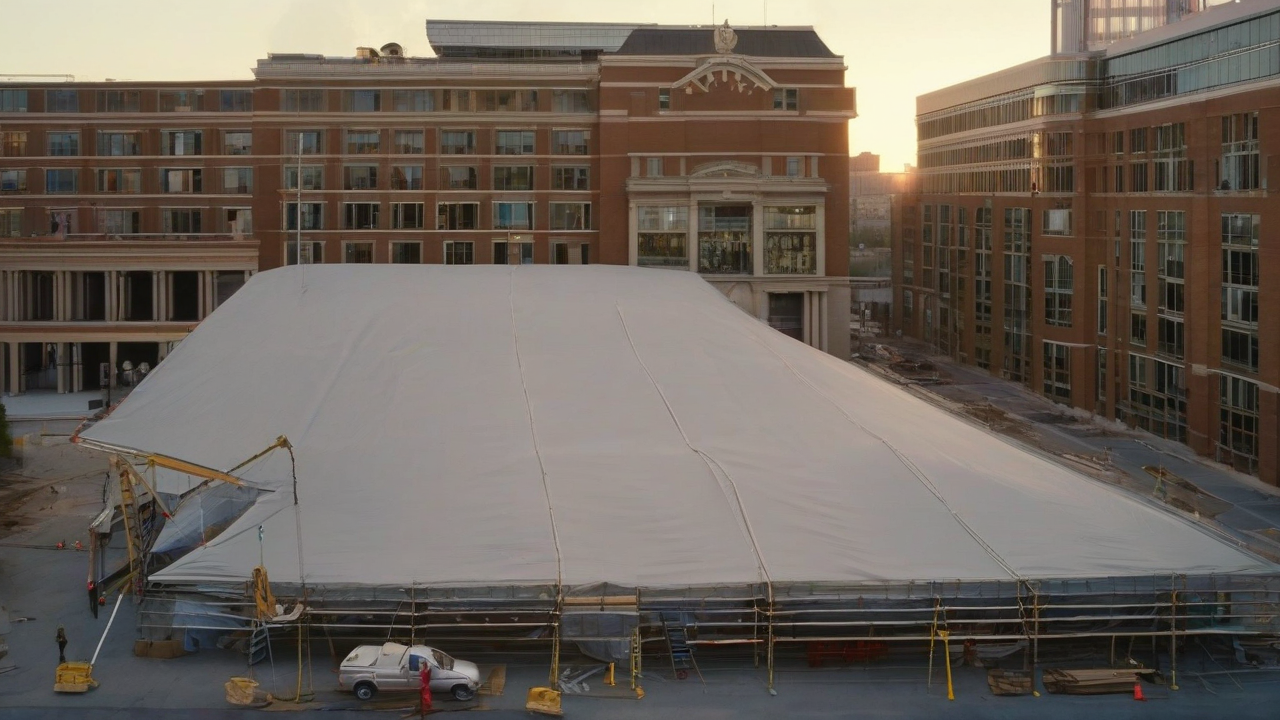
The financial backdrop makes the board's continued silence about the closure's actual costs more conspicuous. Washington Post reporting this week found the center's finances have deteriorated sharply since Trump's name first went up on the building, a fact the board itself was informed of — yet the trustees have provided no detailed accounting of how a two-year shutdown would affect ticket sales, fundraising or artist relationships. [1] The board has separately argued in court filings that removing Trump's name jeopardizes "hundreds of millions of dollars" in donations to a fundraising vehicle it created earlier this year, whose structure and donor base remain undisclosed. [1] A tarp still covers the facade where the name once hung, a decision critics have characterized as petulant rather than practical.
Cooper gave no indication Thursday of when he might rule on the underlying legality of the renaming, leaving October 8 to arrive, if it does, as a deadline without a resolved legal question beneath it — the same structural pattern this paper's companion analysis examines today: a board that can keep re-voting into new violations faster than litigation can resolve the old ones.
-- SAMUEL CRANE, Washington