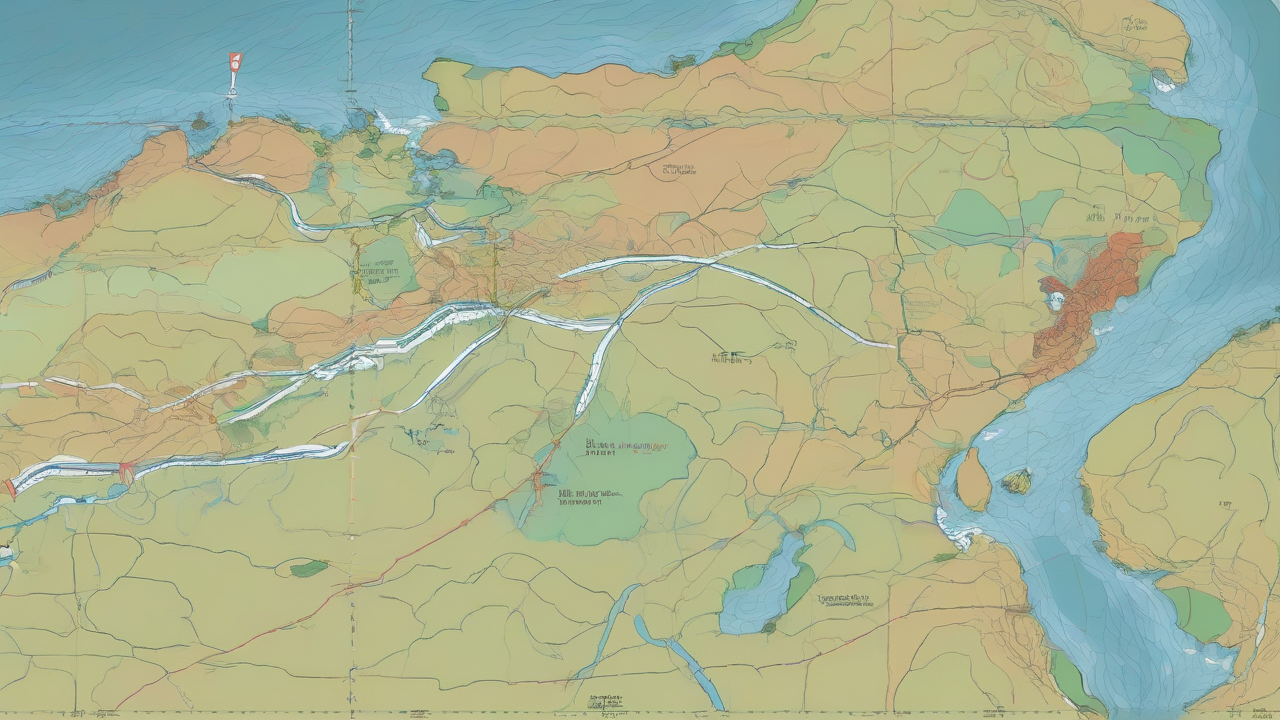
Mohsen Rezaei said again that Iran will declare a prohibited zone near the Strait of Hormuz in the coming days, starting from the U.S. Navy's blockade line and running toward the strait and into parts of the Persian Gulf. [1] Ships that enter, he said, will be placed on Iran's sanctions list. [1] Sunday this paper printed an announced zone with no map beside a tanker sunk on video. Monday the zone is still a sentence.
Al Jazeera put the operational question in the headline: can Iran enforce a restricted zone in the strait. [2] The piece walks the coastline, the islands, and the gap between a television warning and a drawn polygon. [2] Al Jazeera English posted that question to X before dawn UTC. [2] A question is not a chart. A sanctions list is not a boarding.
CENTCOM's Monday arithmetic is hulls, not polygons. The command said it had redirected 94 commercial vessels, disabled three, and boarded two while the blockade of Iranian ports continued. [3] Ninety-four turned ships are a count of what the United States already did. They are not proof that Rezaei's coming line exists on water.
Rezaei again tied the strait to a condition: Iran would keep Hormuz open if Washington stopped attacks, threats, and sabotage, and he said work continued with Oman on maps for a corridor through Iranian and Omani waters. [1] Maps in progress are not maps issued. Oman as a drafting partner is not Oman as an enforcer.
Sunday's Tehran file ended proportionate response and claimed six vessels against three named American hulls. Monday does not add a seventh hull in fetched copy. It adds a second day of the same unmapped warning. Do not merge Sunday's six claims into Monday's zone. Do not write a closure.
The enforceability debate is the honest MSM split. Malay Mail carries Rezaei's warning as a coming-days event with a sanctions penalty. [1] Al Jazeera asks whether the architecture of control along Iran's coast can be made into a line that commercial captains will obey against U.S.-protected shipping. [2] One desk prints the threat. The other prints the physics.
Captains already live inside someone else's geometry. CENTCOM's 94 redirections are that geometry as practiced from the American side: you will not go to an Iranian port today. [3] Rezaei's zone is the mirror claim: you will not cross a line we have not published. [1] Two exclusion stories, one strait, no shared chart.
Sunday's video of Kylo still sits on the command's feed. It is evidence of a sinking. It is not evidence of a zone. A reader who stops at the tanker fire has an American cost ratio. A reader who stops at Rezaei has a future polygon. The paper prints both and draws neither.
Experts quoted in Monday copy doubted Iran could fully enforce a broader zone against U.S.-escorted hulls while still being able to harass unprotected commercial traffic. [2] That is a risk statement, not a scorecard. Harassment is not a declared zone. A declared zone is not an enforced one.
The corridor language is doing political work. A new international route through Iranian and Omani waters, if it existed on a published chart, would be a fact about insurance, pilots, and noon positions. [1] On Monday it is a promise about work with Oman. Promises do not move VLCC fixtures.
Washington's blockade count and Tehran's sanctions list are both coercive vocabularies. One is already numbered. [3] One is still conjugated in the future tense. [1] The paper's Sunday position holds: count the sunk ship; do not enforce the unannounced zone. Monday adds: count the 94; still do not draw the line.
Labor Day in the United States closed the New York exchange that would otherwise have re-priced this paragraph in public. Oil still moved in Asia and on the screens that do not take American holidays. The strait did not. It waited for a map.
Ghalibaf's Sunday doctrine — faster, more intense, more painful — has no Monday addendum in fetched copy. Doctrine without a new strike is still doctrine. Zone without coordinates is still weather.
Pickaxe Mountain remains unstruck. The wipe-out-if-it-goes-a-third-time line remains unspent. Neither belongs in a Monday zone story except as a reminder of what has not happened.
A prohibited zone that starts 'in the coming days' can be true tomorrow and still be false today. The job of this edition is today. Today the line is unpublished. Today the 94 are counted. Today Al Jazeera asked whether enforcement is even available. Print the question. Leave the chart blank.
Rezaei's sanctions list is a piece of paper that does not yet have a latitude. [1] Captains take orders from navies they can hear on VHF. They do not take orders from a coming-days clause.
The 94 redirected hulls belong in this lead because they are the only large Monday number attached to the same water. [3] They measure American practice. They do not measure Iranian cartography.
Al Jazeera English's pre-dawn post is the X layer this edition will actually show. [2] It asks a question the paper also asks. It does not leak a shapefile.
Labor Day in Washington is not a pause in Tampa or Tehran. [1] The holiday explains a closed exchange. It does not explain a blank map.
If Tuesday brings coordinates, Tuesday's paper will print them. [2] This paper's contract is Monday. Monday still owes the map.
-- YOSEF STERN, Jerusalem