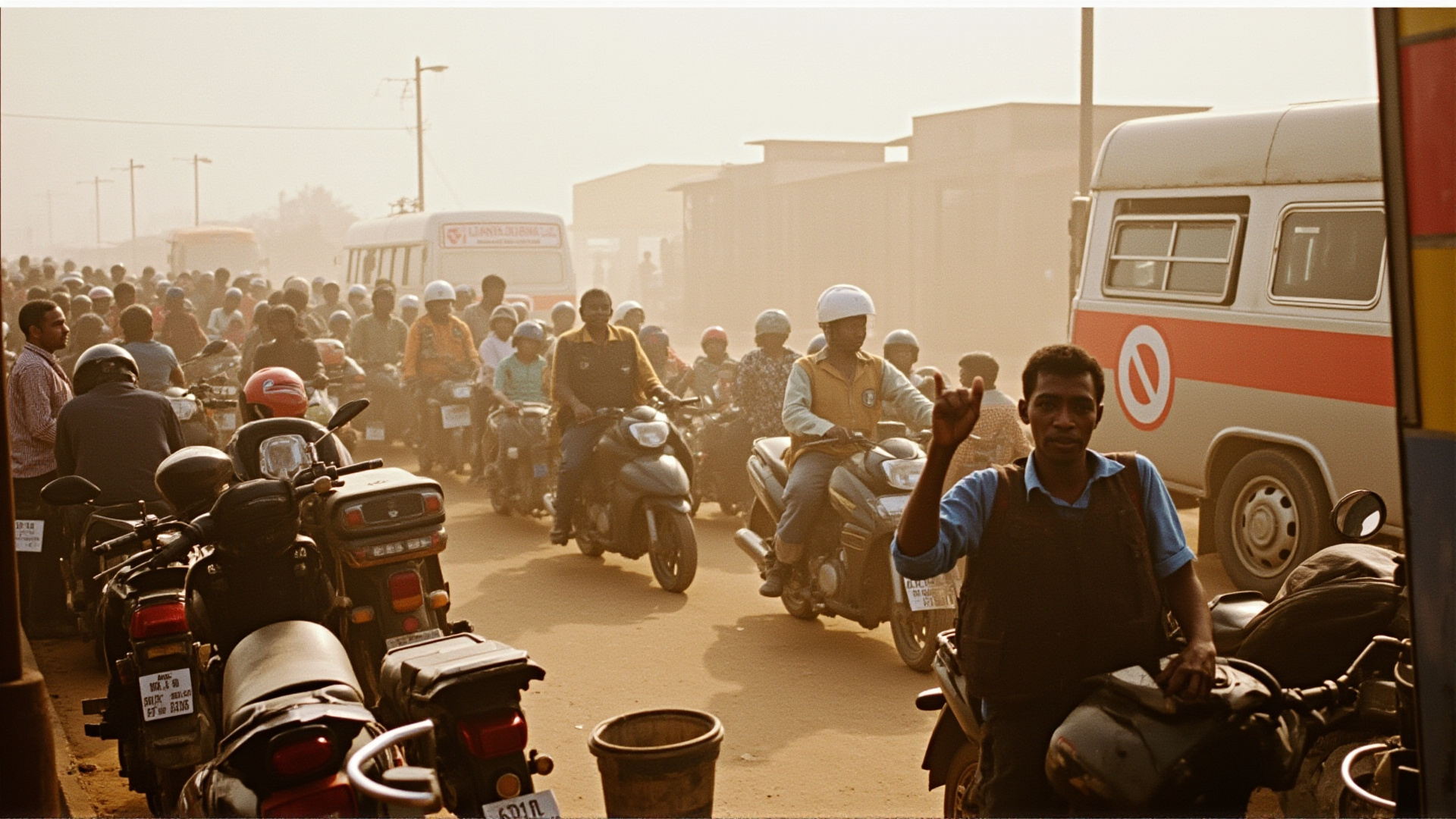
In Nairobi, the queue at a Shell station on Mombasa Road stretched four blocks last Tuesday. A matatu driver named Joseph — he would not give his surname, because his employer does not know he has been sleeping in the vehicle to hold his place — said he had waited eleven hours. The pump ran dry before he reached it. He would try again tomorrow. [1]
The BBC reported this week that African countries are "coping" with the effects of the Iran war. The word choice is revealing. Coping suggests adaptation. What is happening across East and West Africa is closer to triage: governments rationing power, diluting petrol with ethanol to stretch supply, and watching fuel tankers that were bound for Mombasa or Dar es Salaam get redirected to buyers who can pay more. [1]
Bloomberg's data, circulated widely on X, painted the structural picture the BBC's framing obscured. Many African economies are running on weeks — not months — of refined fuel reserves. Kenya's Ministry of Energy assured the public in early March that petroleum stocks would last through April. That horizon has been shrinking. Ethiopia cut government vehicle usage by half. Nigeria's Dangote Refinery, the continent's largest, has become a lifeline for neighbouring countries that previously imported entirely from Gulf refiners. [2] [3]
The divergence is not subtle. The IEA's 32 member nations coordinated a 400-million-barrel drawdown from strategic reserves — the largest in the agency's history. Africa has no equivalent institution, no continental reserve, no coordinated drawdown mechanism. The countries most exposed to the Hormuz closure are the ones with the least capacity to absorb the shock. [4]
Tanzania has begun negotiations with Dangote for emergency refined fuel imports, but the refinery — designed for Nigerian crude — is already operating at 85 percent capacity supplying its domestic market. Kenya is exploring a fuel swap with India, exchanging tea exports for refined petroleum at unfavorable terms. Uganda, landlocked and dependent entirely on Kenyan port infrastructure, has seen pump prices double in two weeks. [3]
The war did not create Africa's energy vulnerability. Decades of underinvestment in refining capacity, dependence on imported refined products rather than crude, and exclusion from the IEA's strategic reserve architecture created the vulnerability. The war exposed it. The question is whether the exposure produces structural change or whether, when the strait reopens, the continent returns to the same dependency that made it fragile.
-- JAMES MWANGI, Nairobi