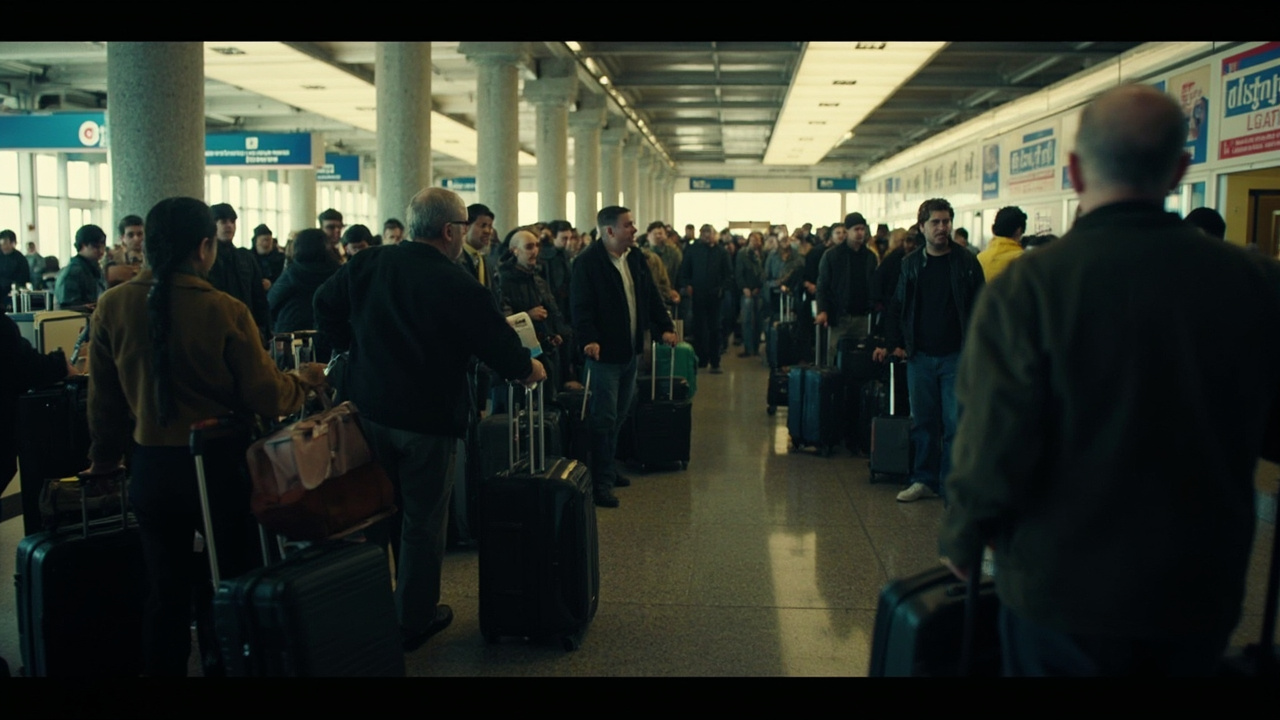
The Transportation Security Administration does not have the staffing to screen passengers at every airport in the United States. That is not an editorial judgment. It is the operational reality described by a senior DHS official to Reuters last Wednesday, who warned that small airports could soon face closure if the partial shutdown of the Department of Homeland Security continues. The shutdown entered its second month on Friday. Spring break began the same week. The math is headed nowhere good. [1]
At least 366 TSA officers have resigned since the shutdown began on February 14, according to figures compiled by multiple news organizations. The number is likely higher; the agency is not processing paperwork at normal speed, and some officers have simply stopped showing up without formally quitting. TSA absence rates, which typically run around 3 to 4 percent on a normal day, have spiked past double digits at multiple airports. The officers who remain are working without pay and, in some cases, picking up second jobs to cover rent. [1]
The shutdown stems from a congressional standoff over DHS funding that has nothing to do with airport security and everything to do with immigration enforcement and ICE. Democrats have refused to fund the department unless the administration makes concessions on deportation policy. Republicans have refused to negotiate. The TSA officers caught in the middle earn a median salary of approximately $47,000 a year — low enough that missing a single paycheck creates immediate financial distress. [2]
The consequences are visible to anyone who has flown domestically in the past two weeks. Security lines at major hubs have stretched to two and three hours during peak periods. Smaller airports, which operate with minimal TSA staffing under normal conditions, have begun reducing operating hours. One regional airport in the Midwest, which Reuters did not name, is down to a single screening lane open six hours a day. Flights have been delayed not because of weather or mechanical issues but because there were not enough people to look inside carry-on bags. [1]
DHS Secretary Kristi Noem told reporters that more TSA agents are "likely to quit, or start calling out to take other jobs, if they miss another paycheck this Friday." She was not issuing a warning so much as describing what she sees happening in her own department. The characterization matches what union officials have reported: experienced officers, the kind who keep lines moving and catch the things the machines miss, are leaving first because they have the credentials to get hired elsewhere quickly. The officers who remain are disproportionately new, part-time, or close to retirement. [2]
Politico described the trajectory as "a snowball going down the hill." The metaphor is apt in its physics if not its temperature. The shutdown does not produce a single catastrophic failure. It produces a gradual degradation — longer lines become canceled flights become closed terminals become a domestic air travel system that cannot function at capacity. Each week compounds the previous one. The officers who quit this week will take months to replace, even after funding is restored, because TSA hiring requires background checks, training, and security clearances that cannot be accelerated.
Spring break is here. Summer is three months away. The snowball has not stopped rolling.
-- MAYA CALLOWAY, New York