TL;DR
Greystones, Ireland, pledged to keep smartphones away from children under thirteen — and the question nobody is asking is why it takes a village pact to do what parents cannot.
MSM Perspective
The Guardian covered the story as heartwarming community action without examining the structural failure it reveals about individual household resistance to tech.
X Perspective
X's parenting communities are split between admiration for the Greystones pledge and skepticism about whether a voluntary community pact can survive one non-compliant family.
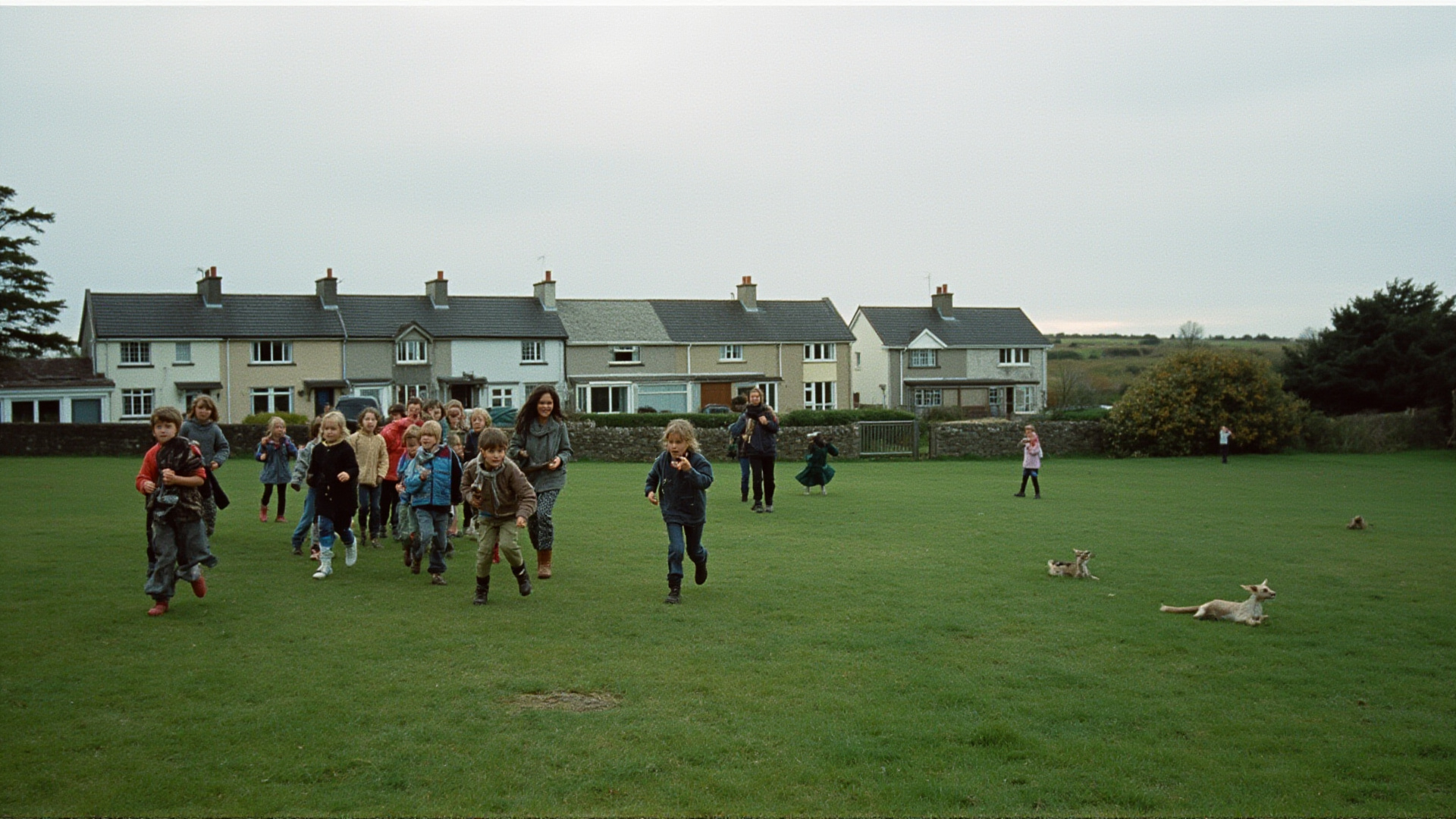
The parents of Greystones, a coastal town of 18,000 in County Wicklow, have signed a voluntary pledge to keep smartphones away from their children until the age of thirteen. The pledge, organized through eight primary schools and the local GAA club, has been signed by approximately 1,600 families — representing, organizers estimate, 70 percent of households with children under thirteen in the town. There is no enforcement mechanism. There is no penalty for breaking it. There is only the social compact that your child will not be the only one without a phone, because nobody's child will have one. [1]
The Guardian covered the story under the headline "The Irish Village Going Phone-Free for Children." The piece was warm, admiring, and entirely uninterested in the question that makes the story worth writing: why does it take a community-wide pact to accomplish something that any individual parent can, in theory, do alone? [1]
The answer is the collective action problem that technology companies understood before parents did. A single family that withholds a smartphone from a twelve-year-old creates a social outcast. The child cannot join the group chat, see the shared content, or participate in the digital layer of friendship that has become, for this generation, friendship itself. The cost of individual resistance is borne entirely by the child. The Greystones pledge works because it eliminates the cost: if nobody has a phone, nobody is excluded by not having one. The game theory is simple. The execution required a village. [1] [2]
Rachel Harper, the principal of Greystones Educate Together school and one of the pledge organizers, said the idea emerged from a parents' meeting in November where forty families described the same experience: buying a phone for a child who did not want one, because every other child had one. "We were all doing something none of us wanted to do," Harper told the Irish Times. "The pledge gave us permission to stop." [2]
The model has attracted interest from communities in Britain, the Netherlands, and the United States. A school district in Boulder, Colorado, contacted Harper's office last week. The Surgeon General's 2025 advisory on adolescent mental health cited smartphone access as a primary risk factor but proposed no mechanism for collective action. Greystones invented one. Whether it survives the first family that breaks ranks is the open question.
-- CHARLES ASHFORD, London
Sources & X Posts
News Sources