Technology
TL;DR
In one week Anthropic won a federal injunction, faced a $1.5B copyright settlement, and carried a $380B valuation.
MSM Perspective
Business press treated each event separately; few outlets connected the three as a single pattern.
X Perspective
X commentators struggled to reconcile Anthropic's legal wins with its copyright liability and sky-high valuation.
Three things happened to Anthropic in the span of a single week in late March 2026, and none of them had anything to do with the others except that they happened to the same company.
On March 26, U.S. District Judge Rita Lin issued a preliminary injunction blocking the Trump administration's ban on government use of Anthropic's Claude AI. The judge found that the Pentagon's designation of Anthropic as a supply-chain risk under 10 USC appeared to be "classic First Amendment retaliation," a finding that Politico described as an early but possibly "premature" victory [1][2]. The case, Anthropic PBC v. U.S. Department of War, had been filed on March 9 after the Pentagon moved to bar federal agencies from using Claude in what critics called an escalation of the administration's broader conflict with Silicon Valley companies that had resisted its policy agenda.
Four days earlier, on March 20, Reuters reported that the lead attorneys behind the $1.5 billion Bartz v. Anthropic copyright settlement had slashed their fee bid after judicial pushback [3]. The settlement, which required Anthropic to pay class members more than $3,000 per copyrighted work, was described by plaintiffs' lawyers as "the largest publicly reported copyright recovery in history" [4]. The deal had been initially rejected by the court in September 2025 and was now proceeding under revised terms.
And hovering above both proceedings was the February valuation. Anthropic had closed a $30 billion funding round that pushed its valuation to $380 billion, a figure reported by the New York Times, Forbes, and AP News [5][6]. The company's annualized revenue had grown from $1 billion in December 2024 to $14 billion by early 2026, a trajectory that made an IPO a matter of when, not whether.
Taken individually, each event was significant but comprehensible. A tech company fighting a government ban. A tech company settling copyright claims. A tech company raising money at an enormous valuation. These are the standard movements of a large enterprise navigating a complex regulatory environment.
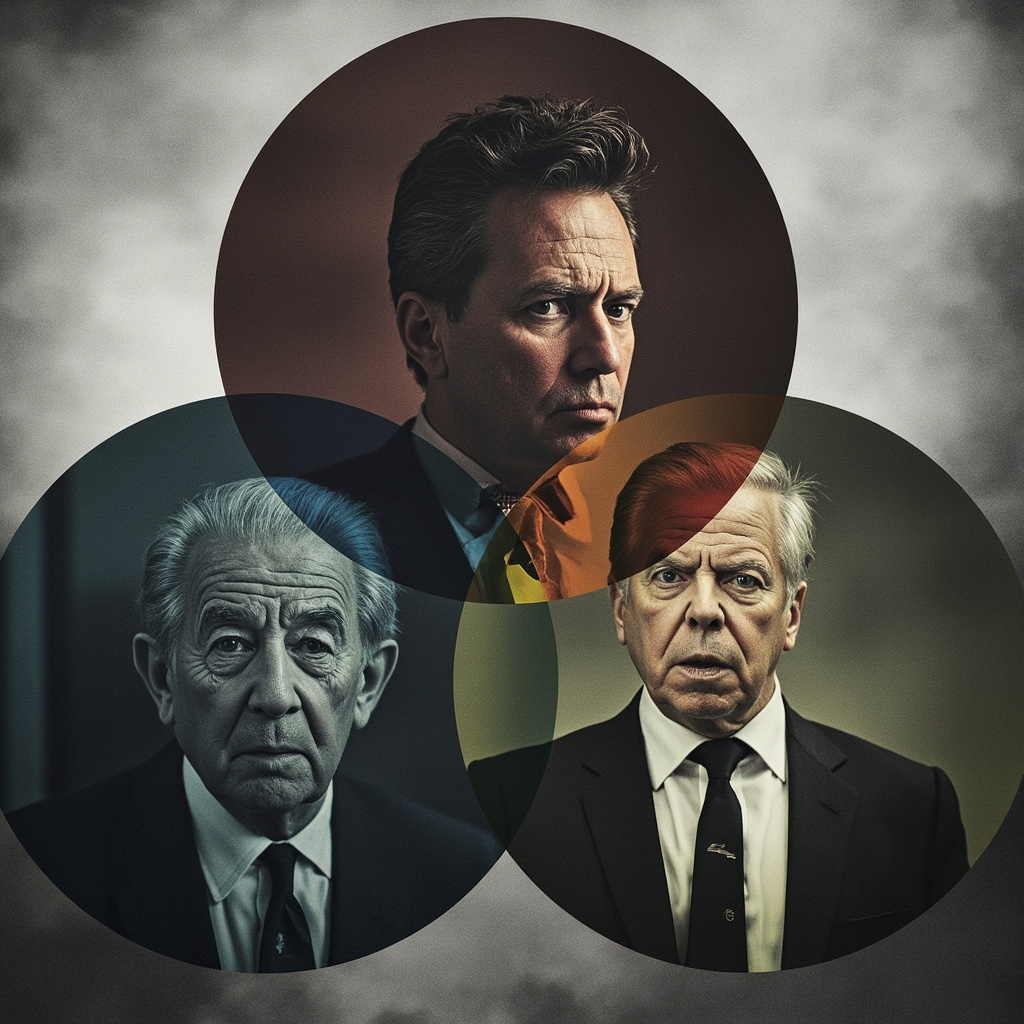
Taken together, they described something stranger: a company simultaneously winning and losing in court, being celebrated and penalized by the legal system, being valued at $380 billion while carrying $1.5 billion in admitted copyright liability. The three events existed on separate legal tracks with separate judges, separate plaintiffs, and separate theories of harm. But they converged on the same week, in the same company, and the combined picture was one of an industry moving faster than any single institution could process.
MediaPost was among the few outlets that attempted to connect the threads, publishing a piece headlined "Anthropic's Legal Wins, IPO, Next-Gen 'Mythos' Leap" [7]. But most coverage treated each event as its own silo. The court win went to the tech press. The copyright settlement went to the legal press. The valuation went to the business press.
The company itself said nothing about the convergence. It did not need to. At $380 billion, silence was its own statement.
-- David Chen, San Francisco
Sources & X Posts
News Sources