Technology
TL;DR
Artemis II launches Wednesday — the first crewed Moon mission in 53 years — but X asks why $4B goes to space while gas hits $4.
MSM Perspective
Scientific American framed Artemis II as a triumphant return to human spaceflight after 53 years.
X Perspective
X centered Artemis II on budget arithmetic — $4.1 billion per launch while the war costs $27 billion and gas crossed $4.
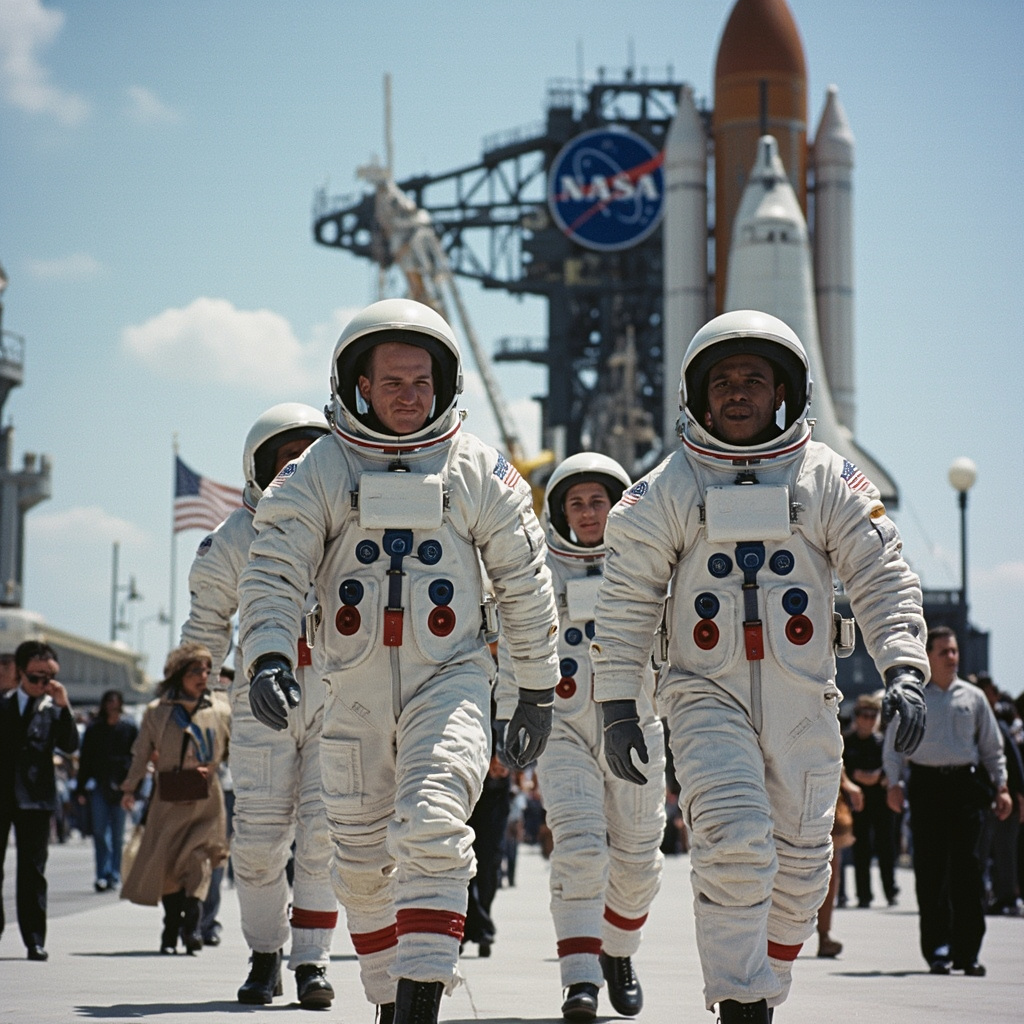
The countdown clock read T-minus eighteen hours when the four astronauts of Artemis II suited up at Kennedy Space Center on Tuesday. [1] Reid Wiseman, Victor Glover, Christina Koch, and Jeremy Hansen would become the first humans to travel beyond low Earth orbit since Apollo 17 in 1972 — a feat NASA called the culmination of decades of planning and the beginning of a new era of deep space exploration.
MSM called it a triumph. The Guardian's space correspondent wrote that "the first moon landing captivated the world. Can a new return visit do the same?" CBS News quoted the astronauts saying they were "ready to go." NPR led with NASA's "historic nine-day trip around the moon and back." The narrative was consistent: despite everything happening on Earth, humanity was reaching for the stars.
X saw it differently. The platform's discourse around Artemis II this week has centered not on the mission's scientific merit but on its optics during wartime. A widely shared post from aerospace journalist Eric Berger noted that each Artemis launch costs approximately $4.1 billion — a figure that, when posted alongside headlines about Iran's death toll passing 8,700 or the S&P 500's worst month since 2022, produced a different kind of viral thread. "We can afford the Moon but not the 401(k)s," one post read. The reply chain that followed was brutal: airstrike costs, drone costs, the price of a single aircraft carrier group versus a lunar mission.
This is not a new tension in American space policy. The Apollo program itself was a Cold War expenditure, its political logic rooted in the need to demonstrate technological superiority over the Soviet Union. What is new is the transparency with which X users are performing the arithmetic in real time — and the absence of that conversation from mainstream coverage.
NASA Administrator Bill Nelson has argued that Artemis represents critical investment in American technological leadership and that its benefits — jobs, innovation, national prestige — justify the cost. The program also carries contracts for dozens of states and thousands of suppliers, a Congressional coalition that has kept the funding alive through multiple administrations regardless of party control.
But that coalition was built in peacetime. The war in Iran has now entered its fifth week, with direct costs estimated at $27 billion and climbing, according to the latest Congressional Budget Office figures. Oil has broken $103 per barrel. Gas has crossed $4 per gallon nationally. The S&P 500 closed March with its worst monthly performance since 2022. None of these numbers appeared in the Artemis II launch coverage.
The paper's March 30 edition noted the cultural coincidence: Project Hail Mary, a film about a lone astronaut saving Earth from a catastrophe of its own making, topped the box office this weekend with a $54.5 million opening. The fiction of space salvation and the reality of space flight arrived in the same news cycle. What the paper didn't note — because it hadn't yet happened — was that the real mission's first crewed launch would fall not on a day of peace but on the thirty-first day of a war that has no authorization, no clear end state, and no exit ramp that leads to less.
The astronauts will orbit the Moon and return. They will not see the oil fires or the protest banners or the gas price signs. The capsule's windows face outward, toward the void. Back on Earth, the war continues, and the budget that funds it does not ask whether there is room for both.
Sofia Lindqvist reported this dispatch from Stockholm.