Technology
TL;DR
NASA began its nearly 50-hour countdown Monday for the April 1 Artemis II launch, the first crewed lunar mission since 1972.
MSM Perspective
Major outlets frame Artemis II as NASA's most consequential crewed mission in decades, with coverage focused on crew readiness and weather risks.
X Perspective
Space enthusiasts are sharing countdown milestones in real time, calling Artemis II a generational moment for human spaceflight.
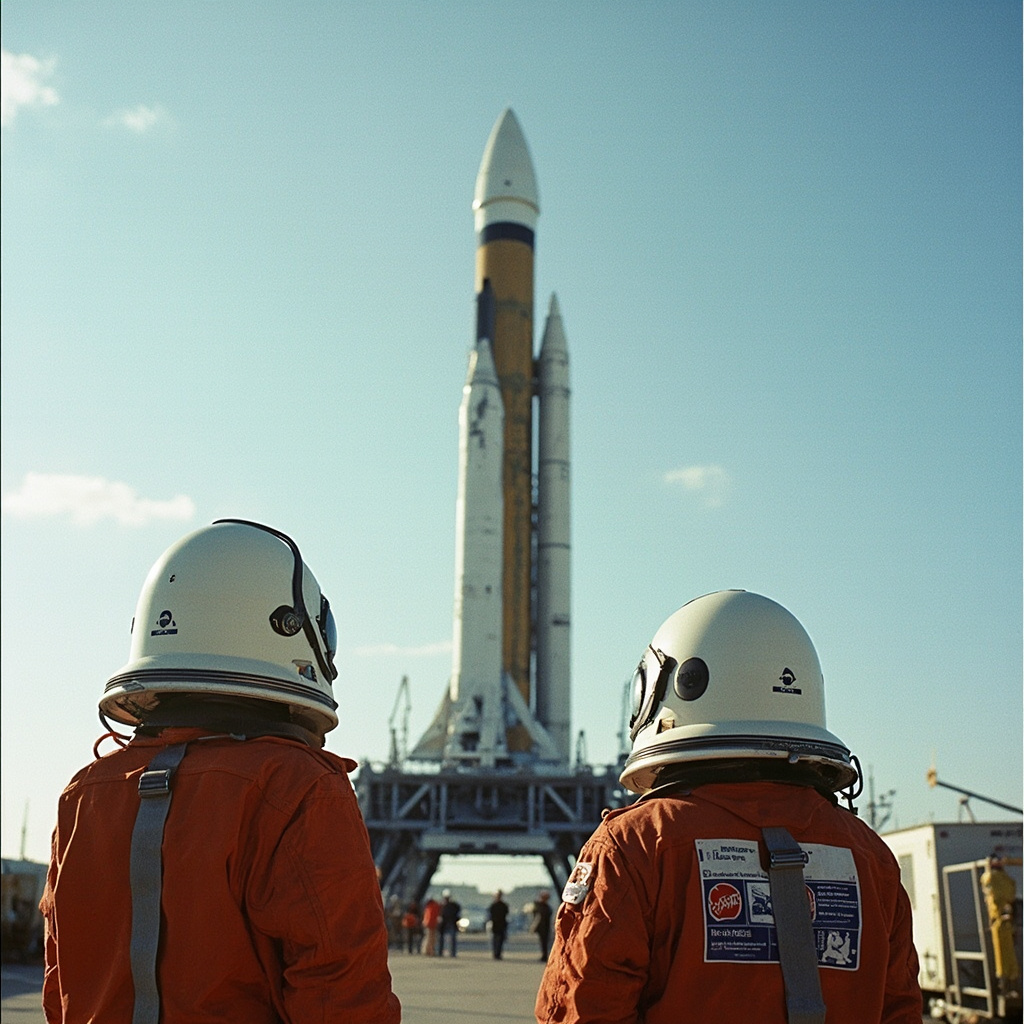
NASA began its nearly 50-hour countdown Monday afternoon at Kennedy Space Center for the Artemis II mission, targeting an April 1 launch at 6:24 p.m. ET [1]. If all holds, it will be the first crewed flight toward the moon since Apollo 17 in December 1972.
Commander Reid Wiseman, pilot Victor Glover, mission specialist Christina Koch, and Canadian Space Agency astronaut Jeremy Hansen arrived at the Space Coast on March 27 and have spent the final days in quarantine and suit checks. The four-person crew will fly aboard the Space Launch System rocket and Orion spacecraft on a roughly 10-day journey around the moon and back to Earth.
At a March 29 press conference, NASA officials confirmed the SLS rocket and Orion were in good condition at Launch Complex 39B following rollout on March 19. Weather remains the primary variable; the 45th Weather Squadron is monitoring conditions along the Florida coast.
Koch, who holds the record for the longest single spaceflight by a woman at 328 days aboard the ISS, told reporters the mission was "starting to feel real." Hansen will become the first Canadian to fly beyond low Earth orbit.
Artemis II is a test flight -- no lunar landing is planned. That milestone belongs to Artemis III, currently targeting no earlier than 2028. But the crewed flyby will validate Orion's life support systems and deep-space navigation in preparation for eventual surface missions.
The countdown clock is ticking. By Tuesday evening, the world will know whether humanity is heading back to the moon.
-- KENJI NAKAMURA, Cape Canaveral