Economy
TL;DR
Treasury Secretary Bessent told Meet the Press that elevated gas prices are worth preventing an Iranian nuke — but couldn't say if the pain lasts 30, 50, or 100 days.
MSM Perspective
The NYT live blog flagged Bessent's admission that he cannot predict when prices will fall, even as gas hits $3.93 nationally.
X Perspective
Critics note Bessent's '50 days for 50 years' line collapsed when Welker pressed him on whether it could be 100 days instead.
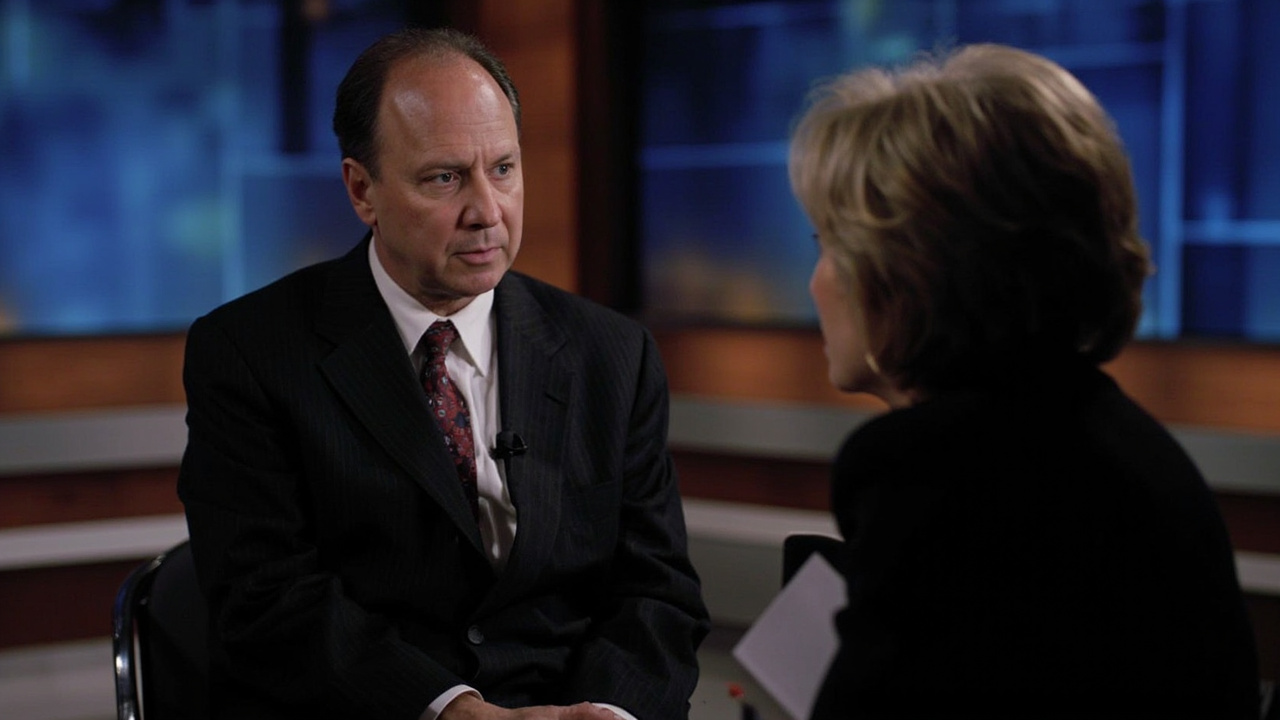
The rhetorical formula was clean, almost elegant: "Fifty days of temporary elevated prices — prices will come off on the other side — for 50 years of not having an Iranian regime with a nuclear weapon." Treasury Secretary Scott Bessent delivered the line on NBC's Meet the Press Sunday morning with the polished confidence of a man who has rehearsed his talking points. Then Kristen Welker asked the follow-up question, and the formula collapsed [1].
"I heard you say 50 days," Welker said. "Are you saying this will be resolved in 50 days?"
Bessent paused. "I don't know if it's 30 days, 50 days, or 100 days," he said [2].
This is the problem with slogans that contain numbers. The numbers invite scrutiny. And when the Treasury Secretary of the United States — the person nominally responsible for the economic stability of the world's largest economy — admits on national television that he cannot estimate the duration of a price shock caused by a war his administration started, the slogan becomes evidence of something the administration would rather not advertise: that nobody in charge knows how long this lasts [2].
Gas prices are at $3.93 per gallon nationally, according to USA Today data from Friday. That is up from $3.14 the day before Operation Epic Fury launched on February 28. In some California markets, prices have crossed $5.50. Diesel, which powers the trucks that move food and goods across the country, is up 28 percent. The Strait of Hormuz — responsible for roughly 20 percent of the world's oil exports — has been effectively closed since Tehran began retaliating against tanker traffic in the war's first week [3].
The administration's response to the energy crunch has been, as this paper reported last week, a study in improvisation. The Treasury Department quietly issued waivers allowing the purchase of Iranian oil "stranded at sea" — a policy that our earlier reporting described as "policy capitulation," licensing the enemy's oil because the war broke the market. Bessent on Sunday attempted to reframe the waivers as strategic jiu-jitsu: "We are using their own oil against them," he said, arguing that redirecting Iranian crude to allies like Japan and South Korea rather than China gives Washington better oversight of the proceeds [1].
The argument has a surface logic. But it also means the United States is simultaneously bombing Iran and buying its oil — a contradiction that even sympathetic analysts have struggled to square. When Welker pressed Bessent on whether the administration has "plenty of money to fund this war," his response was telling: "Ridiculous!" he snapped, before pivoting to assert that the Pentagon's $200 billion supplemental request was fully funded [1].
The $200 billion figure has circulated in defense circles for weeks but has not been formally submitted to Congress. Defense analysts estimate that the daily operational cost of strikes on Iranian military infrastructure — air sorties, cruise missiles, naval deployments — runs between $300 million and $500 million. Three weeks of war at that rate would account for roughly $7 billion to $10.5 billion, a fraction of the supplemental. The remainder would fund the longer-term campaign to "demolish Iranian capabilities," as Bessent described it, including the ongoing destruction of Iranian air defenses, missile factories, and coastal fortifications along the Strait [1][4].
Bessent's broader argument rests on a proposition that is unfalsifiable in real time: that the long-term benefit of eliminating Iran's nuclear program outweighs the short-term economic pain. "The American people, they are beginning to understand, thanks to President Trump, that there is no prosperity without security," he said [1].
This is a political argument dressed as an economic one. Whether Americans "understand" the trade-off depends enormously on where they sit in the income distribution. For a hedge-fund billionaire turned Treasury Secretary — Bessent's pre-government career was at Key Square Capital Management — a $0.79 increase in gas prices is rounding error. For a single mother commuting 45 miles each way to a service-sector job in exurban Ohio, it is the difference between making rent and not making rent.
The administration's own economic messaging has been inconsistent. Energy Secretary Chris Wright, also on Sunday programming, emphasized that the U.S. is "energy independent" and that domestic production can offset lost Iranian and Gulf supply. But energy independence is an accounting fiction: oil is a global commodity, and when 20 percent of the world's supply is disrupted, American producers cannot unilaterally set American prices. The market sets the price, and the market is panicking [3].
The most revealing moment of the interview was not the "50 days" line but what Bessent said about Trump's relationship to gasoline prices. "He is so himself, Kristen, driven by the market every day and the gas prices every day," the Treasury Secretary said. The syntax was mangled but the meaning was clear: Trump watches the price of gas the way a day-trader watches a stock ticker. The policy implications of this obsession — the waivers, the reserve releases, the frantic search for supply alternatives — are the downstream consequences of a president who launched a war and then discovered, as every wartime president eventually does, that wars have economic costs [2].
"Sometimes you have to escalate to de-escalate," Bessent offered, defending Trump's threat to obliterate Iranian power plants. The phrase is borrowed from nuclear deterrence theory, where it has a specific meaning about signaling resolve. Applied to a shooting war and a gas-price crisis, it sounds less like strategy and more like hope.
Fifty days, thirty days, a hundred days. The Treasury Secretary doesn't know. The American consumer, filling up at $3.93 a gallon, doesn't know either. The difference is that only one of them has to pay for the uncertainty.
-- SAMUEL CRANE, Washington
Sources & X Posts
News Sources
X Posts