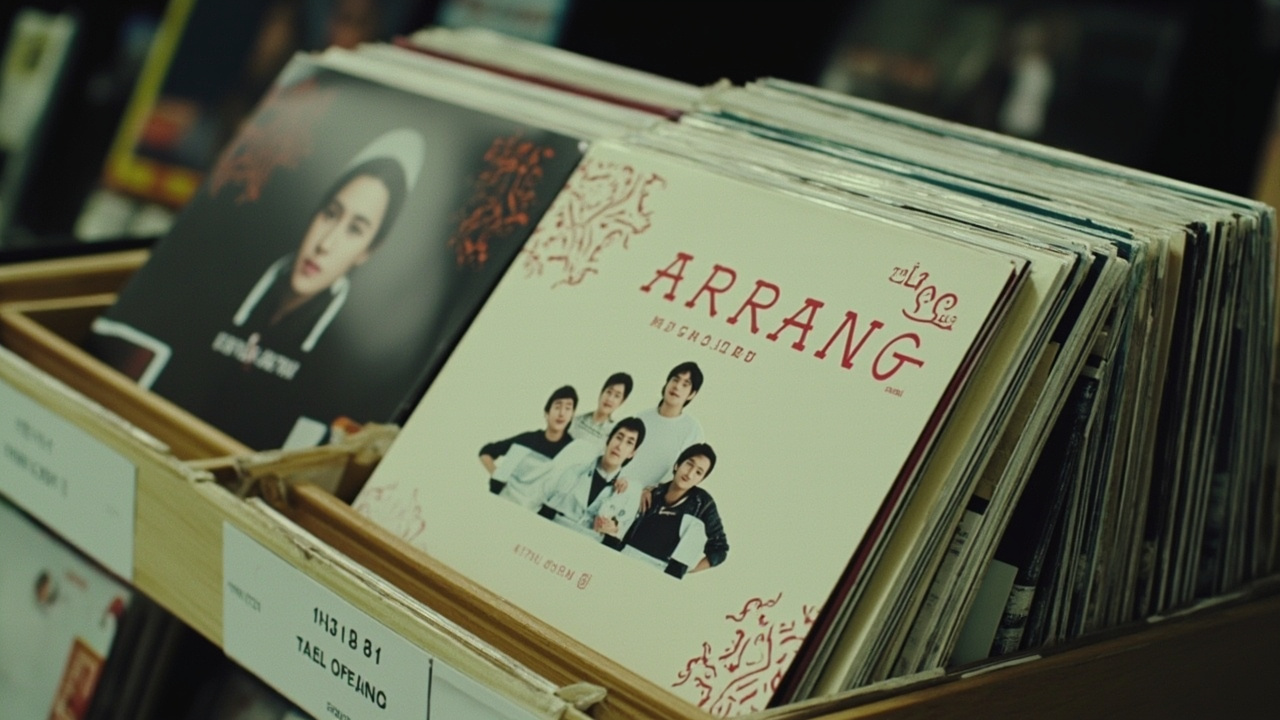
The question that hovered over K-pop for the better part of two years — would BTS survive mandatory military service? — was answered on Friday in the most emphatic unit of measurement the industry recognizes: 3,981,507 copies sold in twenty-four hours on the Hanteo chart. [1]
"Arirang," the group's fifth studio album and first full-length Korean release since completing their enlistment obligations, didn't merely outperform expectations. It obliterated BTS's own record. The previous benchmark was "Map of the Soul: 7," which moved 3.37 million copies in its first week in February 2020. "Arirang" surpassed that figure before the first day was over. [1]
The numbers cascaded through the rest of the global music infrastructure. The album topped iTunes charts in 88 countries and regions. Its lead single, "Swim," hit number one on iTunes in 90 markets, including the United States, Japan, the United Kingdom, Germany, and France. In South Korea, every track on the album entered Melon's Top 100, with "Swim" seizing the top position on both Melon and Bugs within hours of release. [1]
Produced under the direction of Hybe chairman Bang Si-hyuk, the album explores BTS's identity as a group rooted in Korea but reaching outward — a thematic arc that maps neatly onto the traditional folk song from which it takes its name. "Arirang" has hundreds of regional variations across the Korean peninsula. It is a song about departure and longing. For a band that disappeared for two years into barracks, the title is not subtle, and it doesn't need to be. [1]
The commercial performance matters beyond bragging rights. K-pop's physical album market has become an arms race of packaging, photocards, and fan-purchase organizing — a supply chain optimized for first-week explosions. Critics argue these sales overstate actual listenership. That criticism is not wrong, but it misses the point. The album market in K-pop is a loyalty metric. It measures not how many people listen, but how many care enough to spend. By that metric, BTS's absence did not erode its base. It compressed the demand like a spring. [2]
The group's return also arrives at a moment when the K-pop industry needs good news. Several mid-tier groups have struggled to maintain commercial momentum, and the broader entertainment sector in South Korea has faced economic headwinds. BTS selling four million albums in a day is a reminder that the genre's ceiling, at least for its biggest act, is still a long way from view. [2]
-- DAVID CHEN, Beijing