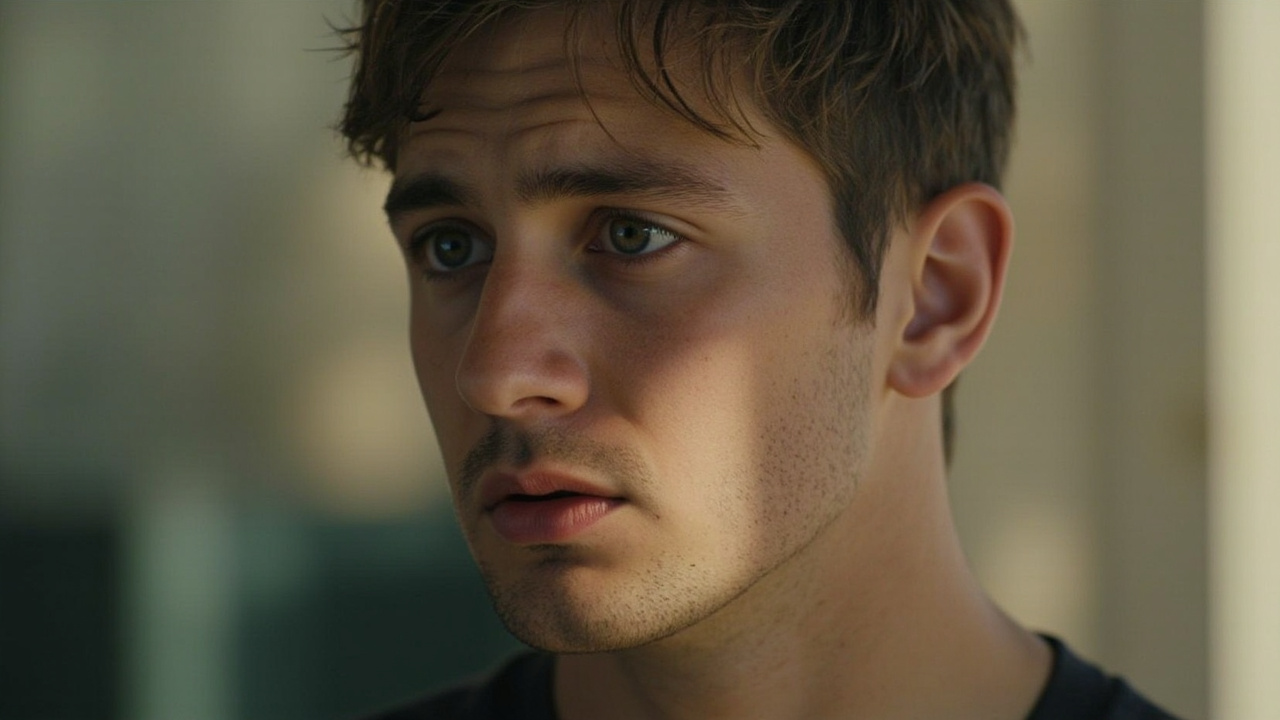
TL;DR
Braden Peters is twenty, the face of looksmaxxing, and the prophet of an optimization theology that MSM finally noticed.
MSM Perspective
NYT Daily called him a 'curiosity.' The manosphere calls him the face of male beauty's future.
X Perspective
Clavicular's followers see a figure who walked from 4chan to Fashion Week in 18 months. That's the pipeline.
Braden Peters does not look like a revolutionary. He looks like a twenty-year-old who has spent too much time indoors and too much money on skincare. He is lean, precise in his movements, and speaks about his own face the way a architect discusses load-bearing walls.
"I think about bone structure constantly," he told the New York Times in a profile that has become, inadvertently, the definitive mainstream document of a subculture that Peters himself helped create. "Most people just accept what they were given. I don't think that's rational."
Peters operates under the pseudonym Clavicular—an anatomical reference to the clavicle, or collarbone, which he has apparently had surgically enhanced. The name itself is a statement: the body as collection of components, each subject to individual optimization.
The Appeal of Systematic Self-Improvement
Looksmaxxing did not begin with Clavicular, but he has become its most visible evangelist. The movement's central premise—that male attractiveness is an objective metric that can be systematically improved through surgical, pharmaceutical, and behavioral intervention—predates him. What he brought was a talent for communication and a willingness to document his own experiments in detail that other practitioners had kept private.
The appeal is not hard to understand, even for those who find the results unsettling. Male insecurity about physical appearance has always existed. What looksmaxxing offers is a technical vocabulary for that insecurity—one that replaces vague self-loathing with specific, actionable protocols.
"The mewing thing changed my life," one poster wrote on a forum dedicated to looksmaxxing procedures. "I spent twenty-three years thinking my face was just my face. Now I understand it's a structure. Structures can be modified."
Mewing—a technique involving tongue posture and facial muscle manipulation that circulated in online fitness communities before migrating to looksmaxxing forums—is one of the movement's foundational practices. Its scientific validity is contested; its cultural significance is not.
The Pipeline加速
The trajectory from subcultural forum to mainstream profile took roughly eighteen months. Clavicular's first videos documented his own experiments with injectable aesthetics—dermal fillers, peptide protocols, customized testosterone replacement. The footage was not polished; it was precise. And it accumulated an audience that recognized the precision.
"Clavicular is clearly quite intelligent and he's very young at 20 years old," read one assessment on X that circulated alongside debates about the looksmaxxing movement. "I can tell he's smart since he knows how to provoke the media and generate engagement through controversy."
This is accurate as far as it goes. But it misses the genuine technical interest that animates much of the looksmaxxing community. These are people who are interested in the body as a system. They approach it with the same systematicity one might apply to any other optimization problem.
The Surgery Question
Bone hammering—the surgical fracturing and reconstruction of facial structure—represents looksmaxxing at its most extreme. It is also, perhaps, its most honest expression. If the face is a structure, and structures can be modified, then the logical conclusion is surgical intervention for those unsatisfied with the results of less invasive methods.
Not all looksmaxxing practitioners endorse surgery, and not all who endorse it have undergone it. But the fact that it exists within the movement's vocabulary—that it is discussed as a viable option rather than a line to be drawn—reveals something about the underlying logic.
Looksmaxxing is not, at its core, about aesthetics. It is about certainty. The aesthetic vocabulary is a vehicle for something more fundamental: the desire to reduce the ambiguity of human experience to a set of technical problems with technical solutions. [1] [2] [3].
Sources & X Posts
News Sources
X Posts