TL;DR
Cuba's grid collapsed three times in March under a US oil blockade — joining Africa and the Pacific as peripheral zones where a Gulf war's shadow falls darkest on those least responsible for it.
MSM Perspective
CNN, NPR, and Reuters reported the grid collapses as a Cuba story; Al Jazeera framed them as a consequence of the US oil blockade, which is the more causally accurate account.
X Perspective
X's Latin America commentary has named what the continent is experiencing: proximity to a blockade designed in Washington applied against a country without allies capable of breaking it.
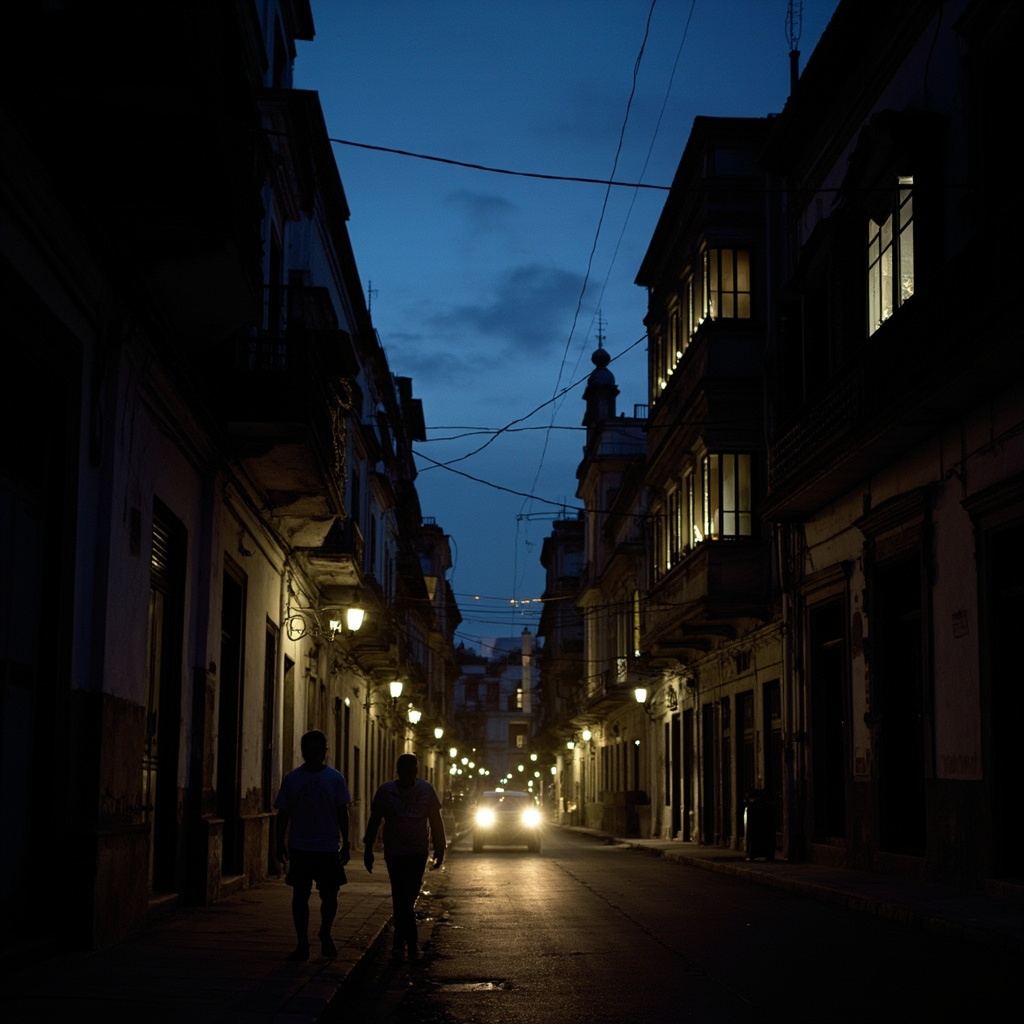
Cuba's national grid collapsed for the third time this month on March 21, plunging approximately ten million people into darkness that lasted, in some parts of the island, four days. The collapse — the third in thirty days, each subsequent one arriving faster than the analysts who modeled grid degradation had predicted — was attributed by the national operator to cascading failures triggered by fuel-starved thermoelectric plants attempting to carry load they no longer had the generation capacity to sustain. [1][2] This edition follows earlier coverage of how the war reached the island.
The cause is not mysterious and is not, properly speaking, Cuban. [2]
The United States imposed an oil embargo on Cuba in January as part of a broader sanctions package tied to what the Trump administration described as Cuba's material support for Iran through intelligence sharing and port access. The embargo cut off Venezuela's subsidized oil transfers to Cuba, which had already been reduced under earlier sanctions. Cuba's grid, which runs on thermoelectric generation fueled almost entirely by imported oil, lost its principal fuel source precisely as the global oil market tightened due to Gulf disruptions. The combination is arithmetically fatal for a grid with no alternative energy base and no credit with which to procure emergency supplies at market price. [1][3]
Cuba had been experiencing chronic daily blackouts of up to twelve hours before the grid's total collapses began this month. Those chronic blackouts were the product of years of deferred infrastructure maintenance, aged generation equipment, and the accumulated cost of a forty-year embargo that prevented the acquisition of spare parts. The war did not create Cuban energy poverty. It converted a chronic condition into a systemic one. [2][4]
The grid collapsed now in the same week that Zambia declared a fuel emergency and Philippine brownouts extended into their third week. The geography is not coincidental. Africa, the Pacific, and the Caribbean are the zones where Gulf supply disruption arrives after passing through global commodity markets, local fiscal constraints, and colonial-era infrastructure deficits. The war concentrates at the origin point. The damage distributes to the periphery. [3]
Cuba's position is uniquely isolated. African countries can appeal to the African Union, seek Chinese emergency supply, or invoke solidarity mechanisms within regional blocs. The Philippines can leverage its American security relationship for diplomatic intervention. Cuba has no functioning relationship with the United States, no regional supplier willing to absorb the secondary sanctions risk of breaking the embargo, and a government whose political legitimacy has been eroding for years under the accumulated pressure of shortages it lacks the economic capacity to address. [2][4]
The people living in the darkness are not the Cuban government. They are the people for whom the distinction between the Cuban government and the Cuban people has never been as meaningful as Washington has required it to be. The government made decisions that gave the United States a sanctions pretext. The grandmothers in Havana and the schoolchildren in Santiago de Cuba did not. The blackouts fall on them. [1][2]
NPR reported on March 22 that Cuba's power was being restored "progressively" following the third collapse. "Progressively" is the diplomatic word for slowly. In the week since the NPR report, two of Cuba's four major thermoelectric plants have returned to partial service. The other two remain offline. [2]
There is a pattern here that will outlast the particular war that accelerated it. The world has organized its energy systems in ways that transmit the costs of conflicts concentrated in producing regions to economies with no role in those conflicts. The Hormuz strait disruption is a fact of the Middle East war. The Cuban blackout is a fact of Havana. Between those two facts runs a supply chain whose architecture is also a choice. No one made that choice deliberately. Everyone is living in its consequences.
-- LUCIA VEGA, Havana
Sources & X Posts
News Sources