TL;DR
The billionaire who insisted the American mall was not dying — and spent decades proving it — died Sunday at 64, leaving his son to defend the bet.
MSM Perspective
Bloomberg and People ran extensive obituaries crediting Simon with defying the 'death of retail' narrative, while the Indianapolis Star covered the immediate succession of his son Eli.
X Perspective
Real estate and finance accounts on X are split between genuine tributes to a titan and sardonic observations that the Mall King died the week the economy is collapsing.
David Simon, the chairman and chief executive officer of Simon Property Group, who spent three decades insisting that the American mall was not a relic and then deploying billions of dollars to prove it, died on Sunday at his home surrounded by family. He was 64. The cause was pancreatic cancer, which he had been fighting for two years. [1]
Simon Property Group announced that David's eldest son, Eli Simon, would immediately assume the role of CEO. The succession was not unexpected — Eli had been groomed for the position — but the speed of the transition underscored what the elder Simon had always understood about his business: malls do not pause for mourning. [2]
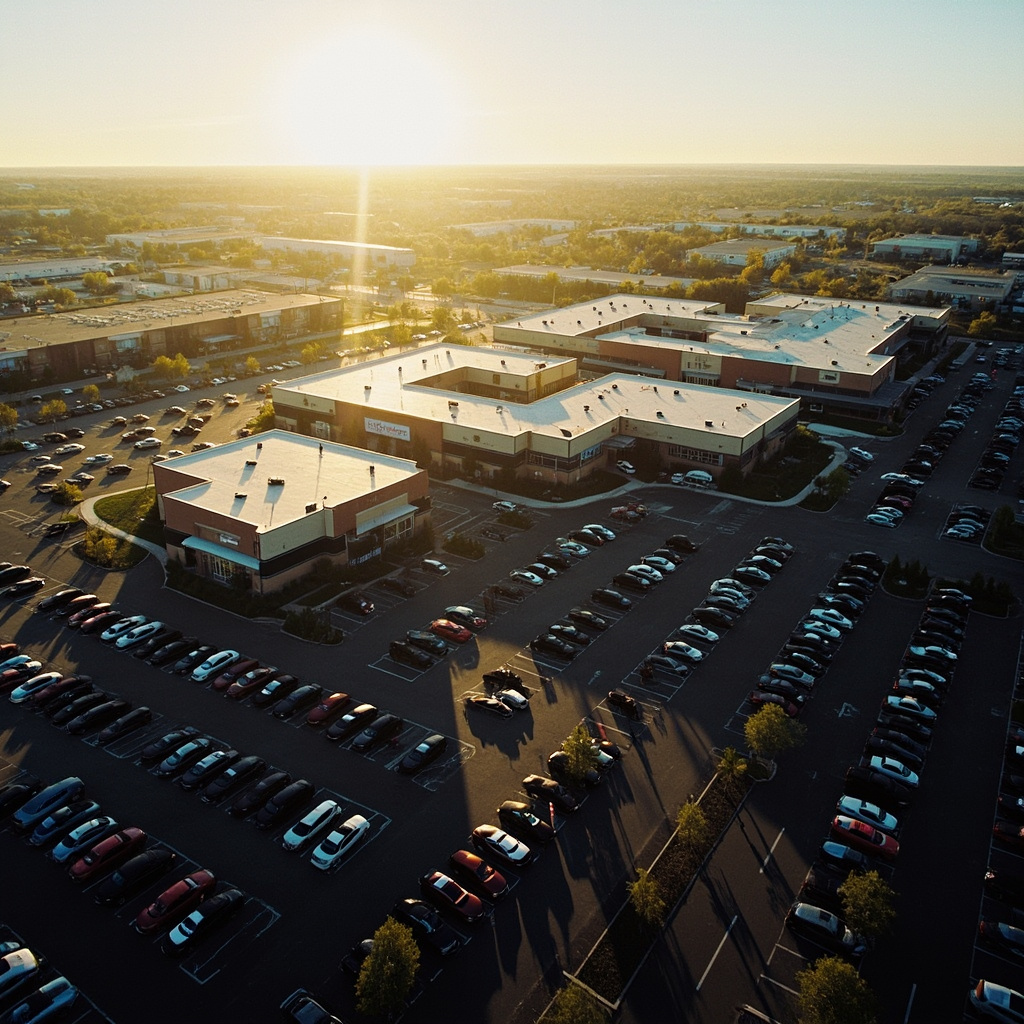
The numbers David Simon left behind are staggering. Simon Property Group owns or has an interest in roughly 230 properties across North America, Europe, and Asia, totaling approximately 190 million square feet of retail space. The company is the world's largest retail real estate investment trust, with a market capitalization that, at its 2024 peak, exceeded $60 billion. Simon himself was a billionaire several times over, with a net worth Forbes estimated at $4.2 billion. [3]
But the numbers alone miss what made him interesting. Simon took over as CEO in 1995, inheriting a business his father Melvin and uncle Herbert had built into a Midwestern shopping-center operator. He immediately began expanding — acquiring competitors, upgrading properties, and, critically, refusing to accept the emerging narrative that e-commerce would render physical retail irrelevant. Every year brought a new round of "death of the mall" stories. Every year Simon cut the ribbon on another renovation.
His most aggressive move came during the pandemic. While competitors retreated, Simon acquired struggling retailers directly — taking stakes in Brooks Brothers, J.C. Penney, and Eddie Bauer through a joint venture with Brookfield Asset Management. The logic was counterintuitive: if your tenants are failing, buy them, restructure them, and install them back in your own properties. Wall Street was skeptical. The tenants survived. [4]
The strategy worked in part because Simon understood something that the "retail is dead" chorus did not: the malls that were dying were the ones that deserved to die. Class C malls in declining suburban corridors with anchor tenants selling commodity goods were indeed obsolete. But premium malls in affluent markets — the Simon specialty — were performing as well or better than they had before e-commerce. The company's A-class properties regularly reported occupancy rates above 95 percent.
Simon was not sentimental about this distinction. He closed underperforming properties without hesitation, redeveloping several into mixed-use projects that incorporated housing, offices, and entertainment alongside retail. He was, in the language his critics preferred, ruthless. He preferred "rational."
His management style was famously blunt. Earnings calls were exercises in brevity. Analysts who asked what Simon considered foolish questions received answers calibrated to ensure they would not ask again. Competitors who underperformed were described in terms that would not survive quotation in a family newspaper. He ran his company the way he played tennis — aggressively, with visible contempt for unforced errors. [5]
The test of his legacy begins now. Eli Simon inherits the CEO title during a war-driven economic crisis that has pushed gasoline above $4 per gallon and consumer confidence to its lowest level since 2022. Premium malls thrive on discretionary spending, and discretionary spending is the first casualty of uncertainty. The elder Simon spent thirty years arguing that the mall would endure. His son will find out if the argument holds when the parking lots thin.
-- MAYA CALLOWAY, New York
Sources & X Posts
News Sources
X Posts