TL;DR
DOGE has requested Fed operational reviews since February — and Powell's Tuesday statement had no enforcement mechanism.
MSM Perspective
WSJ: DOGE has requested operational reviews of Fed personnel and budget decisions since February.
X Perspective
X frames the Fed's independence as the ultimate institutional check — and DOGE's interest as proof it knows this.
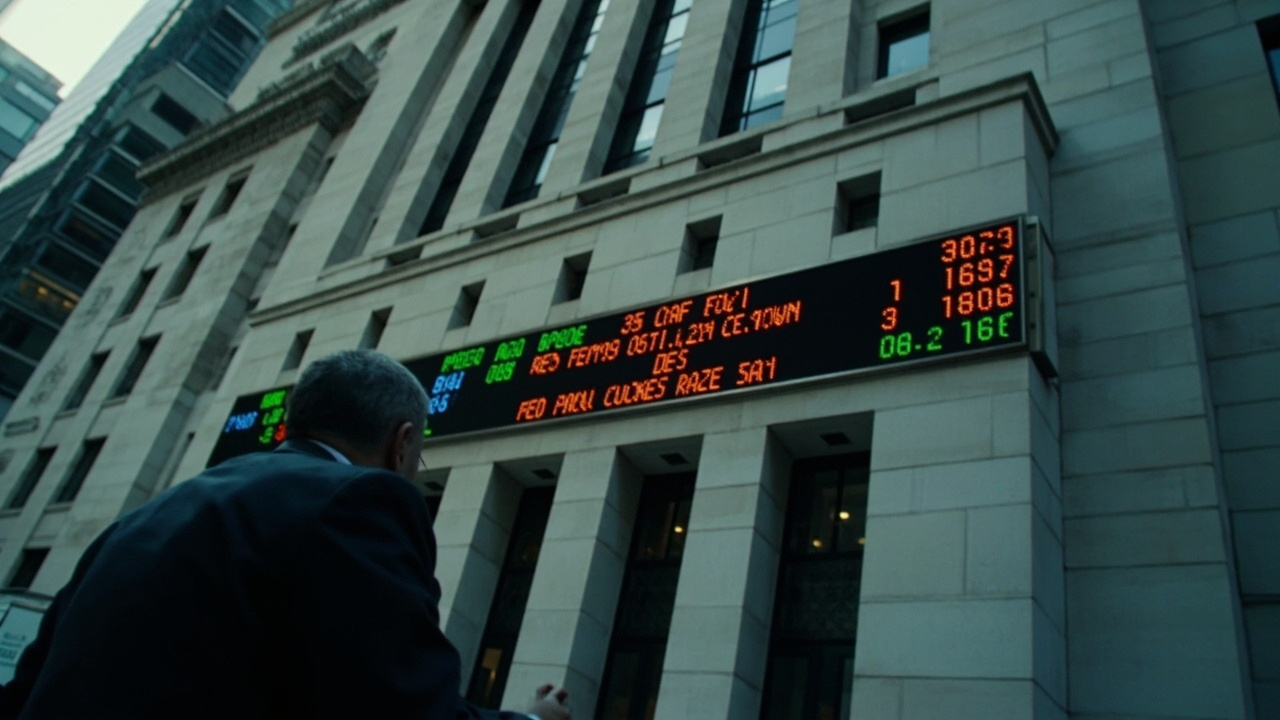
The Wall Street Journal reported Thursday that DOGE has been requesting operational reviews of Federal Reserve personnel decisions and budget allocations since February — inquiries that Fed officials have characterized as unprecedented in scope and that current and former central bankers describe as an attempt to assess the institution's vulnerability to political pressure.
The Fed is the last major US institution that operates with genuine autonomy from direct presidential control. The Federal Reserve Act of 1913 created a structure — regional banks, an independent board of governors, staggered 14-year terms — specifically designed to insulate monetary policy from political cycles. The design has been tested before. It has never been tested by an organization with DOGE's stated mission of identifying and eliminating institutional inefficiencies, operating with direct White House backing, and staffed by people who have publicly described the Fed's independence as an obstacle to good governance.
The operational reviews DOGE has requested include internal communications about personnel decisions, budget allocation formulas, and the criteria used to set the federal funds rate. The Fed has provided some documents under a partial compliance agreement. It has withheld others, citing deliberative process privilege.
The institutional question is not hypothetical. Fed independence matters because monetary policy decisions — interest rate targets, quantitative tightening, emergency lending facilities — operate on long lags and require credibility with markets. If market participants believe the Fed is making rate decisions under political pressure, the effects flow into mortgage rates, corporate borrowing costs, and the dollar's value immediately. The 7.41 percent mortgage rate that is currently crushing first-time homebuyers is a function of inflation expectations and Fed credibility. Compromise that credibility, and the rate goes up — not down.
DOGE's interest in the Fed is consistent with its interest in every other independent agency: understand the institution, identify its political vulnerabilities, and create the conditions for either control or capitulation. The Fed has its own legal defenses. It also has a political problem — its independence is understood by most Americans as an abstraction, which makes it vulnerable to the argument that it is simply unelected power that should be accountable to someone.
Tuesday's FOMC meeting produced no rate change, which was expected. What was not expected was the statement from Chair Powell that the Fed "does not and will not take political instructions on monetary policy decisions." The statement was direct. It was also unaccompanied by any enforcement mechanism.
The question DOGE is asking is whether the Fed's independence is a legal structure or a political convention. The answer has implications that extend far beyond interest rates. [1] [2] [3] [4].
Sources & X Posts
News Sources