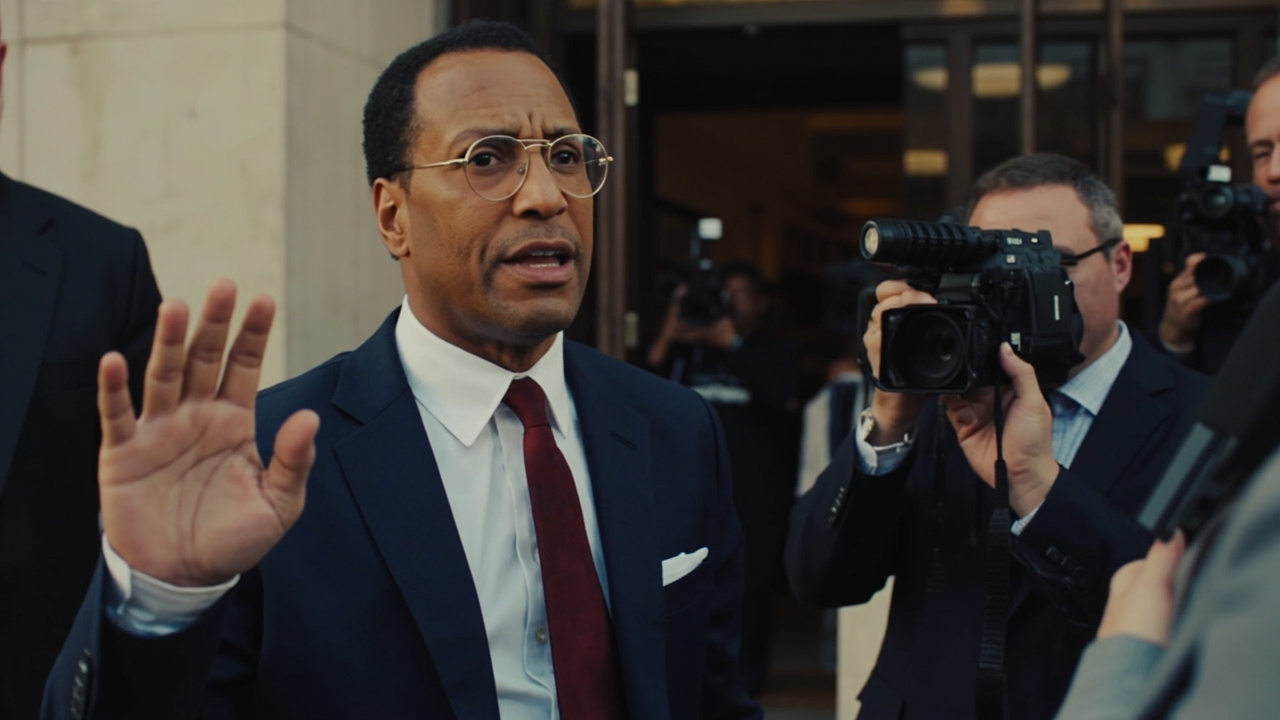
The question at the center of United States v. Don Lemon is deceptively simple: When does covering a protest become participating in one? The answer, according to the Department of Justice, is when the journalist walks through the door.
On January 29, federal agents arrested Don Lemon in Beverly Hills in connection with his coverage of an anti-ICE protest at a church in St. Paul, Minnesota, earlier that month. He was charged, along with Georgia Fort and five others, with conspiracy to deprive others of their civil rights under 18 USC 241 and violation of the Freedom of Access to Clinic Entrances Act — the FACE Act — under 18 USC 248. Lemon pleaded not guilty on February 13 [1][2].
The FACE Act, passed in 1994, was designed to protect abortion clinics and houses of worship from blockades. It makes it a federal crime to use force, threat of force, or physical obstruction to interfere with anyone obtaining or providing reproductive health services, or to intimidate anyone exercising their right to religious worship. The Trump administration's application of the statute to a journalist covering an immigration protest inside a church represents, by any measure, a creative reading of the law [3].
The prosecution's theory, as outlined in the charging documents, is that Lemon did not merely document the protest but facilitated it — that his presence as a well-known media figure attracted attention to the action, encouraged participants, and contributed to the disruption of a worship service. The primary evidence for this theory is Lemon's own livestream. The footage he broadcast, the government argues, demonstrates his active role in the events [1].
This is the detail that press freedom organizations have seized upon with particular alarm. The DOJ is not alleging that Lemon threw a punch, blocked an aisle, or chained himself to a pew. It is alleging that his act of broadcasting — of doing journalism — constituted participation in a conspiracy. Forty press freedom organizations, including the Committee to Protect Journalists, Reporters Without Borders, PEN America, and the Society of Professional Journalists, signed a joint statement condemning the prosecution as "an unprecedented attack on the First Amendment" [2][4].
"If the government can charge a journalist for being present at a newsworthy event and broadcasting it, then the act of witnessing becomes a crime," the statement read. "This is not a precedent consistent with a free press."
The White House appeared to view the arrest differently. Hours after Lemon's detention, the official White House account on X posted what observers described as a mocking reference to the arrest — a response that press advocates argued revealed the political motivation behind the prosecution [4].
Lemon's attorney, prominent civil rights lawyer Mark Geragos, has framed the case as a First Amendment test. "This is about whether a journalist can be prosecuted for showing up and doing his job," Geragos said outside the federal courthouse in Los Angeles after Lemon's arraignment. "The answer, in a free society, is no" [1].
The legal terrain is genuinely complex. The FACE Act has been used sparingly since its passage, primarily against anti-abortion activists who physically blocked clinic entrances. Its application to an immigration protest — in a church, during a worship service — stretches the statute into territory that Congress almost certainly did not contemplate when it wrote the law. Constitutional scholars are divided. Some argue that the statute's text is broad enough to cover the conduct alleged. Others contend that applying it to a journalist engaged in protected activity violates the First Amendment's press clause [3].
What is not disputed is the context. The arrest occurred during a period of escalating confrontation between the Trump administration and journalists. The Committee to Protect Journalists' annual report, released in February, documented what it called "the most aggressive domestic campaign against press freedom since the Sedition Act of 1918." The Lemon prosecution, whatever its legal merits, fits within a pattern that includes subpoenas of journalists' phone records, the exclusion of specific outlets from White House briefings, and public statements by senior officials describing the press as "the enemy of the people" [4].
Lemon himself has used the case as a platform. In a speech at the GLAAD Media Awards on March 14, he described the prosecution as evidence that "the space for journalism in this country is shrinking." The speech received a standing ovation. Whether standing ovations constitute admissible evidence of innocence is a question the courts have not yet addressed [4].
The prosecution's argument inverts a foundational premise of press freedom: that the act of observation and dissemination is categorically different from the act being observed. In the government's telling, Lemon's camera was not a tool of journalism but an instrument of the conspiracy — his broadcast not a report on the protest but part of the protest itself. If this theory prevails, the implications extend far beyond Don Lemon. Every journalist who livestreams a demonstration, who enters a building where civil disobedience is occurring, who arrives at the scene of a confrontation between citizens and the state, could be subject to prosecution not for what they did but for what they showed.
The trial is expected to begin in the fall. In the meantime, Lemon continues to publish on his independent media platform, continues to attend events, continues to be, in the government's characterization, a co-conspirator walking free on his own recognizance.
The livestream that the government intends to use as evidence remains available online. You can watch it. Millions have. In the footage, Lemon holds a camera, narrates what he sees, and walks through a church. The prosecution calls this a crime. The defense calls it journalism. The court will call it something definitive, eventually. Until then, the footage sits there — evidence of something, depending on who is watching and what they believe a journalist is for.
-- MAYA CALLOWAY, New York